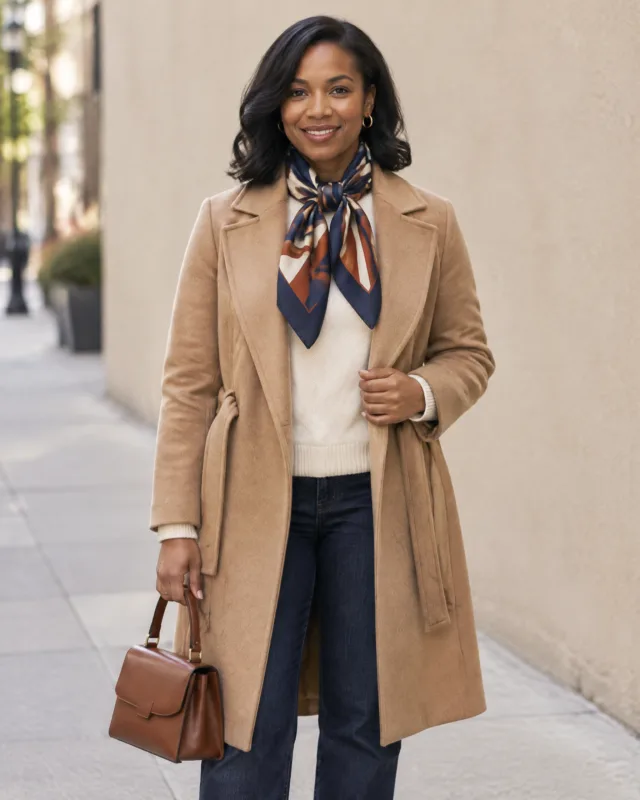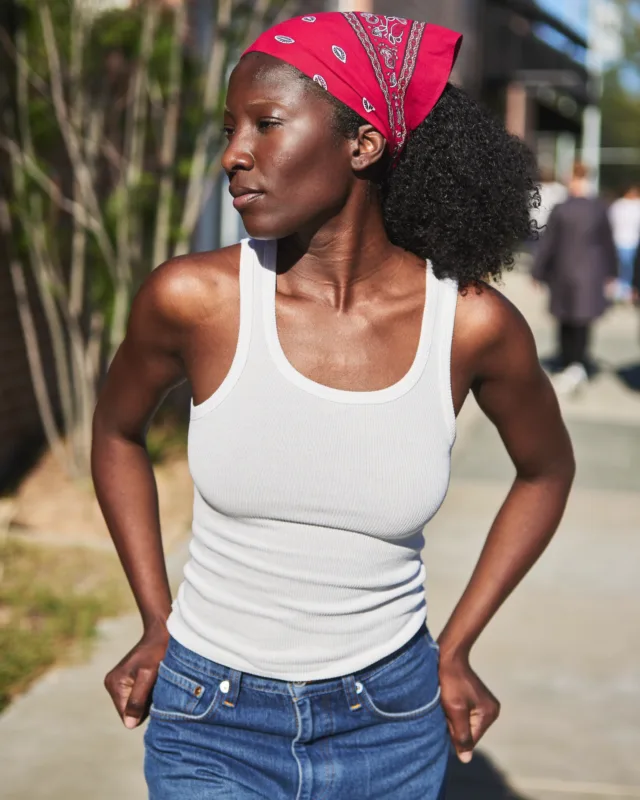
How to style an outfit is a four-step formula: start with pieces that fit, balance loose and fitted shapes, add a third piece such as a jacket or vest, and finish with the right shoes and one accessory. These styling tips for women work with the clothes you already own, from a basic tee to a flannel, a turtleneck or a pair of overalls.
Quick answer
Quick answer: To style any outfit, get the fit right, balance proportions, define your waist with a tuck or belt, add a third layer, and choose shoes that match the outfit’s mood.
- Fit is the foundation: shoulder seams, sleeve length and hem length matter more than price.
- A French tuck or half-tuck is the quickest way to make a top look styled.
- A “third piece” (blazer, vest, cardigan, scarf) turns two basics into an outfit.
- Monochrome outfits look richer when you mix textures like knit, silk and leather.
- Shoes set the tone: sneakers relax, loafers polish, heels and sleek boots dress up.
- Restyling what you own beats buying more: swap one piece at a time.
How to Style Any Outfit: The Quick Formula
The quick formula for styling any outfit is fit, balance, layer, finish. Choose pieces that fit your shoulders and waist, pair a looser piece with a closer-fitting one, add a third piece on top, then finish with shoes and one accessory that match the occasion. Repeat it daily and it becomes second nature.
- Fit. Check that shoulder seams sit at the edge of your shoulder, sleeves end at the wrist bone (or are rolled on purpose), and hems hit a clear point on your body.
- Balance. Pair volume with structure: an oversized sweater with slim pants, or a fitted bodysuit with wide-leg trousers.
- Define. Show a waistline with a tuck, a belt or a cropped length, unless the look is meant to be relaxed and straight.
- Layer. Add a third piece, such as a blazer, vest, cardigan, shirt-jacket or scarf.
- Finish. Pick shoes that fit the mood of the outfit, then add one accessory: a belt, a bag, earrings or a bandana.
| Outfit base | Third piece | Shoes | Accessory | Result |
|---|---|---|---|---|
| White tee + straight jeans | Navy blazer | Loafers | Gold hoops | Smart casual |
| Turtleneck + wide trousers | Long wool coat | Ankle boots | Structured bag | Polished winter |
| Polo shirt + midi skirt | Cropped cardigan | Ballet flats | Slim belt | Preppy weekend |
| Flannel shirt + black jeans | Puffer vest | Lug-sole boots | Crossbody bag | Easy fall |
| Overalls + striped tee | Denim or utility jacket | Clean sneakers | Bandana | Off-duty |
Core Styling Tips Every Woman Should Know
The core styling tips that make the biggest difference are how you tuck, how you balance shapes, adding a third piece, and mixing textures when you wear one color. Master these four and almost every garment in your closet, from a plain tee to a blazer, will look more intentional and put together.
Tuck, Half-Tuck or Leave Out
- Full tuck: best with high-rise pants and skirts, thin fabrics and a belt. It looks crisp and defines the waist.
- French tuck (front tuck): tuck only the front few inches of the hem. It shows your waist while keeping the back relaxed, and works with tees, thin sweaters and button-downs.
- Half-tuck (side tuck): tuck one side for an asymmetric, casual line.
- Leave out: for cropped tops that already end at the waist, tunic lengths over slim pants, or boxy shirts worn as a layer.
Balance Loose and Fitted Pieces
Keep one part of the outfit close to the body. An oversized shirt looks deliberate with slim jeans or leggings; a fitted knit makes wide-leg pants look elegant. When both halves are loose, add a belt or a cropped layer to bring back a waistline. Our guide on how to style jeans applies this balance to every denim cut.
Add a Third Piece
A top and bottom is clothing; add a third piece and it becomes an outfit. Try a blazer, a sweater vest, a cardigan over the shoulders, a denim jacket, a long coat or a scarf. The third piece adds depth, color and a clear finishing point.
Mix Textures in Monochrome Outfits
One-color outfits look expensive when the textures change. Combine ribbed knit with satin, wool with leather, or denim with a crisp poplin shirt. Mixing shades of the same color, like cream, ivory and oatmeal, also adds dimension.
How to Style Cropped Tops
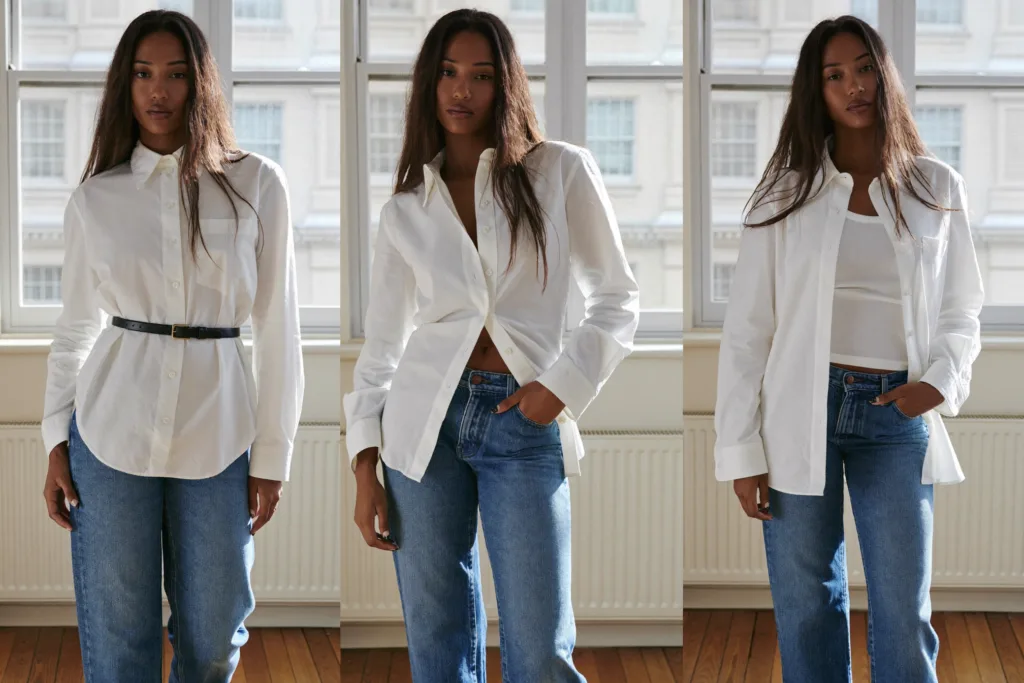
Style a cropped top by pairing it with high-rise bottoms so only a small amount of skin shows, or none at all. Balance a fitted crop with wide-leg jeans or a full skirt, and balance a boxy crop with slim or straight pants. Add an open shirt or blazer to make it work-appropriate or cooler-weather friendly. For more outfit formulas, see our full guide on how to style cropped tops.
- Casual: cropped tee, high-rise straight jeans, sneakers.
- Polished: cropped knit, wide-leg trousers, a long blazer and loafers.
- Evening: cropped satin top, high-waisted midi skirt, heeled sandals.
Cropped jackets and sweaters work on the same principle: they show the waist and suit high-rise bottoms and dresses with a defined waistline.
How to Style Shirts: Flannels and Polos
Flannels and polo shirts can be casual or polished depending on what you pair them with. Worn open over a tee with jeans, a flannel is a relaxed layer; buttoned and tucked into trousers, it looks sharp. A polo tucked into a skirt or tailored pants feels preppy, while a loose polo with denim reads sporty.
Flannel shirts: wear one open as a light jacket over a tank or tee, tie it at the waist with high-rise jeans, or layer it under a puffer vest. For a smarter look, button it, tuck it into dark jeans or corduroy pants and add loafers or ankle boots. For more outfit ideas, read our guide to how to style a flannel.
Polo shirts: a fitted knit polo tucked into wide trousers or a pleated skirt looks modern and clean. Try a white polo with a navy blazer and straight jeans, or with a denim skirt and sneakers on weekends. Pop the collar only when the look is deliberately preppy. Our full guide on how to style a polo shirt has more outfit formulas. For more pairings, see our guide on what to wear with a white polo shirt.
How to Style Turtleneck Sweaters
A turtleneck sweater is one of the most versatile layering pieces. Wear a fine-knit turtleneck on its own with trousers, or layer it under a blazer, a slip dress, a pinafore or a sweater vest. A chunky turtleneck looks best with slim or straight bottoms that balance its volume.
- Under a blazer: a thin black, cream or camel turtleneck replaces a shirt for a sleek work look.
- Under a dress: layer a fitted turtleneck beneath a slip dress or sleeveless knit dress, then add boots.
- Tonal look: a turtleneck in the same color as your pants creates a long, elegant line.
If a high neck feels too close, try a mock neck, which gives a similar effect with less fabric at the throat.
How to Style Vests and Layering Pieces
Style a vest as a top on its own, over a shirt or tee, or under a jacket. Sweater vests feel preppy over a button-down, tailored vests look sharp with matching trousers, and puffer vests add warmth over flannels and knits. Vests add a third piece without the bulk of sleeves.
- Sweater vest: layer over a crisp white shirt with jeans or a pleated skirt.
- Tailored vest: wear it alone with wide-leg trousers for a modern suit look, or over a tee with jeans.
- Puffer vest: add over a turtleneck, flannel or hoodie with leggings or jeans and boots.
For seasonal layering, build from thin to thick: a fitted base layer, a shirt or knit, a vest, then an outer coat. Each layer should be slightly longer or shorter than the one below so the edges look planned.
How to Style Overalls
Style overalls with a fitted top underneath, such as a striped tee, a ribbed tank, a turtleneck or a thin sweater, so the volume stays balanced. Roll or cuff the hem to show your ankles, and finish with sneakers, loafers or ankle boots. A belt over the waist adds shape to roomy styles.
- Spring and summer: tank or tee, cuffed hem, canvas sneakers or sandals.
- Fall and winter: turtleneck or thin sweater underneath, a long cardigan or coat on top, ankle boots.
- More polished: dark-wash or black overalls with a crisp shirt and loafers.
How to Style Accessories Like a Bandana
Accessories, including a simple bandana, are the finishing touch that makes an outfit look styled. Tie a bandana as a headband or ponytail wrap, knot it at the neck over a tee or shirt, or loop it through a bag handle. Choose a color or print that repeats something else in your outfit. For step-by-step tying methods, read our guide on how to style a bandana.
- Hair: fold into a strip and tie as a headband, or wrap around a low ponytail.
- Neck: fold into a triangle and tie loosely at the side, or roll and knot it close for a neckerchief look.
- Bag: tie to a tote or crossbody handle to add color without changing the outfit.
The same thinking applies to belts, scarves and jewelry: one or two chosen accessories look intentional; five at once compete. For knots, wraps and bag ties, see our guide on how to style a scarf.
Choosing Shoes to Finish an Outfit
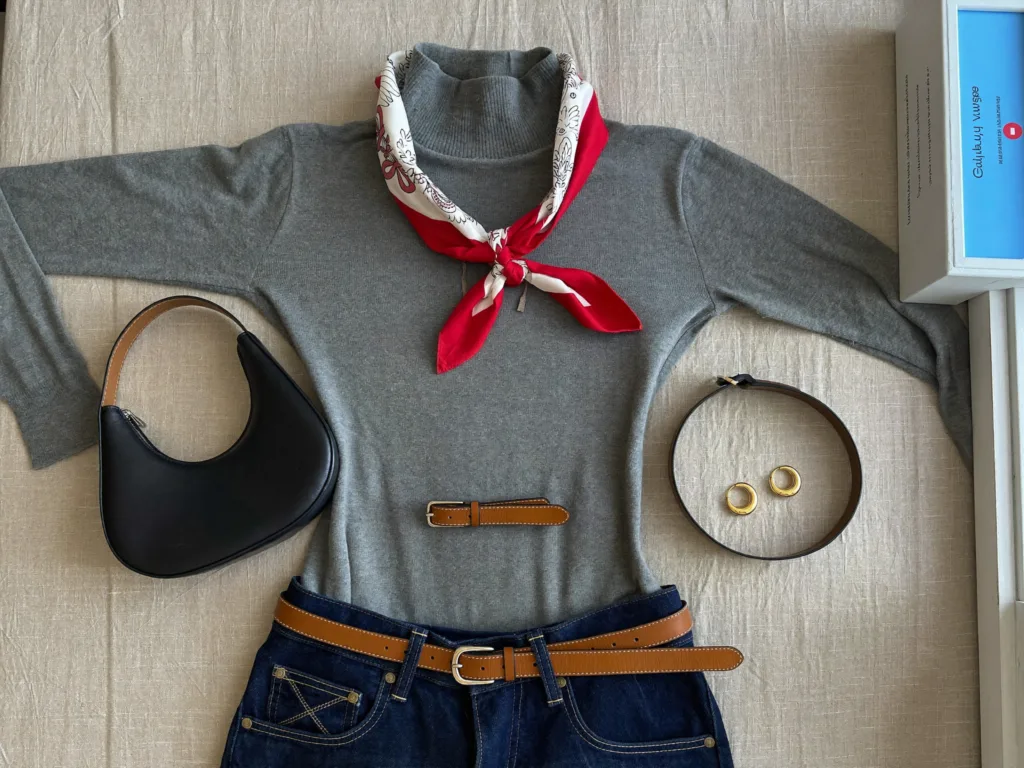
Shoes are the final styling decision and they change the whole outfit’s mood. Sneakers make a look casual and modern, loafers and flats add polish, and boots and heels dress things up or add edge. Match the shoe to both the occasion and the hem length of your pants or skirt. To see every option side by side, browse our guide to the types of shoes women wear most.
Sneakers
Clean, low-profile sneakers suit jeans, slip dresses, wide trousers and even suits. Chunkier sneakers balance baggy or wide-leg pants.
Loafers and Flats
Loafers are a smart bridge between casual and polished, working with jeans, trousers, skirts and socks in colder months. Ballet flats and pointed flats suit cropped pants, midi skirts and dresses.
Boots and Heels
Ankle boots work with straight and flare jeans and with midi dresses. Knee-high boots pair with skirts, dresses and slim pants. Block heels and pointed heels make any outfit dressier.
| Outfit | Casual shoe | Polished shoe | Dressy shoe |
|---|---|---|---|
| Jeans + tee | White sneakers | Loafers | Pointed heels |
| Wide trousers + knit | Slim sneakers | Block-heel loafers | Platform heels |
| Midi skirt + sweater | Canvas sneakers | Ballet flats | Knee-high boots |
| Overalls + tee | Canvas sneakers | Chunky loafers | Heeled ankle boots |
How to Style Clothes You Already Have
To style clothes you already have, start with your most-worn pieces and build new combinations around them before buying anything. Pull five favorites, pair each with two pieces you rarely wear, and swap shoes and accessories to see new outfits. You will often find several looks you never tried.
Try this re-mix exercise:
- Choose your anchors. Pick five items you wear most, such as straight jeans, a blazer, a white tee, black trousers and a knit.
- Pull the forgotten pieces. Choose five items you love but rarely wear.
- Pair one anchor with one forgotten piece. Build at least two outfits for each forgotten item.
- Change the finish. Try each outfit with three different shoes and one new accessory.
- Photograph the winners. Keep a phone album of outfits that work so you can repeat them on busy mornings.
- Fix or let go. If something never works, decide whether tailoring would help or whether it is time to pass it on.
This is the same thinking behind a capsule wardrobe: fewer pieces that all mix together, so every new pairing feels fresh.
Stylist’s tip
When a top looks almost right but not quite, check the shoulder seam first. If it sits past the edge of your shoulder on a piece that is not meant to be oversized, a tailor can often adjust it, or a belted layer on top can disguise it.
How Do You Find Your Personal Style?
You find your personal style by noticing what you already reach for and what you save as inspiration, then looking for the patterns: colors, shapes, fabrics and moods that repeat. Turn those patterns into a few simple style words and use them to guide every new purchase and outfit.
- Save outfit photos you love for a few weeks, then look for common threads.
- Write three words that describe the feeling you want, such as “relaxed, sharp, warm.”
- Experiment gradually: change one element at a time, like a new shoe shape or color.
- Notice how you feel in each outfit; comfort and confidence are part of style.
Styling Tips by Body Shape and Age
Styling tips work for every body when you adjust proportions to your frame. Petite women benefit from shorter layers and high rises, curvy and plus-size women from defined waists and structured fabrics, and women over 40 from elevated basics and good tailoring. Use these as starting points, not rules.
- Petite: choose cropped jackets, high-rise bottoms and tonal outfits for a longer line. Keep prints and volume in proportion to your frame.
- Curvy and plus-size: wrap tops, V-necks, belted layers and fabrics with some structure create shape. A longline open blazer or cardigan adds a vertical line.
- Tall: you can carry longer layers, bigger prints and wide-leg pants easily; look for sleeves and inseams long enough for your frame.
- Over 40: invest in quality basics like fine knits, crisp shirts and a well-cut blazer. Tailoring, good fabrics and polished shoes do more than trends.
If you are not sure of your proportions, knowing your body shape (where you are widest and how defined your waist is) makes these choices easier.
Common Styling Mistakes to Avoid
The most common styling mistakes are wearing clothes that do not fit, ignoring what goes underneath, wearing too many statement pieces at once, and choosing the wrong shoe for the outfit. Each is easy to fix and makes an immediate difference to how polished you look.
Do
- Have key pieces tailored, especially pants hems and jacket sleeves.
- Wear well-fitting, smooth undergarments in a shade close to your skin under light fabrics.
- Pick one focal point per outfit, such as a print, a color or a bold accessory.
- Choose shoes that match the outfit’s level of formality and the hem length.
Don’t
- Buy a size that fits one part of your body and pulls everywhere else.
- Combine several trends at once in one outfit.
- Leave every top untucked when a simple front tuck would define your shape.
- Skip ironing or steaming; wrinkles read as careless even on great clothes.

Seasonal Layering for Tops and Outerwear
Seasonal layering means building outfits from thin to thick so you can add or remove pieces through the day. In spring and fall, layer a tee, a shirt or light knit, and a trench or denim jacket. In winter, use a fine base layer, a sweater or vest, and a wool coat.
- Spring: tee, open button-down, light trench. Swap the trench for a cardigan on warmer days.
- Summer: a linen shirt worn open over a tank is a sun-friendly third piece, and it layers just as easily over a long dress; see how to style maxi dresses.
- Fall: flannel or turtleneck, puffer vest or blazer, ankle boots.
- Winter: thermal or fine-knit base, chunky sweater, long coat, scarf and boots.

Frequently asked questions
How do I style my clothes to look more put together?
Start with fit: tailor hems and sleeves so pieces sit correctly. Then define your waist with a tuck or belt, add a third piece such as a blazer or cardigan, and finish with shoes that match the outfit’s mood. Steamed, wrinkle-free clothes and one deliberate accessory make the whole look more polished.
How can I style clothes I already have?
Begin with your most-worn pieces and pair each with something you rarely wear. Try every new combination with different shoes and one fresh accessory, and photograph the outfits that work. Small swaps, like a loafer instead of a sneaker or a vest over a shirt, create new looks without buying anything new.
What is the third piece rule in fashion?
The third piece rule says that adding one layer over a top and bottom finishes an outfit. That third piece can be a blazer, jacket, vest, cardigan, shirt-jacket or scarf. It adds depth, color and structure, and it is one of the simplest ways to make basic pieces look styled and intentional.
What are the most common styling mistakes?
The most common mistakes are ill-fitting clothes, wearing too many trends or statement pieces at once, unbalanced proportions such as loose on loose with no waistline, skipping tailoring, and choosing a shoe that clashes with the outfit’s formality. Fixing fit and choosing one focal point solves most of these problems quickly.
Do accessories really make a difference?
Yes. A belt can define the waist of an oversized shirt, a structured bag can make jeans and a tee look office-ready, and a scarf or bandana adds color to a neutral outfit. One or two well-chosen accessories shift a look from casual to polished without changing any of the clothes.
How do I find my personal style?
Collect outfit images you love for a few weeks and look for patterns in color, shape and mood. Notice which pieces you reach for most and how they make you feel. Choose three words that describe your ideal style, then experiment gradually, changing one element at a time until outfits feel like you.
How do you style a basic white tee?
A white tee works with almost anything. Front-tuck it into high-rise jeans with loafers for weekends, wear it under a blazer with trousers for work, or tuck it into a satin midi skirt with heels for evening. Choose a fabric thick enough to be opaque and a fit that skims your shoulders.