Types of fashion styles are recurring, recognizable ways of dressing, such as classic, bohemian, minimalist or streetwear, each defined by its silhouettes, colors, fabrics and attitude. This guide pairs the main style types with a practical glossary of clothing types and fashion terms, so you can name what you love and shop for it with confidence.
Quick answer
A fashion style is a lasting way of dressing defined by shape, color and mood; most women’s wardrobes blend two or three styles rather than fitting just one.
- The core style families include classic, casual, chic, bohemian, minimalist, romantic, edgy, grunge, streetwear, sporty, preppy, vintage, business casual and glam.
- A style lasts for years, a trend lasts a season or two, and an aesthetic is a mood-driven, often internet-born look.
- Knowing garment terms (A-line, sheath, wide-leg, Chelsea boot, crossbody) makes shopping and tailoring far easier.
- Necklines, sleeves and rise change how a piece fits your body more than almost any other detail.
- To find your personal style, pick three style words, check them against your real life and mix two styles on purpose.
What Are Fashion Styles? (Quick Answer)
Fashion styles are consistent ways of dressing that people recognize instantly: a classic woman in a trench and loafers, a bohemian in a tiered maxi skirt, a minimalist in clean neutral lines. A style is defined by its typical silhouettes, color palette, fabrics and the attitude it projects, and it stays relevant much longer than any single trend.
It helps to separate three words that are often used interchangeably:
| Term | What it is | How long it lasts | Example |
|---|---|---|---|
| Style | A lasting way of dressing rooted in personality and lifestyle | Years or a lifetime | Classic, bohemian, minimalist |
| Trend | A specific item, color or detail that is popular right now | A season or a few years | A particular sleeve shape or color of the moment |
| Aesthetic | A mood or visual world, often born online, covering clothes, decor and imagery | Varies; often shorter-lived | Cottagecore, coastal, dark academia |
Your personal style can absorb trends and borrow from aesthetics, but it is the foundation that keeps your closet coherent. To explore mood-driven looks, browse our guide to aesthetic outfits.
Types of Fashion Styles with Pictures
There are dozens of named fashion styles, but most fall into about 14 core families. Each one has signature pieces, colors and a recognizable attitude. Read the short descriptions below and note which ones make you think “that’s me”; most women relate to two or three, and the mix becomes their personal style.
Classic
Timeless, tailored and polished. Key pieces: trench coat, crisp white shirt, straight-leg trousers, cashmere crewneck, pumps or loafers. Colors: navy, camel, black, white, gray.
Casual
Comfortable, practical and relaxed. Key pieces: jeans, T-shirts, sweatshirts, sneakers, denim jackets. Colors: anything, often neutrals and soft blues.
Chic
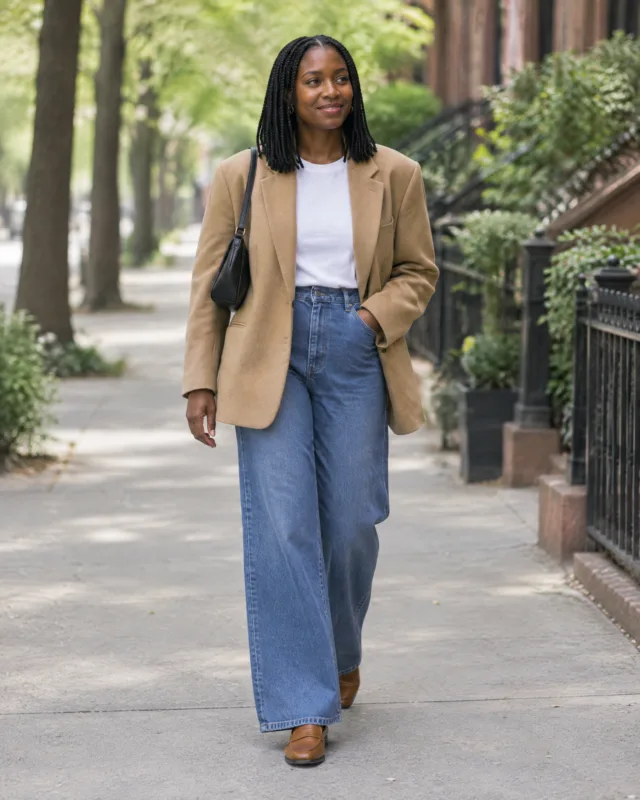
Effortlessly elegant with a fashion-aware edge. Key pieces: tailored blazer, silk blouse, wide-leg trousers, ballet flats, a structured bag. Colors: black, white, cream and one statement shade.
Bohemian
Free-spirited and earthy. Key pieces: flowing maxi dresses, peasant blouses, fringe, suede, layered jewelry, sandals. Colors: rust, mustard, olive, warm prints.
Minimalist
Clean lines, few details and quality fabrics. Key pieces: simple knits, straight trousers, slip skirts, unembellished leather shoes. Colors: neutrals and tonal palettes.
Romantic
Soft and feminine. Key pieces: florals, ruffles, lace, puff sleeves, midi skirts, delicate jewelry. Colors: blush, lavender, cream, soft florals.
Edgy
Bold and slightly rebellious. Key pieces: leather jacket, combat or moto boots, hardware details, asymmetric cuts. Colors: black, charcoal, metallics.
Grunge
Undone, layered and nineties-influenced. Key pieces: flannel shirts, band-style tees, slip dresses over tees, ripped denim, chunky boots. Colors: muted darks, plaids, washed black.
Streetwear
Urban, graphic and sneaker-driven. Key pieces: hoodies, oversized tees, cargo pants, track jackets, statement sneakers, caps. Colors: bold graphics with black, white and gray.
Sporty and Athleisure
Performance pieces worn outside the gym. Key pieces: leggings, bike shorts, zip-up layers, technical jackets, clean trainers. Colors: monochrome sets and crisp brights.
Preppy
Collegiate and neat. Key pieces: cable knits, pleated skirts, button-downs, blazers, loafers, headbands. Colors: navy, white, red, kelly green, stripes and plaids.
Vintage and Retro
Vintage means actual pieces from past decades; retro means new pieces inspired by them. Key pieces: high-waisted trousers, tea dresses, cat-eye sunglasses, Y2K low-rise or seventies flares depending on the era you love.
Business Casual
Polished workwear without a full suit. Key pieces: tailored trousers, midi skirts, knits, blouses, blazers, loafers or low heels. Colors: neutrals with soft color accents.
Glam
Statement, sparkle and drama. Key pieces: sequins, satin, faux fur, bodycon or sculpted dresses, heels, bold jewelry. Colors: black, gold, silver, jewel tones.
Fashion Styles Comparison Table
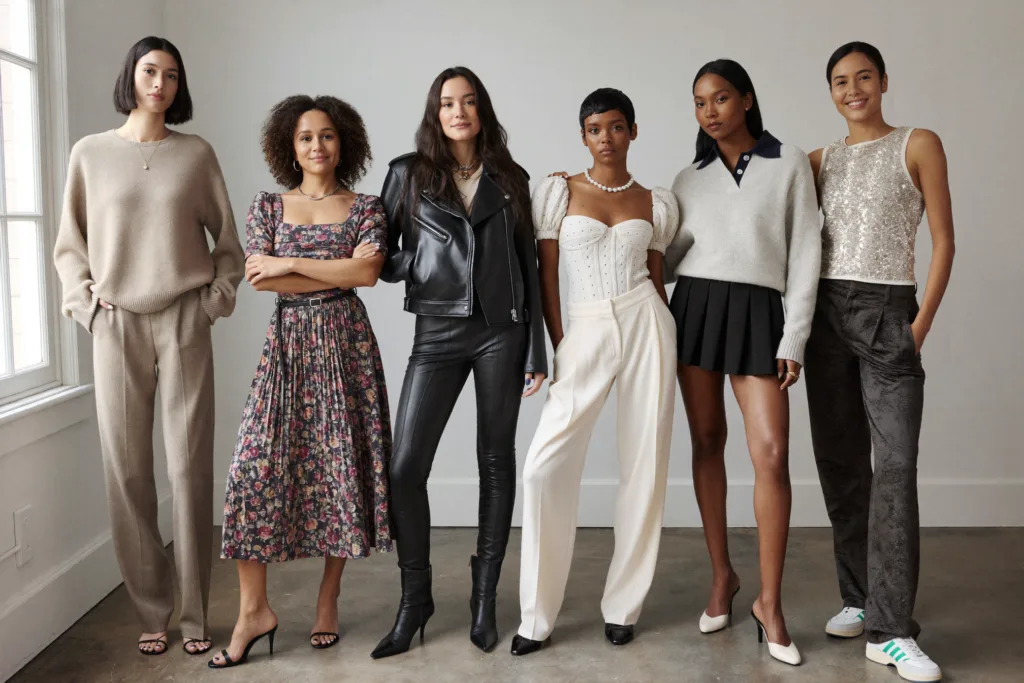
This table compares the main fashion styles side by side, with key pieces, typical colors, best occasions and the personality words each style tends to project. Use it to spot overlaps: styles that share colors or pieces, such as classic and minimalist or boho and romantic, are the easiest to blend into one signature look.
| Style | Key pieces | Colors | Best occasions | Personality keywords |
|---|---|---|---|---|
| Classic | Trench, white shirt, loafers | Navy, camel, white | Work, dinners, travel | Timeless, reliable |
| Casual | Jeans, tees, sneakers | Any, mostly neutrals | Weekends, errands | Relaxed, practical |
| Chic | Blazer, silk blouse, flats | Black, cream, one accent | City, events | Polished, confident |
| Bohemian | Maxi dress, fringe, sandals | Earth tones, prints | Festivals, vacations | Free, creative |
| Minimalist | Clean knits, straight pants | Neutrals | Work, everyday | Calm, intentional |
| Romantic | Florals, lace, ruffles | Pastels, blush | Dates, garden parties | Soft, dreamy |
| Edgy | Leather jacket, boots | Black, metallics | Nights out, concerts | Bold, independent |
| Grunge | Flannel, slip dress, boots | Muted darks, plaid | Casual, music events | Laid-back, nonconformist |
| Streetwear | Hoodie, cargos, sneakers | Graphics, black, white | Everyday, city | Urban, current |
| Sporty | Leggings, zip-ups, trainers | Monochrome, brights | Active days, travel | Energetic, comfortable |
| Preppy | Cable knit, pleated skirt | Navy, red, green | Campus, brunch | Neat, cheerful |
| Vintage/Retro | Era-specific dresses, flares | Era palettes | Parties, everyday | Nostalgic, playful |
| Business casual | Trousers, knits, blazer | Neutrals | Office | Professional, approachable |
| Glam | Sequins, satin, heels | Jewel tones, metallics | Parties, galas | Dramatic, luxe |
Types of Dresses
The main types of dresses are named by their silhouette: A-line, sheath, wrap, slip, fit-and-flare, shift, bodycon, empire waist and maxi. Silhouette describes the outline the dress creates on the body, and it is the single most useful term to know when shopping, because it tells you how a dress will fit before you try it on. For pictures of 30+ styles, see our full guide to the types of dresses.
- A-line: fitted at the top, flaring gently to the hem like the letter A. Flattering on most figures.
- Sheath: close-fitting, straight, usually knee-length; a workwear staple.
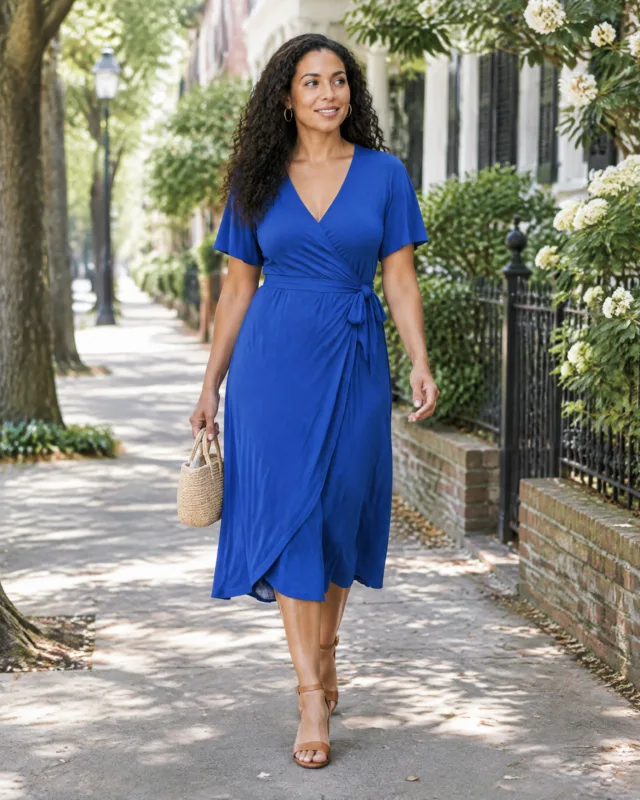
- Wrap: one side crosses over the other and ties at the waist, creating a V-neck.
- Slip: a simple, often bias-cut dress with thin straps, originally inspired by lingerie.
- Fit-and-flare: fitted through the waist, with a fuller skirt than an A-line.
- Shift: straight and loose from shoulder to hem, with no defined waist.
- Bodycon: stretchy and body-hugging from top to bottom.
- Empire waist: the seam sits just under the bust, with a flowing skirt below.
- Maxi, midi, mini: names for length rather than shape: ankle, mid-calf and above the knee.
Types of Pants, Jeans and Skirts
Pants, jeans and skirts are mostly described by their leg or skirt shape and by their rise, which is where the waistband sits on your body. Common pant types include wide-leg, straight, tapered, flared and cropped; jeans follow similar shapes; skirts are named by silhouette, such as pencil, A-line, pleated and slip.
Pants: wide-leg, straight, tapered or cigarette, bootcut, flare, palazzo, culottes, joggers, cargo and paperbag-waist. Our visual guide to types of pants explains each cut.
Jeans: skinny, straight, slim straight, bootcut, flare, wide-leg, mom (high rise, relaxed through the hip, tapered), boyfriend (loose and slouchy) and barrel or curved leg. Our guide to the types of jeans explains how each cut fits.
Rise: low rise sits below the navel, mid rise near it and high rise at or above it.
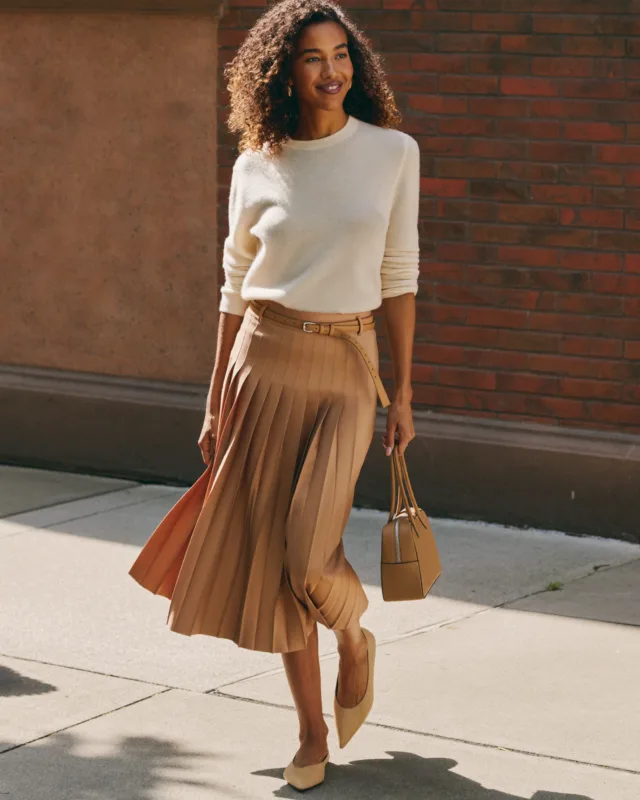
Skirts: pencil (narrow and straight), A-line, pleated, circle (full, cut in a circle), slip (bias-cut and fluid), wrap, tiered, denim and maxi.
Types of Shoes, Heels and Boots
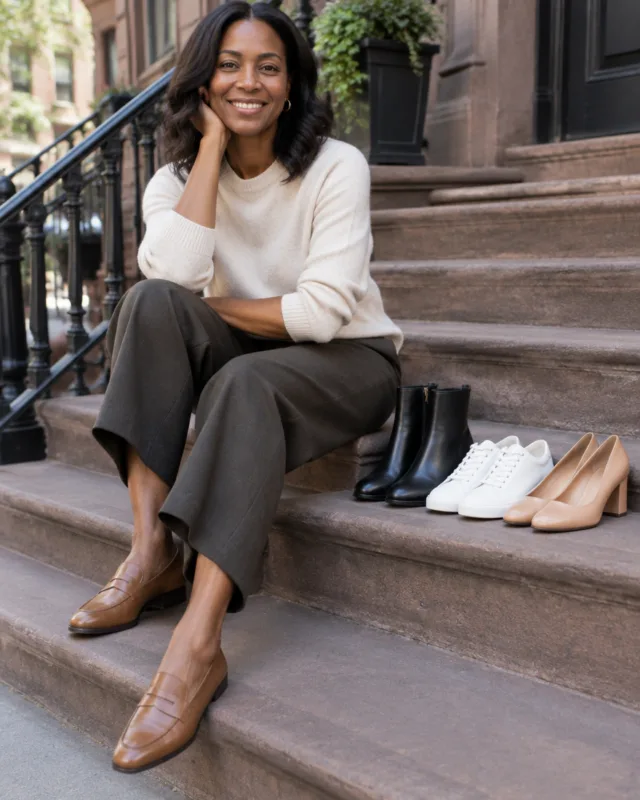
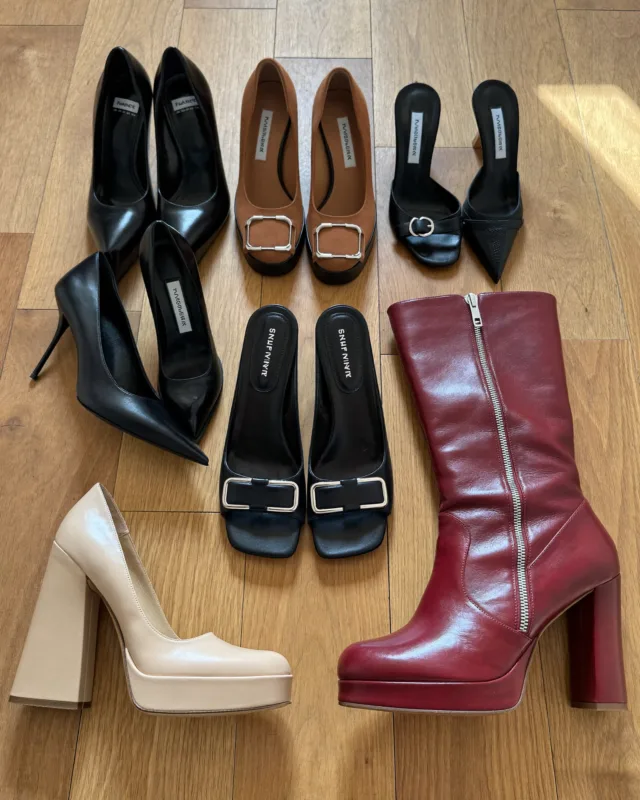
Shoe types are grouped by height and coverage: flats such as ballet flats and loafers, heels from kitten to stiletto, and boots from ankle to over-the-knee. Knowing the names of heel shapes and boot heights helps you match shoes to outfits and dress codes, and to choose comfortable options for long days. Our guide to types of boots for women covers every height from ankle to over-the-knee. For 50 named styles, see our guide to types of shoes.
| Category | Common types | Quick note |
|---|---|---|
| Flats | Ballet flats, loafers, mules, oxfords, espadrilles | Everyday and work-friendly |
| Sneakers | Low-top, high-top, platform, slip-on | Casual to smart casual |
| Heels | Kitten, block, stiletto, wedge, platform, slingback | Block and kitten are easiest to walk in |
| Sandals | Slides, strappy, gladiator, flatforms | Warm weather, dressy or casual |
| Boots | Ankle, Chelsea, combat, knee-high, over-the-knee, cowboy | Height changes which hemlines work best |
Types of Bags
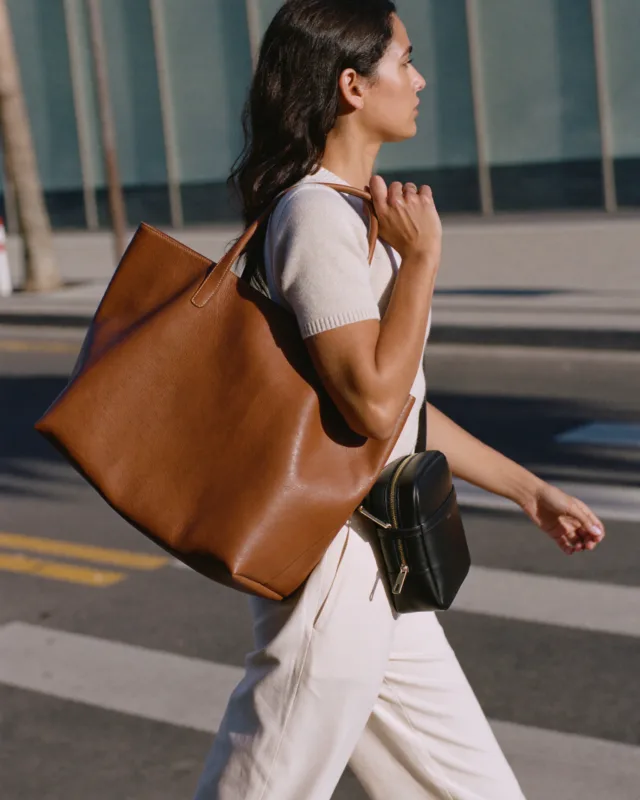
The main types of bags are tote, crossbody, shoulder bag, clutch, hobo, satchel, bucket bag, backpack and belt bag. Each is defined by its shape, size and how it is carried, which makes it more suited to certain days: totes for work and errands, crossbodies for hands-free city days and clutches for evening events.
- Tote: large, open-top bag with two handles; fits a laptop or groceries.
- Crossbody: small to medium bag on a long strap worn across the body.
- Shoulder bag: medium bag with a shorter strap that sits under the arm.
- Clutch: small, handle-free evening bag carried in the hand.
- Hobo: slouchy, crescent-shaped bag with a single strap.
- Satchel: structured bag with a flat bottom, top handle and often a strap.
- Bucket bag: cylinder-shaped with a drawstring top.
- Backpack and belt bag: casual, hands-free options.
Types of Coats and Outerwear
Coats and outerwear are named by their length, cut and origin: trench coat, peacoat, wrap coat, puffer, parka, blazer, leather moto jacket, denim jacket and shacket. A few classic layers cover most climates and dress codes, so learning these names makes it easy to identify which piece your wardrobe is missing.
- Trench coat: belted, double-breasted, water-resistant coat, usually in khaki.
- Peacoat: short, double-breasted wool coat with wide lapels.
- Wrap coat: collarless or shawl-collar coat that closes with a belt.
- Puffer: quilted, insulated jacket in short or long lengths.
- Parka: long, hooded, weather-resistant coat for cold climates.
- Blazer: tailored jacket that works as a light layer.
- Moto jacket: cropped leather or faux leather jacket with an asymmetric zip.
- Shacket: a hybrid of shirt and jacket, often in wool or flannel.
Necklines and Sleeves Explained
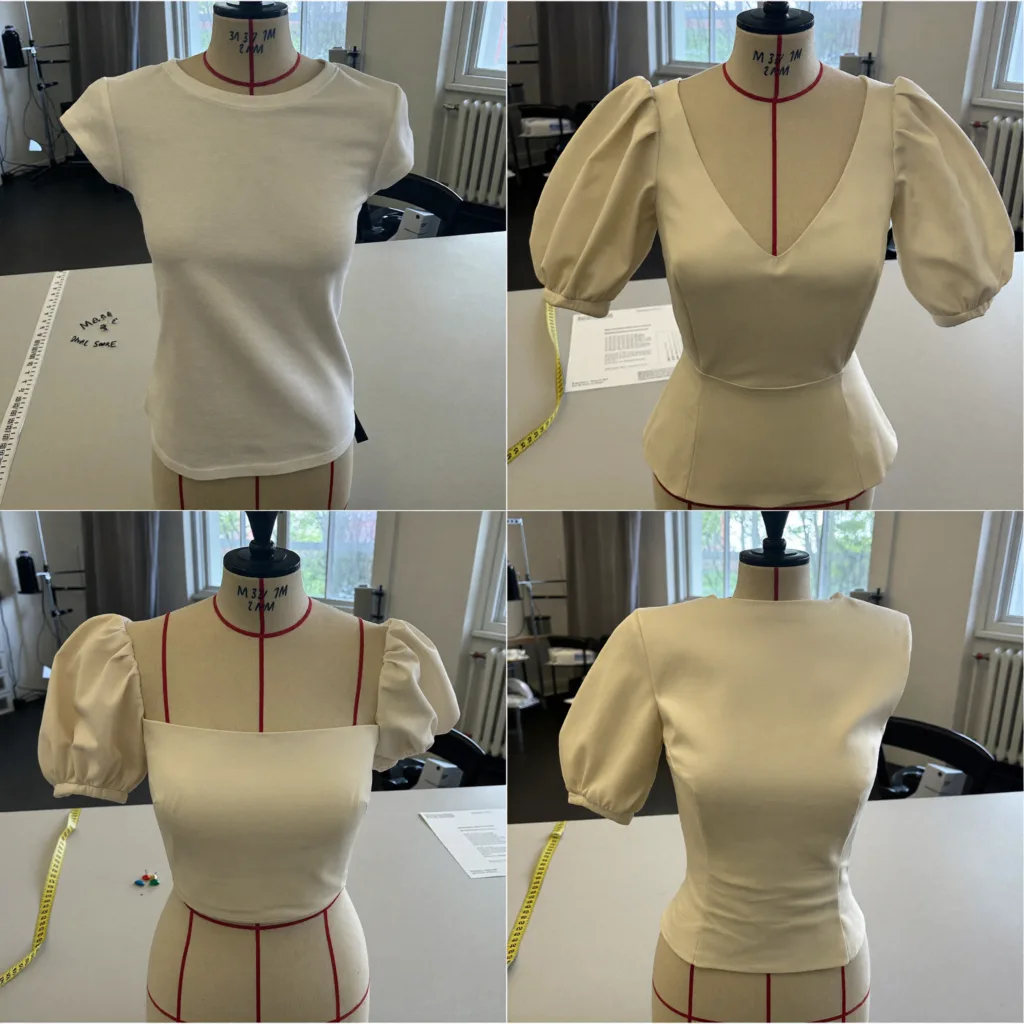
Necklines and sleeves frame the face and shoulders, so they shape how a top or dress fits and flatters more than almost any other detail. Common necklines include crew, V-neck, scoop, square, sweetheart, boat, halter and off-the-shoulder; common sleeves include cap, puff, bishop, raglan, flutter and bell.
Necklines: crew (round and close to the neck), V-neck, scoop (lower, rounded), square, sweetheart (curved like the top of a heart), boat or bateau (wide and shallow across the collarbone), halter (straps around the back of the neck), cowl (draped folds), mock neck and off-the-shoulder.
Sleeves: sleeveless, cap (very short and covering just the shoulder), short, elbow, three-quarter, long, puff, bishop (full and gathered at a cuff), bell (flaring from elbow to wrist), flutter (short and loose), raglan (seam runs diagonally to the collar) and dolman or batwing (cut wide into the body). For pictures of each shape, see our full guide to types of sleeves.
Stylist’s tip
When a top or dress looks “off” but you cannot say why, check the neckline before anything else. A slightly wider or deeper neckline often balances broad shoulders or a fuller bust, while a higher, closer neckline can balance narrow shoulders. Knowing the right term also makes it far easier to explain the fix to a tailor.
Essential Fashion Terms A–Z
Fashion terms are the technical words used to describe how clothes are cut, constructed and worn. Knowing a few dozen of them makes product descriptions easier to read, helps you talk to tailors and lets you spot quality. Here are 30 essential fashion terms with plain-English definitions you can use right away.
- Appliqué: fabric or decoration stitched onto the surface of a garment.
- Asymmetric: a cut that differs on each side, such as a one-shoulder top.
- Bias cut: fabric cut diagonally to the grain so it drapes and skims the body.
- Capsule wardrobe: a small, mix-and-match collection of versatile pieces.
- Color blocking: wearing large, solid blocks of contrasting colors together.
- Cropped: shortened, usually above the waist or ankle.
- Dart: a stitched fold that shapes fabric to the body.
- Drape: how a fabric falls and hangs.
- Empire waist: a waistline placed just below the bust.
- Fit and flare: fitted bodice with a flared skirt.
- Gathering: fabric pulled together along a seam to create fullness.
- Hemline: the bottom edge of a skirt, dress or pants.
- Inseam: the length of the inner leg seam, from crotch to hem.
- Jacquard: a fabric with a pattern woven in, not printed.
- Lining: an inner layer that improves structure, comfort and drape.
- Monochrome: an outfit built from one color in different shades.
- Notch lapel: the classic V-shaped cut where a jacket collar meets the lapel.
- Oversized: intentionally cut larger than the body for a relaxed look.
- Peplum: a short flared ruffle or panel at the waist of a top or jacket.
- Pleat: a fold of fabric pressed or stitched in place.
- Princess seams: curved vertical seams that shape a garment without darts.
- Rise: the distance from the crotch seam to the waistband.
- Ruching: fabric gathered into soft, repeated folds.
- Silhouette: the overall outline a garment creates.
- Smocking: decorative stitched gathering, often stretchy.
- Tailoring: precise cutting and fitting, usually for jackets and trousers.
- Tonal dressing: combining close shades of one color family.
- Twill: a sturdy fabric with a diagonal weave, like denim or chino.
- Waistband: the strip of fabric that finishes the top of pants or skirts.
- Yoke: a fitted panel at the shoulders or hips from which the rest of the garment hangs.
How to Find Your Personal Style
To find your personal style, choose three words that describe how you want to look and feel, test them against your real weekly schedule and then mix two style families on purpose. This turns a vague goal into a filter you can use for every purchase, so your closet starts working together instead of against you.
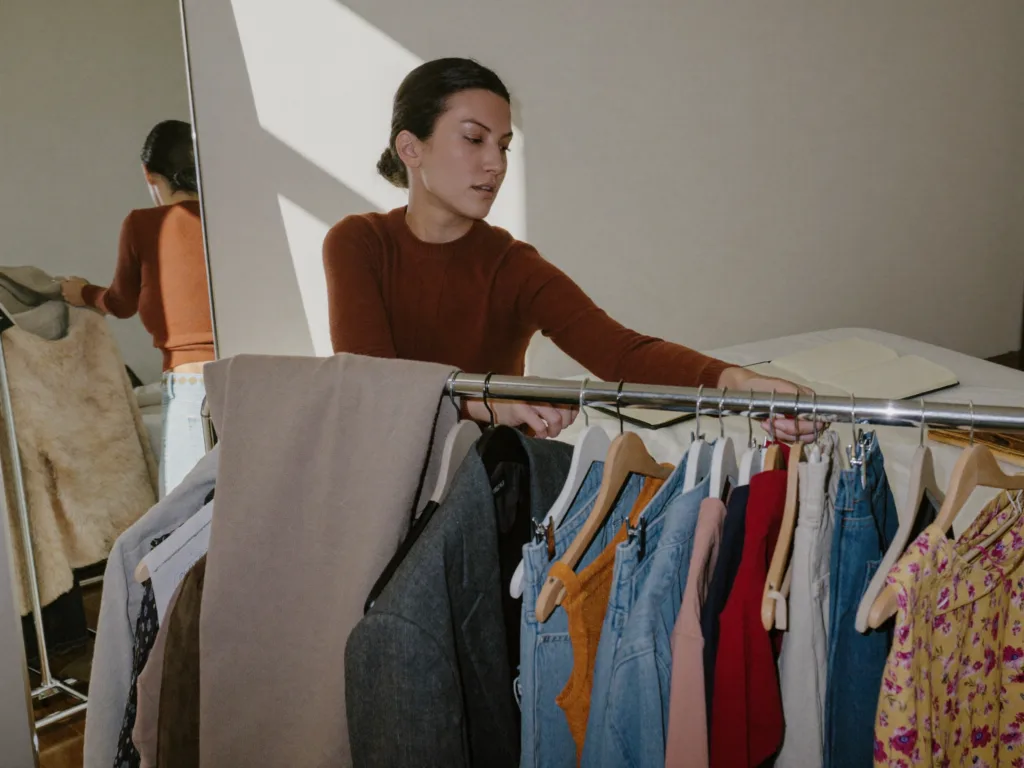
Identify 3 Style Words
- Pull out the five pieces you wear most and the five outfits you feel best in.
- Write down what they share: color, shape, fabric, mood.
- Distill that into three words, such as “polished, relaxed, warm” or “sleek, bold, practical.”
- Use those words as a test: if a new piece does not match at least two of them, skip it.
Check Your Lifestyle
Your style has to fit the life you actually live. List how your week breaks down, for example office days, remote days, weekend errands, evenings out. Then compare that to your closet. If most of your days are casual but most of your clothes are formal, shift your style words toward comfort and versatility rather than buying more occasion pieces. When an event does call for something specific, our guide to dress code types explains what each one means.
Mix Two Styles
The most memorable personal styles combine two families. Pick one as your base (about 70 to 80 percent of your outfit) and one as your accent (the rest).
| Base style | Accent style | What it looks like |
|---|---|---|
| Classic | Edgy | Trench coat and straight jeans with combat boots |
| Minimalist | Bohemian | Neutral knit dress with layered gold jewelry and suede bag |
| Casual | Chic | Tee and jeans with a sharp blazer and ballet flats |
| Romantic | Streetwear | Floral midi skirt with a hoodie and chunky sneakers |
| Preppy | Glam | Cable knit sweater with a sequin skirt |
Do
- Do build around the pieces you already reach for most.
- Do let one style lead and use the second as an accent.
Don’t
- Force yourself into a single label if it doesn’t fit your life.
- Buy a whole new wardrobe to match a trend or aesthetic you just discovered.

Frequently asked questions
What are the 7 types of fashion styles?
A widely used model lists seven style types: classic, romantic, dramatic, natural, creative, elegant and sexy or alluring. Each describes a mix of personality and clothing preference. It is one framework among many, so other lists use different names and numbers. Most people find they combine two or three of the seven.
What are the 8 main types of fashion styles?
A practical list of eight everyday fashion styles is casual, classic, chic, bohemian, minimalist, streetwear, romantic and sporty. These cover most wardrobes in daily life. The number varies by source, and other lists split or merge categories such as preppy, edgy or vintage, so treat any count as a guide, not a rule.
How many types of fashion styles are there?
There is no official count. Dozens of named styles and hundreds of aesthetics exist, and new ones appear constantly online. Most can be grouped into roughly a dozen core families, such as classic, casual, bohemian, minimalist, edgy and glam, which makes the landscape much easier to navigate.
What are the 12 fashion archetypes?
The 12 archetypes are adapted from Jungian psychology and used by some stylists and brands: innocent, everyman, hero, rebel, explorer, creator, ruler, magician, lover, caregiver, jester and sage. Each suggests a mood for clothing, for example the ruler in structured tailoring or the explorer in practical, rugged pieces.
What is the difference between a fashion style and an aesthetic?
A fashion style is a lasting way of dressing shaped by your personality and lifestyle, such as classic or minimalist. An aesthetic is a mood-driven visual world, often born on social media, that covers clothes, decor and imagery, such as cottagecore. Aesthetics tend to change faster, while a style can last a lifetime.
What are the most popular fashion styles for women?
Casual, classic, minimalist, streetwear and bohemian are among the most broadly popular fashion styles for women, because they are versatile and easy to wear daily. Business casual is also widely worn thanks to office life. Popularity shifts with trends, so choose the styles that suit your life rather than what is most common.