


Vintage aesthetic outfits are looks built from clothing that is genuinely from past decades, or inspired by it, such as 1950s swing dresses, 1970s flare jeans and 1990s slip dresses. The easiest way to wear the style today is to mix one or two vintage pieces with modern basics. It is one of the most popular aesthetic outfits because it feels personal, nostalgic and sustainable at the same time.
Quick answer
Quick answer: The vintage aesthetic borrows silhouettes, fabrics and details from past decades. Pair one era-specific piece with current basics so it looks styled, not costumed.
- Vintage means genuinely old, usually 20+ years; retro means new clothes made in an old style.
- Each decade has a signature: 50s swing, 60s mod, 70s boho, 80s power shoulders, 90s grunge.
- Thrifting, estate sales and online resale are the best sources of real secondhand pieces.
- Vintage sizing runs smaller than modern sizing, so always shop by measurements.
- Wash delicate vintage fabrics gently and store them away from light.
What Is the Vintage Aesthetic? The Quick Answer
The vintage aesthetic is a personal style built on fashion from past decades, using either real secondhand clothing or new pieces inspired by older eras. It often mixes details like Peter Pan collars, high-waisted jeans, cardigans, Mary Janes and cat-eye sunglasses to create a nostalgic, romantic or slightly quirky look.
You do not have to commit to a single decade. Many women blend eras, for example a 70s suede jacket with 90s straight jeans, or a 50s cardigan over a modern slip dress. What ties the look together is a sense of history: older fabrics, classic cuts and accessories that feel collected over time rather than bought all at once.
Vintage vs. Retro vs. Antique: What’s the Difference?
Vintage clothing is genuinely from a past era, and is commonly defined as at least 20 years old. Retro clothing is newly made but designed to look like an earlier decade. Antique usually refers to pieces about 100 years old or more. These are widely used conventions, not strict rules, so sellers may define them slightly differently.
| Term | What it means | Typical age | Example |
|---|---|---|---|
| Vintage | Original clothing from a past era | Commonly 20+ years | A 1980s wool blazer from a thrift store |
| Retro | New clothing made in an older style | Newly made | A new 1950s-style polka dot swing dress |
| Antique | Very old garments, often collectible | Around 100+ years | An Edwardian lace blouse |
| Vintage-inspired | Modern clothes with vintage details | Newly made | Today’s jeans with a 70s flare |
For most everyday outfits, a mix of real vintage and retro pieces is the most practical approach. Retro reproductions come in modern sizing and are easier to wash, while true vintage gives you one-of-a-kind character.
Vintage Aesthetic Outfits by Decade
Vintage aesthetic outfits by decade are easiest to build around one signature silhouette per era: the full-skirted 1950s swing dress, the short 1960s mod shift, 1970s flares and peasant blouses, 1980s power shoulders, and 1990s grunge or Y2K low-rise looks. Start with that hero piece, then add one or two period details.

1950s
The 1950s are all about a defined waist and full skirt, the classic pin-up silhouette.
- Swing dress + fitted cardigan + Mary Janes + cat-eye sunglasses.
- High-waisted cigarette pants + tucked gingham blouse + ballet flats + headscarf.
- Full circle skirt + fitted knit top + wide belt + kitten heels.
1960s
The 1960s brought the mod look: graphic, youthful and shorter hemlines.
- A-line shift dress + opaque tights + low block-heel boots.
- Peter Pan collar dress + cropped cardigan + Mary Janes.
- Turtleneck + mini skirt + bold geometric earrings.
1970s
The 1970s mixed bohemian softness with denim and earthy colors.
- 1970s flare jeans + peasant blouse + platform sandals + fringe bag.
- Suede jacket + turtleneck + corduroy flares + clogs.
- Floral maxi dress + crochet vest + wide-brim hat.
1980s
The 1980s were bold, with power shoulders, bright colors and lots of attitude.
- Oversized shoulder-pad blazer + high-waisted mom jeans + loafers.
- Batwing sweater + leggings + slouchy boots.
- Bright colorblock dress + statement earrings + pumps.
1990s and Y2K
The 1990s favored minimal and grunge looks, while Y2K added shine and low rises.
- Slip dress + white tee underneath + chunky boots.
- Plaid flannel + band tee + ripped straight jeans + combat boots. Our guide on how to style a flannel has more grunge-friendly ideas.
- Low-rise flare pants + baby tee + mini shoulder bag + tinted sunglasses.
Stylist’s tip
Pick one decade per outfit as your anchor, then let a single accessory from another era sneak in. A 70s flare jean with a 90s baby tee reads as intentional, while mixing four decades at once can look chaotic.
Modern Vintage Outfits for Everyday Wear
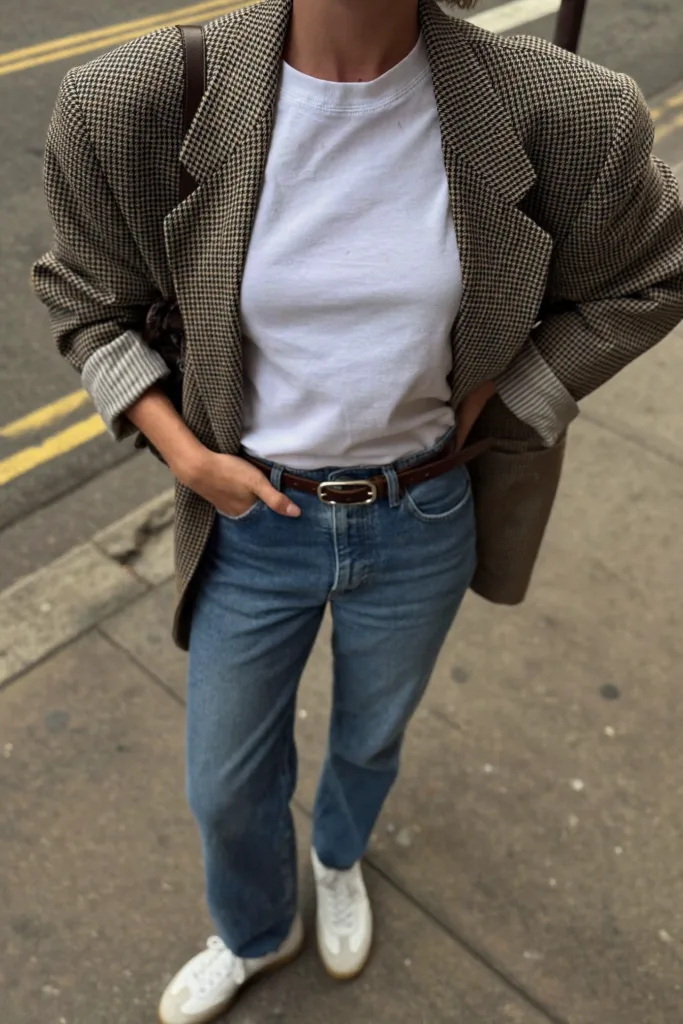
Modern vintage outfits pair one standout vintage piece with current basics, so the look feels wearable at work, on weekends and out to dinner. A thrifted 80s blazer over a plain tee and modern jeans, or a 70s floral blouse with black trousers, keeps the vintage piece as the star without looking like a costume.
Use this simple formula: one vintage hero piece + two modern basics + one subtle period accessory.
- Office: vintage silk blouse + tailored high-waisted trousers + modern loafers. Our guide on how to style high-waisted pants helps you balance the proportions.
- Weekend: 90s mom jeans + fitted white tee + modern sneakers + a vintage leather belt.
- Dinner: 1960s shift dress + sleek sandals + simple gold hoops.
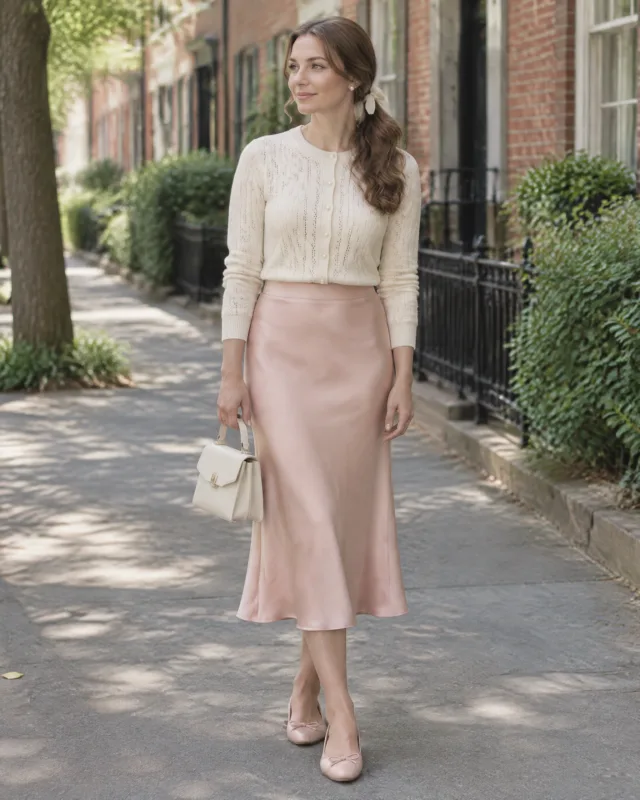
- Errands: vintage cardigan + slip skirt + white sneakers.
- Date night: satin 90s slip dress + modern blazer + strappy heels.
Keep hair and makeup current. A sleek ponytail or soft waves with natural makeup modernizes even the most era-specific dress. This approach also works for every size, because you can choose modern basics in your exact fit and add vintage through accessories or roomier pieces like cardigans, blazers and maxi skirts.
Do
- Pair one vintage piece with modern basics.
- Tailor vintage finds so they fit your body today.
- Mix textures, like denim with lace or wool with silk.
- Keep hair and makeup modern for an updated feel.
Don’t
- Wear head-to-toe pieces from one decade unless it is a theme party.
- Buy pieces with stains, odors or damage you cannot fix.
- Ignore fabric content labels when washing.
- Choose by size number alone without checking measurements.
Vintage Aesthetic Sub-Styles
The vintage aesthetic includes several popular sub-styles. Cottagecore draws on romantic, rural dressing with prairie dresses and florals. Fairycore adds whimsical, airy layers and soft pastels. Preppy vintage borrows from classic collegiate dressing with cable knits, pleated skirts and loafers. Each sub-style mixes old-fashioned details with its own mood.
Cottagecore
Cottagecore centers on puff sleeves, smocked or prairie dresses, gingham, eyelet cotton, floral prints and straw baskets. Pair a midi prairie dress with a knit cardigan and simple flats for a gentle, countryside look.
Fairycore
Fairycore leans whimsical: sheer layers, tulle skirts, lace, corsets worn over blouses and earthy or pastel tones. Delicate jewelry and nature-inspired accessories complete the look.
Preppy Vintage
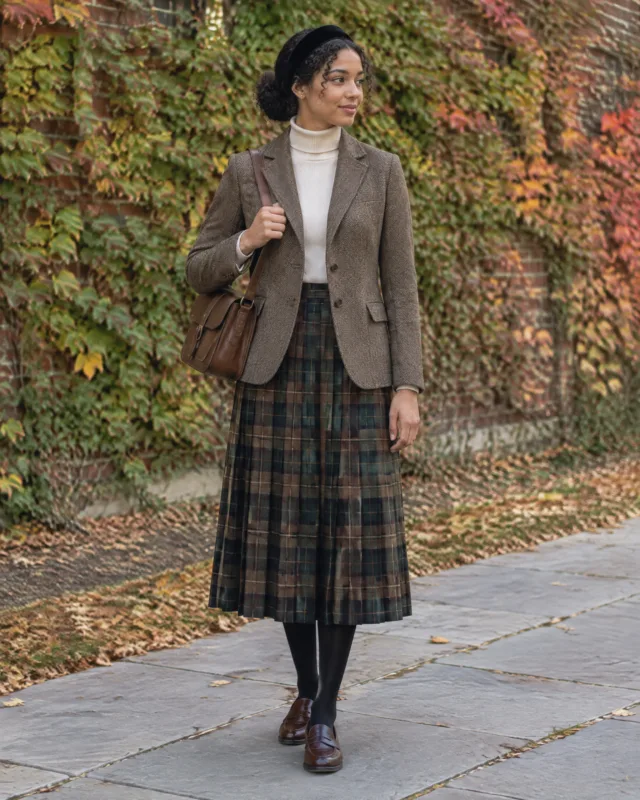
Preppy vintage draws on classic collegiate style: cable-knit sweaters, pleated skirts, button-down shirts, blazers, knee socks and penny loafers. It fits nicely into smart casual dress codes. For more modern takes on the look, browse our preppy outfit ideas. Explore how this compares with other looks in our guide to types of fashion styles.
Key Pieces to Build a Vintage Wardrobe
To build a vintage wardrobe, start with versatile staples that work with modern clothes: high-waisted mom jeans, a fitted cardigan, a silk or peasant blouse, a midi skirt, a slip dress, a structured blazer, Mary Janes or loafers, and cat-eye sunglasses. These pieces create many outfits across decades.
| Piece | Era it nods to | Easy pairing |
|---|---|---|
| High-waisted mom jeans | 80s and 90s | Tucked tee or blouse |
| Fitted cardigan | 50s and 60s | Slip dress or jeans |
| Peasant blouse | 70s | Flares or denim shorts |
| Slip dress | 90s | Tee underneath or blazer over |
| Pleated midi skirt | 50s and 70s | Knit top and loafers |
| Oversized blazer | 80s | Tee and straight jeans |
| Mary Janes | 50s and 60s | Skirts, dresses, cropped pants |
| Cat-eye sunglasses | 50s and 60s | Almost anything |
These staples also work with the 3-3-3 approach: three vintage-leaning tops, three bottoms and three pairs of shoes can be combined into dozens of distinct looks.
Where and How to Shop for Vintage Clothing
Shop for vintage clothing at thrift stores, consignment shops, dedicated vintage boutiques, flea markets, estate sales and online resale platforms. Check every piece for fabric content, seams, zippers, stains and odors before you buy. Vintage sizing usually runs smaller than modern sizing, so rely on measurements instead of the size label.
Follow this checklist when thrifting:
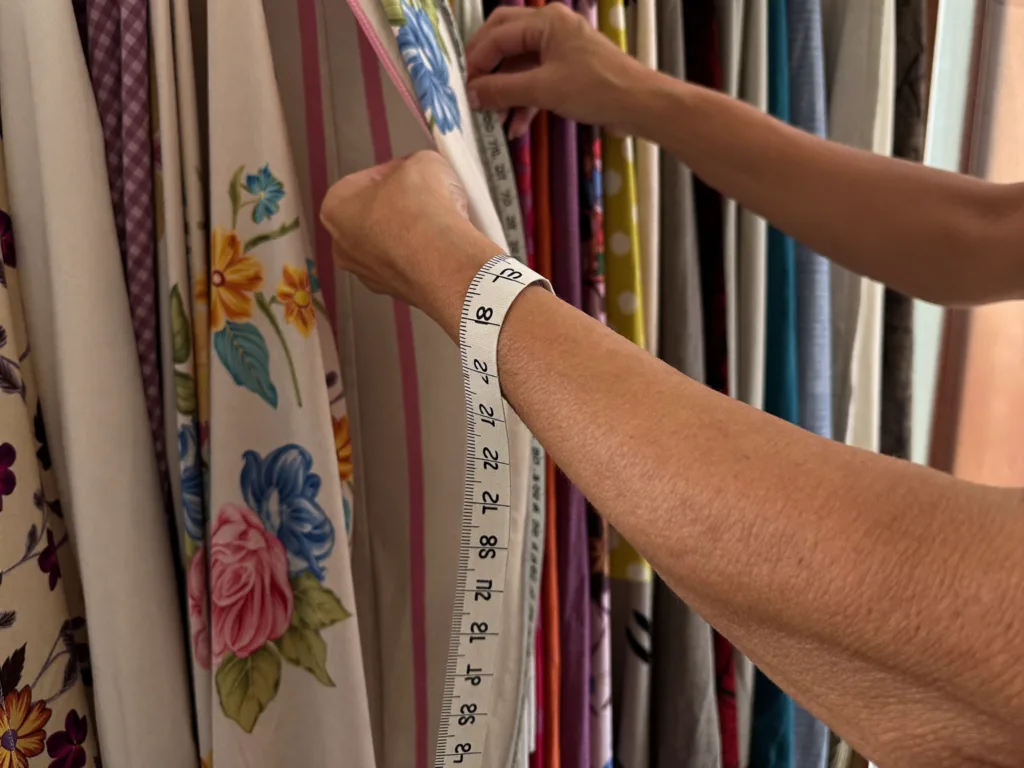
- Bring your measurements. Know your bust, waist, hips and inseam, and carry a tape measure.
- Check the label. Look for natural fibers such as wool, silk, cotton and linen, which tend to age better.
- Inspect seams and closures. Pull gently at seams and test zippers, buttons and snaps.
- Look in good light. Check underarms, collars and hems for stains, holes or fading.
- Smell it. Musty odors can sometimes be removed, but heavy smoke or mildew may not.
- Consider alterations. Hems and waists are easy to adjust; shoulders and bust are harder and more expensive.
Buying secondhand is also a form of sustainable fashion, since it keeps existing clothes in use longer. Many younger shoppers, including Gen Z, are drawn to vintage for its uniqueness, nostalgia and lower environmental impact.
Caring for Vintage Clothes
Care for vintage clothes by hand washing or using a gentle cold cycle, using mild detergent, and laying pieces flat or hanging them to air dry. Spot test before washing anything with dye or embellishments, and dry clean delicate silk, structured wool and beaded garments. Store pieces away from sunlight, heat and moisture.
A few key care habits:
- Read the fabric: Older pieces may lack care labels, so identify the fiber first and treat it accordingly.
- Wash less often: Air out garments between wears and spot clean small marks.
- Use padded hangers: These protect shoulders on blazers and dresses.
- Fold heavy knits: Hanging stretches sweaters, so fold them with tissue.
- Protect from pests: Cedar blocks and breathable garment bags help guard wool and silk.
For washing methods by fabric type, see our full guide on how to wash clothes.
Frequently asked questions
What is a vintage aesthetic?
A vintage aesthetic is a style built on fashion from past decades, using either real secondhand clothing or new pieces designed to look older. It often includes high-waisted jeans, cardigans, slip dresses, Mary Janes and cat-eye sunglasses. Many women mix several eras together to create a look that feels nostalgic and personal.
What are some vintage outfit ideas?
Popular vintage outfit ideas include a 1950s swing dress with a cardigan and Mary Janes, 1970s flare jeans with a peasant blouse and platforms, an 80s shoulder-pad blazer with mom jeans, and a 90s slip dress layered over a white tee with chunky boots. Each look builds on one signature decade piece.
How can I dress vintage without looking like a costume?
Pair one vintage piece with modern basics, such as a thrifted blazer with current jeans and sneakers. Keep hair and makeup modern, avoid wearing everything from a single decade and tailor vintage finds to fit you well. A single era-specific accessory is usually enough to signal the aesthetic.
Why does Gen Z love vintage clothing?
Gen Z is drawn to vintage clothing for its uniqueness, nostalgia and sustainability. Secondhand pieces are often one of a kind, which helps shoppers stand out from mass-produced trends. Thrifting can also be more affordable, and buying used clothing keeps garments in circulation longer, which appeals to environmentally minded shoppers.
What is the difference between vintage and retro?
Vintage clothing is genuinely from a past era and is commonly considered at least 20 years old. Retro clothing is newly made but designed to imitate an older style. A thrifted 1970s dress is vintage, while a brand-new dress made in a 70s style is retro. Both fit the vintage aesthetic.
What is the 3-3-3 rule in fashion?
The 3-3-3 rule is a capsule mixing exercise where you choose three tops, three bottoms and three pairs of shoes, then combine them into as many outfits as possible. With vintage staples like mom jeans, a cardigan and Mary Janes, nine pieces can easily create more than 20 distinct looks.

1 comment
Comments are closed.