


To wash silk safely, hand wash it in cold or lukewarm water with a small amount of pH-neutral, enzyme-free detergent, swish gently for a few minutes, rinse in cool water, then press out the water in a towel and air dry flat away from sunlight. Most washable silk can also go in a machine on a cold delicate cycle inside a mesh bag. For everything else in your hamper, see our guide on how to wash clothes. To compare silk with other fibers, see our types of fabric guide.
Quick answer
Quick answer: Spot test, wash cold with a gentle silk-safe detergent, never wring or tumble dry, and air dry in the shade.
- Use a pH-neutral delicates detergent or a mild baby shampoo, never bleach or enzyme detergents.
- Hand washing is safest; machine wash only on a cold delicate cycle in a mesh bag with low spin.
- Roll silk in a towel to remove water instead of wringing it.
- Iron on the reverse side on the lowest setting, or use a steamer.
How to Wash Silk: Quick Steps
Washing silk takes five steps: read the care label, test a hidden spot for color bleeding, wash in cold water with a gentle detergent, rinse without wringing, and air dry flat out of direct sunlight. The whole process takes about 15 minutes of hands-on time and works for most blouses, scarves, slips and pillowcases. Silk is a staple of formal dressing, and our wedding guest outfits hub shows how to wear it to each dress code.
- Check the label.
- Spot test an inside seam.
- Wash in cold water with silk-safe detergent.
- Rinse and press out water.
- Dry flat away from heat and sun.
Before You Wash: Check the Label and Test Colorfastness
Before washing silk, read the care label and do a quick colorfastness test. Dampen a white cotton swab with cool water and a drop of detergent, then press it on an inside seam for a few seconds. If color transfers to the swab, the dye may bleed, and the piece is safer with a professional cleaner.
“Dry clean” usually means the manufacturer recommends it, while “dry clean only” signals a higher risk. Bright dyes, prints and fine weaves like chiffon are most likely to bleed or change texture.
Can You Wash Dry-Clean-Only Silk?
You can often hand wash simple, unlined dry-clean-only silk after a successful spot test, but you take on some risk. Skip home washing and use a professional cleaner for structured, lined, beaded, embellished or tailored silk, such as blazers, gowns and wedding dresses, because water can distort interfacing and seams.
How to Hand Wash Silk Step by Step
Hand washing is the gentlest way to clean silk. Fill a clean basin with cold or lukewarm water, add about a teaspoon of silk-safe detergent, submerge the garment and swish it softly for three to five minutes. Rinse in fresh cool water until no suds remain, then press, never wring, the water out.
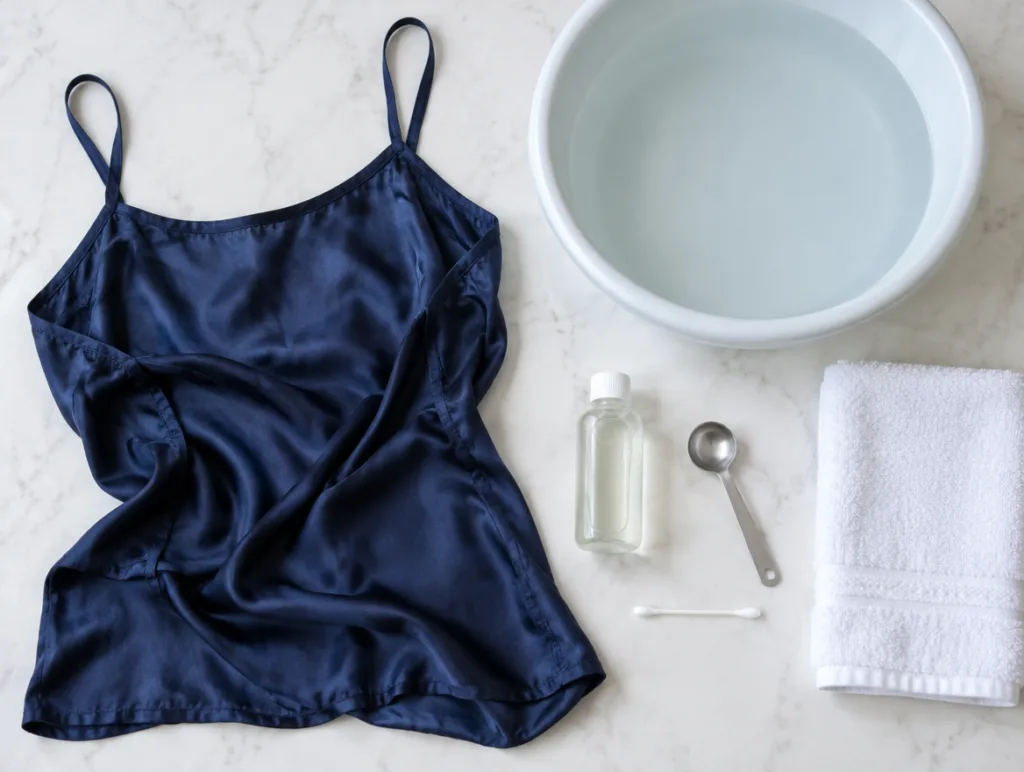
- Fill the basin with cold to lukewarm water, no warmer than 85°F.
- Add detergent: about one teaspoon of pH-neutral delicates detergent per gallon.
- Turn the garment inside out to protect the outer sheen.
- Soak briefly, no more than five minutes, to avoid color loss.
- Swish gently with your hands. Never scrub or rub fabric against itself.
- Rinse in fresh cool water until it runs clear.
- Optional: a final cool rinse with a quarter cup of white vinegar removes soap residue.
- Press out water, then towel dry.
How to Wash Silk in a Washing Machine
To wash silk in a washing machine, turn the item inside out, place it in a mesh laundry bag, and choose the delicate or hand-wash cycle with cold water and the lowest spin setting. Use a small amount of silk-safe detergent, wash it with other lightweight items only, and remove it as soon as the cycle ends.
- Skip fabric softener. It leaves residue and dulls the sheen.
- Remove it promptly so creases and water marks don’t set.
Stylist’s tip
Set the spin to the lowest option or “no spin.” You will remove the remaining water with a towel anyway, and a gentle spin keeps creases from setting.
Best Detergents for Silk (and What to Avoid)
The best detergent for silk is a pH-neutral, enzyme-free liquid made for delicates or silk and wool. Silk is a protein fiber, so enzymes designed to break down protein stains can weaken it. Avoid bleach, optical brighteners, alkaline powders and regular heavy-duty detergents, which can strip the sheen and make fibers brittle.
| Use | Avoid |
|---|---|
| pH-neutral delicates or silk detergent | Chlorine bleach and oxygen bleach |
| Enzyme-free liquid formulas | Detergents with protease or other enzymes |
| Mild baby shampoo | Heavy-duty powder detergents |
| Distilled white vinegar for rinsing | Fabric softener and dryer sheets |
Washing Silk With Shampoo
A gentle, clear baby shampoo is a good substitute for silk detergent because it is mild and low in additives. Use about a teaspoon per basin, and skip conditioning or clarifying formulas.
Washing Silk Without Detergent
For lightly worn silk, a cool water rinse with a splash of white vinegar can freshen it. It will not remove oils or sweat, so use a gentle cleanser for anything visibly dirty.
How to Dry, Iron and Steam Silk
Dry silk by laying it on a clean, dry towel, rolling the towel up to press out water, then hanging it on a padded hanger or laying it flat in the shade. Never use a dryer or direct sunlight. Iron on the reverse side on the lowest silk setting while slightly damp, or use a steamer from a few inches away.
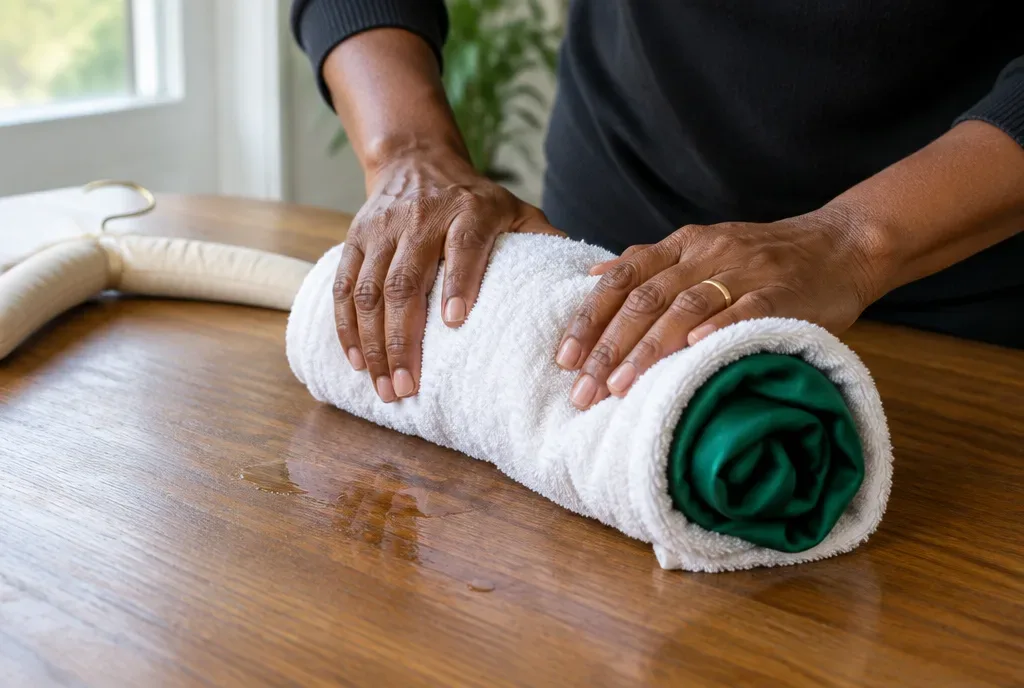
- Air dry: Hang blouses on padded hangers; dry scarves and slips flat.
- Iron with care: Use a pressing cloth and never spray water directly on silk, which can leave spots.
- Steam to refresh wrinkles between washes without direct contact.
How to Remove Stains From Silk
To remove stains from silk, act quickly: blot (never rub) with a clean cloth, rinse the back of the stain with cold water, and dab a drop of silk-safe detergent on the spot. Rinse again and air dry. Avoid hot water, stain sticks with enzymes and bleach, which can leave permanent marks on silk. For sturdier cotton and linen whites that can handle stronger brightening, see our guide on how to wash white clothes.
- Sweat: Dab with equal parts cool water and white vinegar, then wash.
- Oil and makeup: Cover with cornstarch for 30 minutes, brush off, then spot clean.
- Wine or coffee: Blot and rinse from the back with cold water. Leave old or large stains to a professional.
Washing Different Silk Items
Different silk items need small adjustments. Silk blouses and dresses benefit from hand washing after every few wears, silk pillowcases need washing about once a week because they absorb skin oils, and silk scarves are delicate enough that a quick hand wash and flat dry is always the safest choice.
Silk Blouses and Dresses
Wash after two or three wears. Turn blouses inside out, close the buttons and dry on a padded hanger so shoulders keep their shape. Silk blouses are a capsule staple, and if you are building one, our guide to what is a capsule wardrobe shows how to make each piece work harder.
Silk Pillowcases
Wash weekly, inside out, by hand or in a mesh bag on a cold delicate cycle, and dry in the shade. Rotating two pillowcases reduces wear.
Silk Scarves
Hand wash printed scarves individually, as they can bleed. Dry flat on a towel, smoothing the edges so the hem dries straight.
Silk Washing Mistakes to Avoid
The most common silk washing mistakes are using hot water, wringing or twisting the fabric, putting silk in the dryer, choosing an enzyme or bleach-based detergent, and drying in direct sunlight. Each one damages the fine protein fibers, leading to shrinkage, dullness, water spots or fading that is hard to reverse.
Do
- Wash in cold or lukewarm water.
- Use a pH-neutral, enzyme-free detergent.
- Roll silk in a towel to remove water.
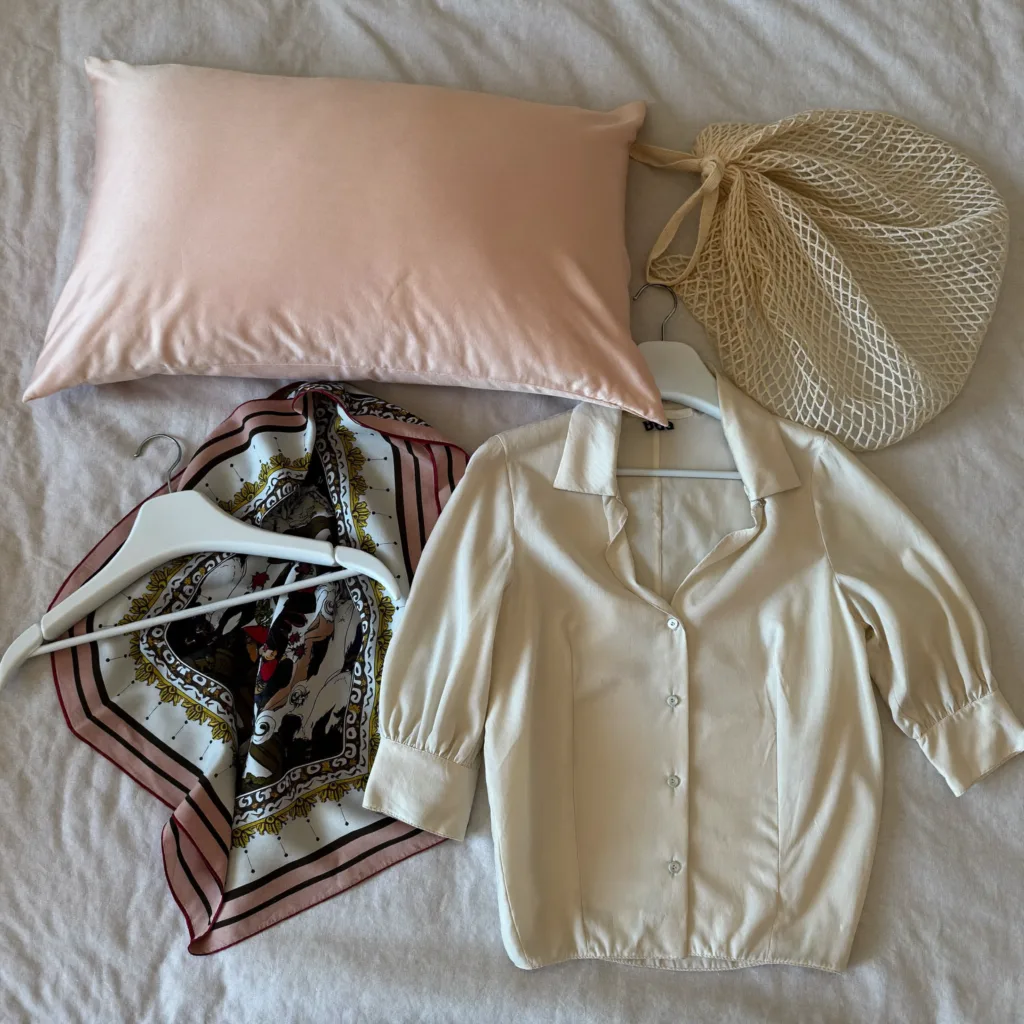
- Store clean silk in breathable cotton bags, not plastic.
Don’t
- Wring, twist or scrub silk.
- Tumble dry silk, even on low heat.
- Use bleach or regular heavy-duty detergent.
- Hang silk to dry in direct sunlight.
Troubleshooting Silk After Washing
| Problem | Likely cause | Fix |
|---|---|---|
| Silk feels stiff | Detergent residue or hard water | Rinse in cool water with a splash of white vinegar, then plain water |
| Lost its sheen | Harsh detergent or friction | Vinegar rinse, then steam lightly; use a gentler detergent next time |
| Water spots | Uneven drying | Re-wet the whole garment and dry evenly |
| Yellowing | Body oils left in storage | Wash before storing; keep in cotton bags away from light |
Store silk clean and dry in a cool, dark closet with cedar or lavender to deter moths, which target protein fibers. Knitwear needs the same care, so see our guide on how to wash a wool sweater for caring for your other protein-fiber pieces. For silk-trimmed accessories, see how to wash a hat.
Frequently asked questions
Can 100% silk be washed?
Yes. Most 100% silk can be hand washed in cold water with a gentle, pH-neutral detergent after a quick colorfastness test on an inside seam. Avoid home washing for structured, lined or embellished silk pieces, and take vividly dyed or printed silk that bleeds during the spot test to a professional cleaner instead.
Is it okay to get silk wet?
Yes. Water by itself does not damage silk. The real problems come from heat, friction, harsh detergents and uneven drying. To prevent water spots, wet the whole garment evenly rather than one area, and dry it flat or on a padded hanger out of direct sunlight so it dries uniformly.
What is the best thing to wash silk with?
The best choice is a pH-neutral, enzyme-free liquid detergent made for delicates or silk and wool. A mild, clear baby shampoo is a good backup. Skip bleach, fabric softener and regular laundry detergent, since enzymes and alkaline formulas can weaken silk’s protein fibers and dull its natural sheen.
Does silk shrink when you wash it?
Silk can shrink if it is washed in hot water or dried in a dryer. To prevent shrinkage, wash in cold or lukewarm water, avoid agitation and always air dry. If a piece shrinks slightly, gently stretch it back into shape while damp and press it with a cool iron.
Can you hand wash silk that says dry clean only?
Often, yes, for simple unlined pieces like scarves, camisoles and plain blouses, as long as a spot test shows no color transfer. Use cold water and a gentle detergent, and keep the wash brief. Take tailored, lined, beaded or heavily structured silk to a professional cleaner instead.
Can you wash silk in a washing machine?
Yes, if the care label allows washing. Turn the item inside out, place it in a mesh laundry bag, and use the delicate cycle with cold water and the lowest spin setting. Wash it only with other lightweight items, use a silk-safe detergent and remove it promptly when the cycle finishes.