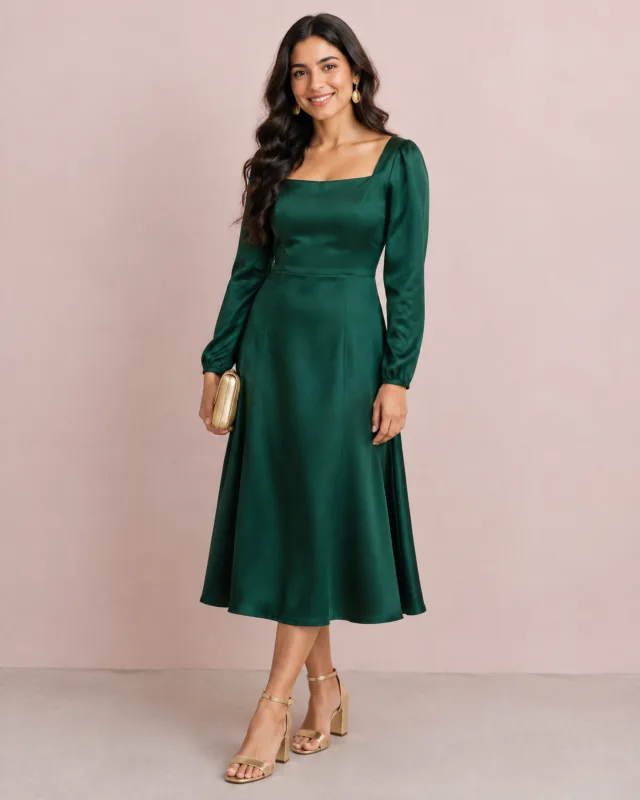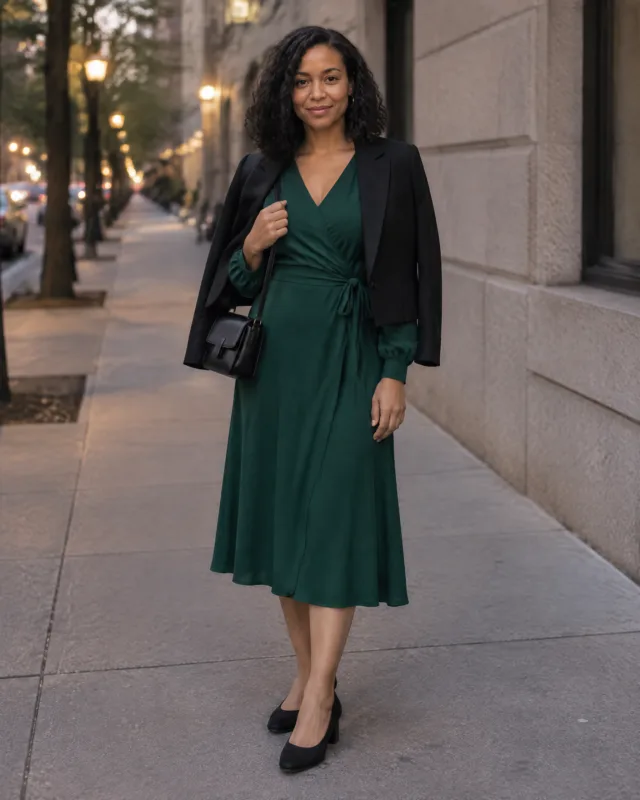

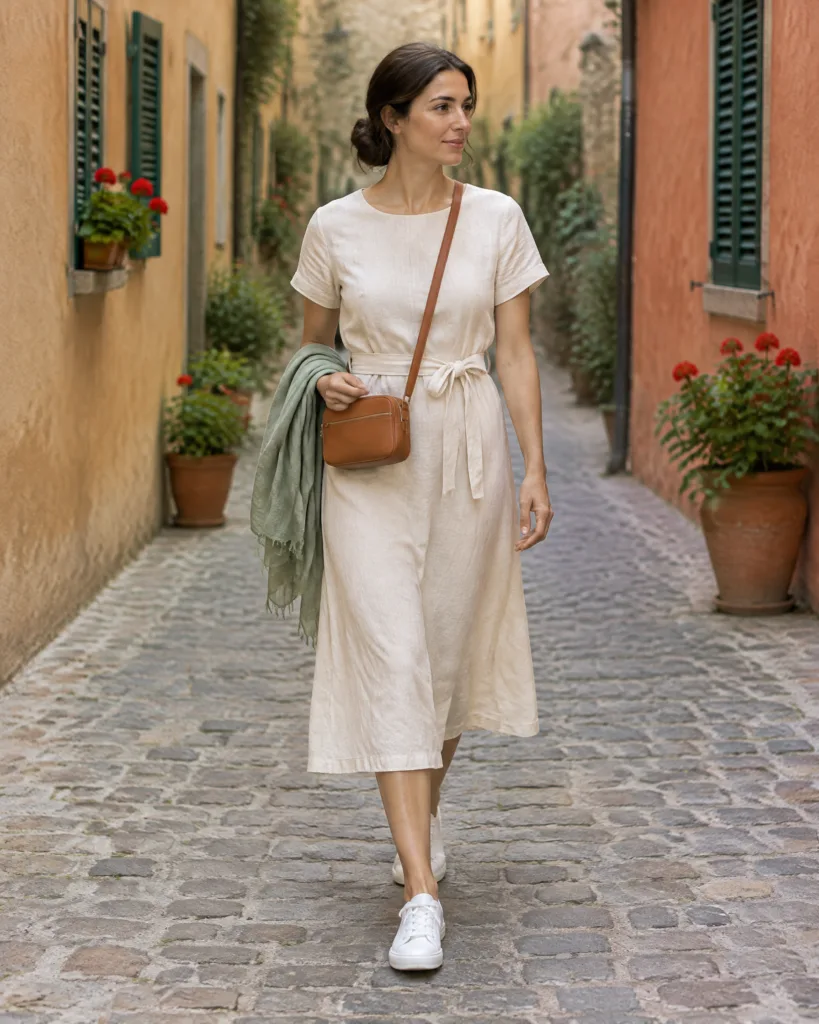
Deciding what to wear in Italy is easier once you know the local approach: polished but relaxed clothes, quality fabrics, a neutral palette and shoes that can handle long days on stone streets.
The quick version: pack fitted neutral basics in linen, cotton and knit, a midi dress or skirt, tailored pants or dark jeans, a light layer, a scarf that covers your shoulders for church visits, and broken-in leather sneakers or loafers. Skip gym wear and flip-flops in cities. For more occasion guides, see our full what to wear hub. For other trips, our vacation outfits by destination hub compares packing lists by climate. For packing basics that work on any trip, see our travel outfits for women guide.
Quick answer
- Italian street style leans polished and simple: neutral colors, good fit and natural fabrics.
- Covered shoulders and knees are commonly requested at churches and religious sites, so carry a scarf or wear a midi skirt.
- Comfortable, broken-in shoes with cushioned soles matter more than anything else on cobblestones.
- Dress for the region: cities call for smart casual, the coast for linen and sandals, the mountains for real layers.
- A small zip crossbody bag worn in front is both stylish and practical in crowded areas.
- A 10-day capsule of about 15 mix-and-match pieces covers sightseeing days and dinners.
What to Wear in Italy: The Quick Answer
Wear neutral, polished and comfortable pieces: linen or cotton tops, tailored pants or dark jeans, midi dresses and skirts, a light jacket or cardigan, and cushioned walking shoes. Carry a scarf so you can cover your shoulders at churches, and add one dressier outfit for evening aperitivo and dinner.
Most travelers find that a smart-casual mindset works everywhere in Italy. That does not mean dressing up all day. It means choosing clothes that fit well, avoiding obvious gym wear in cities, and picking shoes that look neat while still handling hours of walking. A small capsule in two or three colors makes this simple.
How Italian Women Actually Dress
Many Italian women dress in a way that looks effortless but intentional: well-fitted basics, quality fabrics, neutral colors and one or two thoughtful accessories. Comfort matters, but so does looking put together, even for a casual walk. The overall effect is polished rather than flashy, with fit doing most of the work.
The Tourist vs Local Difference
The biggest giveaways are usually not individual items but the overall look: athletic clothes worn all day, large backpacks, logo tees and very casual footwear in the city. Swapping a few pieces, such as leather sneakers instead of running shoes and a crossbody instead of a backpack, makes a big difference.
Fabrics and Colors Italians Favor
Natural fabrics like linen, cotton, silk and leather are popular, especially in warm months. Colors tend toward neutrals such as white, cream, navy, black, camel and olive, often with one accent shade or a simple print. Tailored fits, clean lines and good-quality shoes and bags tie everything together.
What Not to Wear in Italy
What not to wear in Italy mostly comes down to context. Gym clothes, flip-flops, very short shorts and oversized graphic tees can look out of place in city centers, restaurants and churches. You can still be comfortable; just choose versions that look a little more polished, and save beachwear for the beach.
Athleisure and Gym Wear in the City
Leggings and sports bras worn as everyday outfits can read as touristy in cities. A better swap is wide-leg knit pants or soft trousers with a fitted tee, which feel just as comfortable but look intentional.
Flip-Flops on Cobblestones
Thin flip-flops offer little support on uneven stone streets and can be slippery. Swap them for cushioned leather sandals with a back strap, slides with a contoured footbed, or leather sneakers. Keep flip-flops for the beach and pool.
Oversized Graphic Tees and Huge Backpacks
Logo tees and large backpacks are practical but stand out. Choose a plain fitted tee or a linen shirt, and carry a small zip crossbody bag for daily essentials. If you need more space, a structured tote that closes at the top is a stylish alternative.
Church and Vatican Dress Code for Women
Shoulders and knees covered is commonly requested at churches and religious sites across Italy, including major basilicas. Rules and enforcement vary by site, so check the official site before your visit. A midi skirt or pants plus a scarf or light cardigan lets you visit spontaneously without changing your whole outfit.
Covering Shoulders and Knees
Many visitors plan sightseeing days around a church-friendly base: a midi or maxi skirt, a dress below the knee, or lightweight long pants, with a top that has sleeves or a layer you can add. Very short skirts, very short shorts and low-cut tops are the pieces most often asked to be covered.
The Scarf Trick
A large lightweight scarf or sarong is the easiest solution. Drape it over your shoulders before you enter, or tie it around your waist as a wrap skirt over shorts. It folds small, works as a light layer on breezy evenings, and adds color to neutral outfits. For more on modest outfit choices, see our guide on what to wear to church.

Stylist’s tip
Keep a large cotton or linen scarf in your day bag every day of the trip. It covers your shoulders for church visits, warms you up in the evening and doubles as a picnic blanket.
What to Wear in Italy by Season
Italy’s weather varies by season and region, so plan around the month you are traveling. Summers are hot, especially in the south and in cities; spring and fall are mild with cool evenings; and winters are chilly, with cold in the north and the mountains. Pack layers in every season except midsummer.
| Season | Typical weather (varies by region) | Key pieces |
|---|---|---|
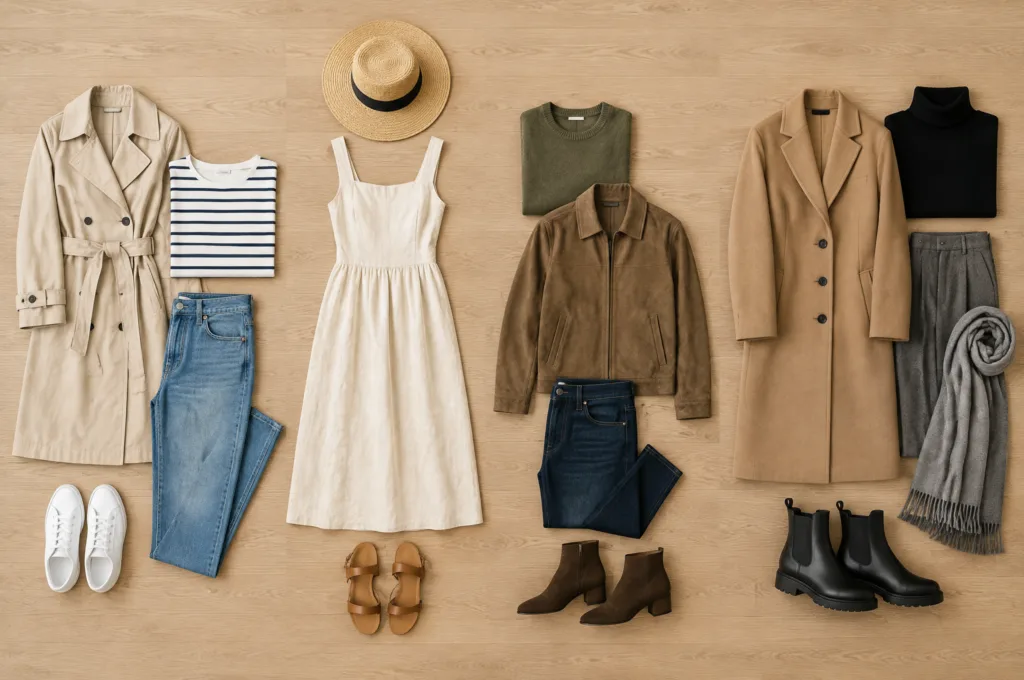
| Spring (March–May) | Mild days, cool mornings, some rain | Light trench, jeans, midi dress, knit, sneakers |
| Summer (June–August) | Hot, often 85°F and above in cities | Linen dresses and pants, sandals, hat, scarf |
| Fall (September–November) | Warm to mild, cooler nights, some rain | Layers, light jacket, loafers, ankle boots |
| Winter (December–February) | Cool to cold, colder in the north and mountains | Wool coat, sweaters, boots, scarf, gloves |
Spring (March to May)
Outfit formulas: straight jeans, a striped tee, a light trench and leather sneakers; or a midi shirt dress with a cardigan and loafers. Pack a compact umbrella or a packable rain jacket for showers.
Summer (June to August)
Outfit formulas: a linen midi dress with cushioned sandals and a straw hat; or wide-leg linen pants with a fitted tank and a scarf for church visits. Our guide on what to wear with linen pants has more warm-weather pairings.
Fall (September to November)
Outfit formulas: dark jeans, a fine knit sweater, a suede-look jacket and ankle boots; or a satin midi skirt with a long-sleeve tee and loafers. Early fall can still feel like summer in the south.
Winter (December to February)
Outfit formulas: wool trousers, a turtleneck, a long wool coat and waterproof boots; or a knit dress with opaque tights, a coat and a scarf. Choose waterproof shoes for rainy days.
What to Wear by Region and City
Dress for where you are: cities like Rome and Florence call for polished walking outfits, the Amalfi Coast and beach towns for linen and sandals, Venice and Lake Como for elegant but practical layers, and the Dolomites for real outdoor gear. Most trips cover more than one region, so pack pieces that cross over.
Rome and Florence
Expect long sightseeing days, lots of stairs and many church visits. Wear midi dresses or light pants, a top with sleeves or a scarf, and supportive sneakers or loafers.
Amalfi Coast and Beach Towns
Coastal towns are more relaxed. Linen sets, sundresses, swimsuits with a cover-up and flat sandals work well. Many towns are built on steep hillsides with stairs, so sandals with a back strap are safer than slides.
Venice and Lake Como
These areas suit slightly dressier outfits: a silky midi skirt, tailored trousers, loafers or block-heel sandals. Venice has bridges and uneven stone, so keep heels low.
Northern Italy and the Dolomites
Mountain areas need practical layers even in summer: a fleece or light puffer, a waterproof jacket, hiking shoes and moisture-wicking tops. Evenings can be cool. Our guide on what to wear hiking covers trail layers in more detail.
Best Shoes to Wear in Italy
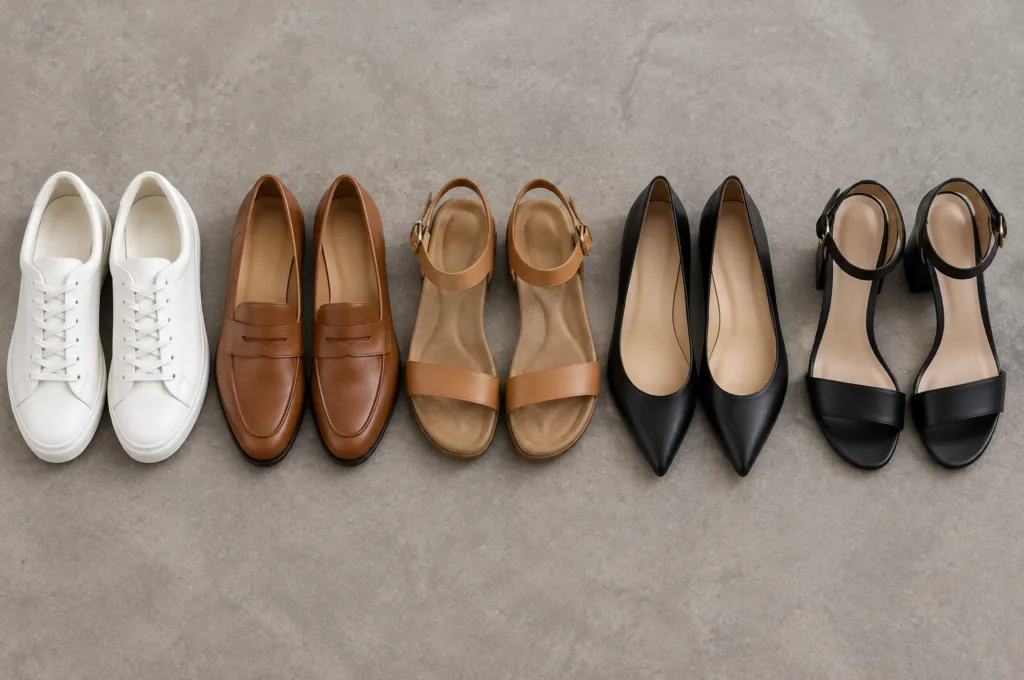
The best shoes for Italy are cushioned, supportive and already broken in: leather sneakers, loafers with padded insoles, sandals with a contoured footbed and back strap, and low block heels for evening. Thin soles and stilettos are hard on cobblestones. Bring at least two walking pairs so you can rotate.
Walking Shoes for Cobblestones
Leather or canvas sneakers with thick rubber soles are the most versatile choice. Wear them for at least a week before the trip. Slip-resistant soles help on polished stone and wet streets.
Evening Shoes That Still Walk
Low block heels, pointed flats, loafers and dressy sandals with a cushioned footbed all work for dinner. Choose a heel under two inches with a wide base so you can walk from the restaurant without discomfort.
Italy Outfit Ideas for Day and Evening
Italy outfits work best when the same pieces move from sightseeing to dinner with a swap or two. Day outfits prioritize comfort and church-friendly coverage; aperitivo and dinner outfits add a silky fabric, jewelry or a dressier shoe. Use these formulas as starting points and mix them across your trip.
Sightseeing Day Outfits
- A linen midi dress, leather sneakers, a crossbody bag and a scarf.
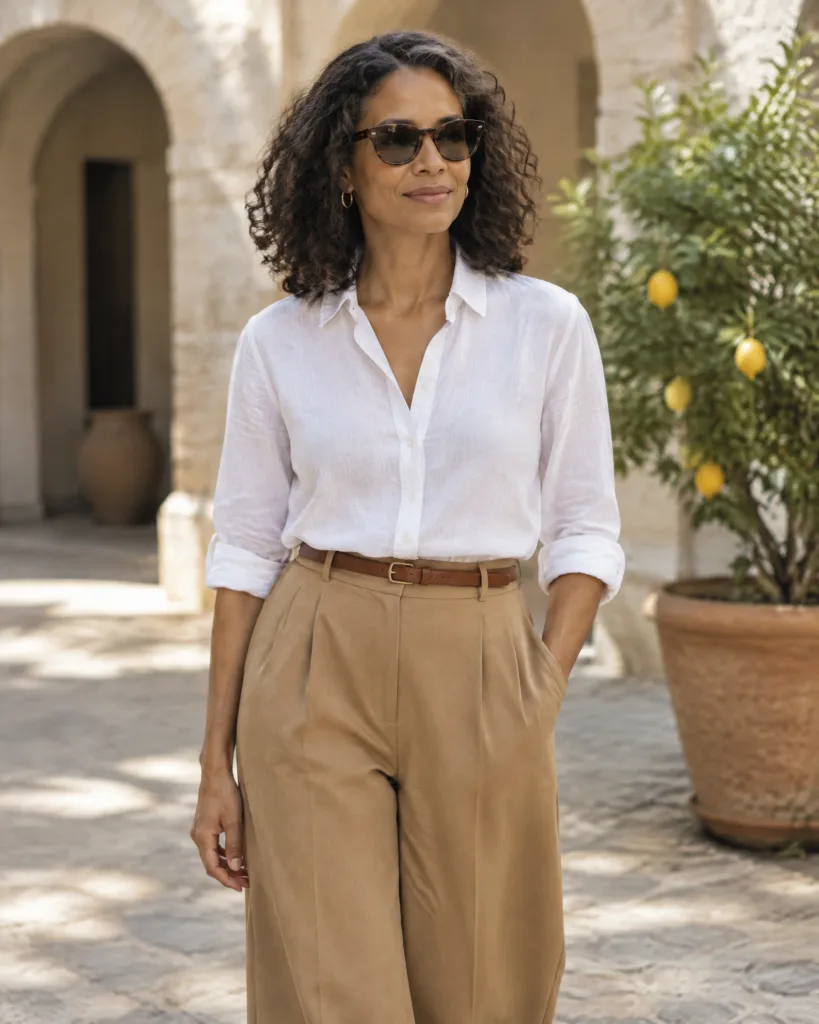
- Straight jeans, a white linen shirt, loafers and sunglasses.
- Wide-leg cotton pants, a fitted tee, a light cardigan and cushioned sandals.
- A midi skirt, a short-sleeve knit top and white sneakers.
Aperitivo and Dinner Outfits
- A satin midi skirt, a fitted black tee, gold jewelry and block-heel sandals.
- Tailored wide-leg trousers, a silky camisole under a light blazer and pointed flats.
- A knit maxi dress with a cropped cardigan and dressy sandals.
- Dark jeans, a silk blouse and loafers for a relaxed trattoria.
For a dressier night, our semi-formal attire for women guide shows how to elevate a look.

Over-40 and Plus-Size Italy Outfits
For long walking days, choose breathable fabrics, supportive shoes and easy silhouettes. Wide-leg linen pants with a longline tunic, a wrap midi dress with bike shorts underneath, or a matching knit set all work well. Anti-chafe shorts and supportive sandals make hot city days more comfortable for every body.
Rainy-Day Outfits
Pack a lightweight hooded rain jacket or trench that fits over a sweater, plus water-resistant sneakers or ankle boots. Dark jeans and quick-dry pants are better than light linen in the rain. A compact umbrella fits easily in a tote.
Women’s Italy Packing List (10-Day Capsule)
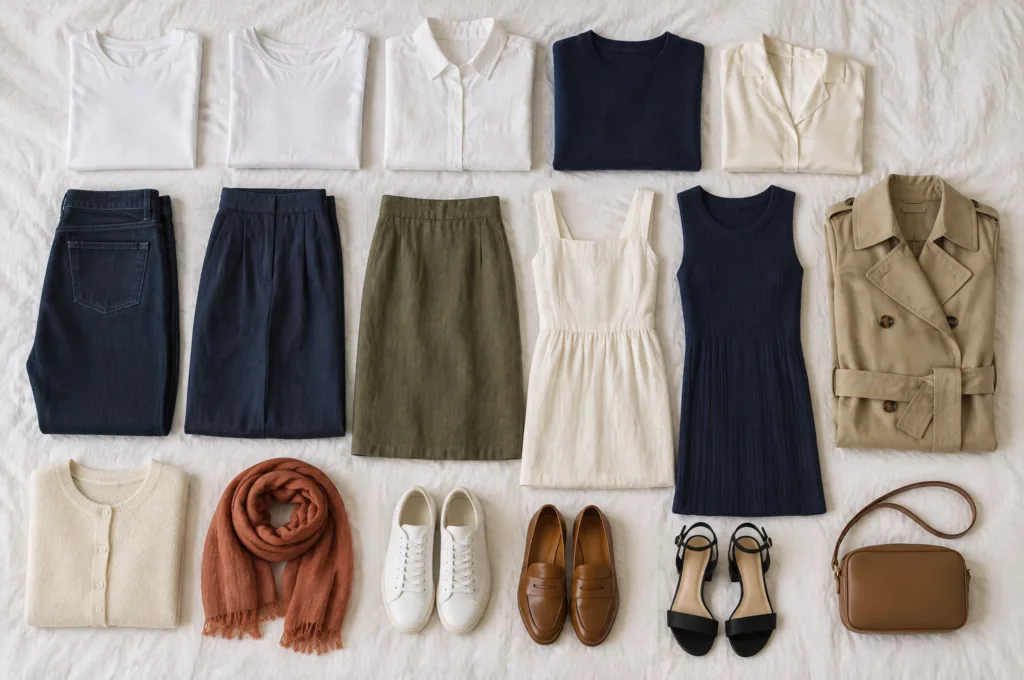
A 10-day Italy capsule for women can fit in a carry-on when every piece mixes and matches. Plan around two or three colors, pack about 15 clothing pieces plus three pairs of shoes, and use a sink wash or laundry midway. Adjust layers for the season and region you are visiting.
| Category | Quantity | Example pieces |
|---|---|---|
| Tops | 5 | Two tees, linen shirt, knit top, silky blouse |
| Bottoms | 3 | Dark jeans, wide-leg linen pants, midi skirt |
| Dresses | 2 | Linen midi dress, knit maxi dress |
| Layers | 2 | Light trench or denim jacket, cardigan |
| Scarf | 1–2 | Large lightweight scarf for churches and evenings |
| Swim | 1 | Swimsuit and cover-up for coastal stops |
| Shoes | 3 | Leather sneakers, cushioned sandals or loafers, low block heels |
| Bags | 2 | Zip crossbody, foldable tote |
Choose a crossbody bag with a zip closure and a strap you can wear across your body, ideally in front in crowded areas. Keep valuables in an inner pocket. For a broader look at building a mix-and-match travel wardrobe, read our guide to vacation outfits for women.
Do
- Pack a scarf or cardigan for church visits every day.
- Break in your walking shoes before the trip.
- Wear a zip crossbody bag in front in crowded areas.
Don’t
- Wear flip-flops for a full day on cobblestones.
- Rely on athletic wear as your only city outfits.
- Assume every church has the same rules without checking first.
Frequently asked questions
What clothing is frowned upon in Italy?
Beachwear in city centers, bare shoulders and very short skirts or shorts at churches, gym wear worn all day, and flip-flops away from the beach can feel out of place. None of these are forbidden on the street, but choosing slightly more polished options helps you blend in and makes church visits easier.
What are women wearing in Italy right now?
Relaxed linen pieces, tailored trousers, midi skirts and dresses, simple knits and leather sneakers or loafers are common, usually in neutral tones like cream, navy, black and camel. Accessories tend to be minimal but good quality. The overall look is polished and comfortable rather than trend-heavy.
Is it OK to wear jeans in Italy?
Yes, jeans are very common in Italy. Well-fitted dark or straight-leg styles look polished for sightseeing and casual dinners. In summer, they can feel hot, so lighter linen or cotton pants may be more comfortable. For church visits and nicer dinners, many travelers choose jeans without heavy rips.
Can I wear shorts in Italy?
Shorts are fine in summer, especially in coastal towns and on hot city days. Tailored or longer styles look more polished than very short ones. Since shoulders and knees covered is commonly requested at churches, carry a scarf or wrap skirt if you plan to visit religious sites during the day.
What shoes should I wear in Italy to walk all day?
Cushioned leather sneakers or supportive loafers are the best choices for long walking days. Choose thick, slip-resistant soles and break the shoes in before your trip. Avoid thin-soled flats, flip-flops and stilettos on cobblestones, and bring a second walking pair so you can rotate if your feet get sore.
How do I not look like a tourist in Italy?
Choose fitted, neutral pieces, a small crossbody bag instead of a large backpack, and leather sneakers or loafers instead of running shoes. Skip logo tees and all-day gym wear in cities. Adding a scarf, simple jewelry or a crisp linen shirt gives outfits the polished look common in Italian street style.