

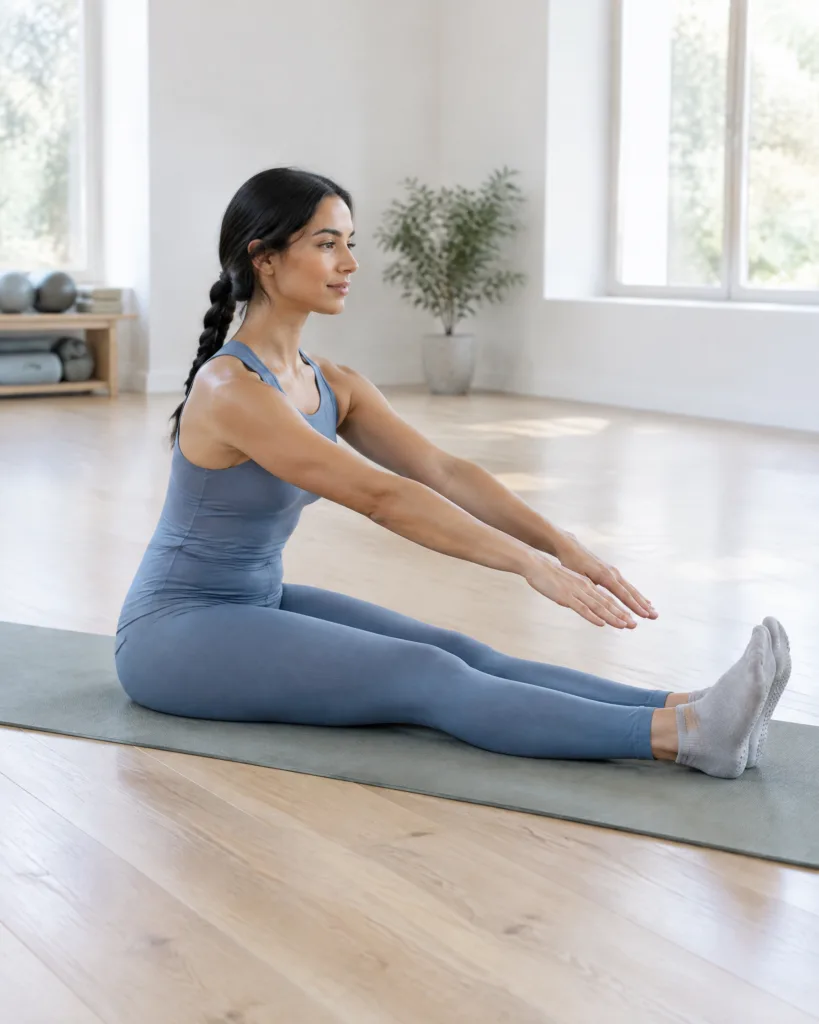
Knowing what to wear to Pilates is mostly about fit: choose snug, stretchy, breathable pieces that let your instructor see your alignment and will not catch on springs or straps. For most mat and reformer classes, that means high-waisted leggings, a supportive sports bra, a fitted top that stays put and a pair of grip socks.
Pilates looks a lot like yoga from the outside, but the equipment, the floor work on your back and studio sock rules change a few details. This guide covers fabrics, tops, bottoms, socks, mat vs reformer differences, outfit ideas and what to skip. For other activities and events, our main what to wear guide has you covered.
Quick answer
- Wear fitted leggings or bike shorts, a light- to medium-support sports bra and a top that will not ride up when you roll down.
- Bring grip socks; many studios require them for reformer classes, and they add hygiene and traction on mats.
- Skip zippers, buttons, back ties, belts and big hair clips that can snag equipment or dig in when you lie down.
- Choose squat-proof, moisture-wicking fabric and test opacity in a deep forward bend before class.
- Remove jewelry, tie hair low or in a braid, and keep perfume light in small studios.
What to Wear to Pilates: Quick Answer
Wear fitted, stretchy activewear with nothing that snags or presses into your back: high-waisted leggings or bike shorts, a light- or medium-support sports bra, a fitted tank or tee that covers your waistband, and grip socks. Add a light layer for warm-up. Leave shoes, jewelry and zippered jackets in your locker or bag. Pilates sits alongside yoga, running and strength training in our workout outfits hub.
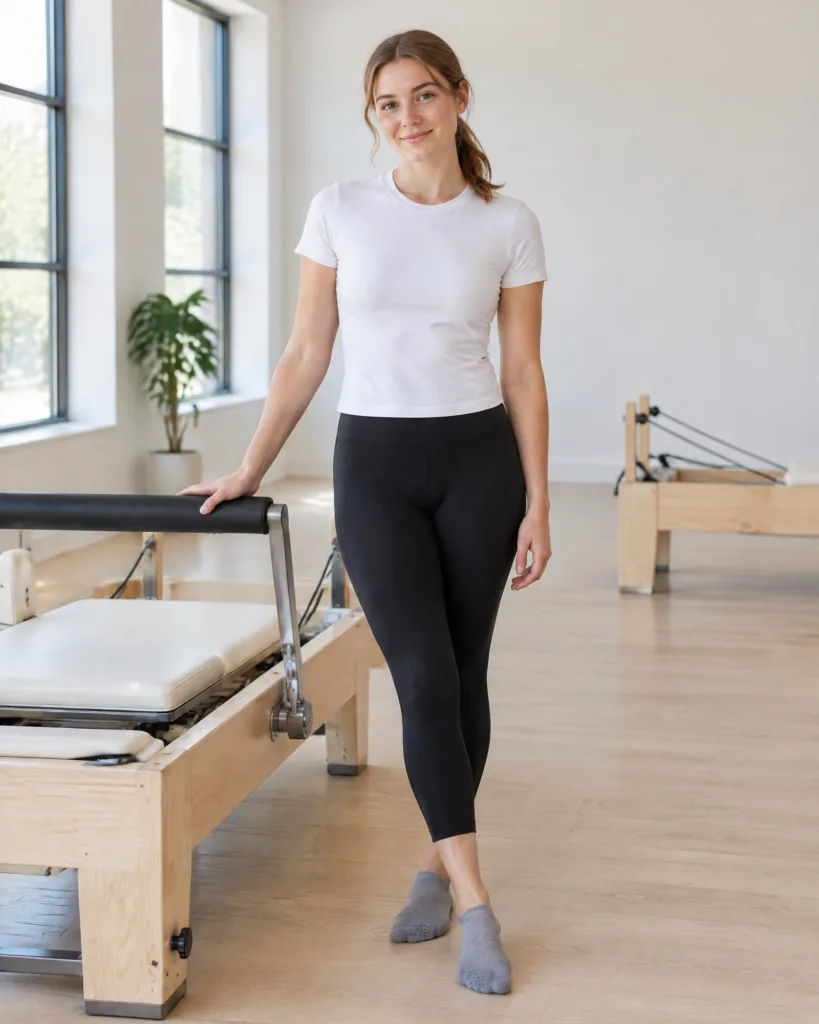
There is no strict dress code at most Pilates studios, but the clothes have three practical jobs. They must move with you through rolling, bridging and leg circles. They must stay in place when you are upside down or lying on your back. And they must be close enough to the body that your instructor can see how your hips, ribs and spine are lining up.
If you already practice yoga, much of that wardrobe crosses over. Our guide to what to wear to yoga covers yoga-specific needs such as barefoot practice and style-by-style layering, while this guide focuses on what is different in Pilates.
Why Fitted Clothes Matter in Pilates
Fitted clothes matter in Pilates because instructors coach precise alignment of the pelvis, spine and shoulders, and loose fabric hides those positions. Snug pieces also stay clear of reformer springs, straps, pulleys and the moving carriage, where a baggy hem or drawstring can catch. Fitted does not mean tight; it means close and comfortable.
During a typical class you will spend a lot of time on your back with your legs in the air, so loose shorts and wide tees tend to slide toward your face. Fitted fabric stays put, which lets you focus on breathing and control rather than tugging at your clothes.
Bottoms: Leggings, Shorts and Unitards
The best Pilates bottoms are high-waisted, squat-proof leggings in full or 7/8 length, fitted bike shorts with a 6- to 8-inch inseam, or a one-piece unitard. A wide, flat waistband sits comfortably during roll-ups and does not dig into your stomach when you curl forward. Avoid back pockets with rivets or bulky seams.
| Bottom | Best for | What to check |
|---|---|---|
| High-waisted leggings, full length | Most mat and reformer classes, cool studios | Opaque in a deep bend, flat waistband |
| 7/8 leggings | Reformer and footwork, warmer rooms | Hem sits above the ankle, clear of grip socks |
| Fitted bike shorts | Warm or heated studios | Inseam long enough not to ride up in leg circles |
| Unitard or jumpsuit | Sleek one-piece look | Easy restroom access, no back zipper |
| Fitted joggers | Mat classes for cooler days | Narrow ankle cuff, no drawstring toggles |
Squat-proof means the fabric stays opaque when stretched; check by bending forward in natural light. Moisture-wicking means the fabric pulls sweat to the surface so it dries quickly, which matters more in faster reformer flows. For a broader look at leg shapes and lengths, see our guide to types of pants.
Tops and Sports Bras
Choose a fitted tank, tee or long-sleeve top long enough to reach or tuck into your waistband, worn over a supportive sports bra. Pilates is low impact, so light to medium support is usually enough. Look for smooth backs without clasps, knots or ties, since you will lie on the mat and the reformer carriage for much of class.
Do You Need a Sports Bra?
A sports bra is recommended for Pilates comfort, even though the movements are controlled. Light or medium support holds you in place during roll-overs, planks and kneeling work. Skip underwire bras and styles with thick back hooks or decorative knots that press into your spine when you lie down. A tank with a built-in shelf bra is another option.
Tops That Won’t Ride Up
Tops that won’t ride up are fitted through the body, with enough length to reach the waistband or tuck in. Long-line tanks, fitted tees and bodysuit-style tops all stay in place when you roll down the spine or lift your hips. Loose, cropped or boxy tops tend to flip toward your face during inversions.
Socks and Shoes: Barefoot or Grip Socks?
Most Pilates classes are done without shoes. Mat classes are often barefoot, but many studios ask for grip socks for hygiene and traction, and most reformer studios require them. Grip socks have rubber dots or pads on the sole that keep your feet steady on the footbar and carriage. Check your studio’s policy before your first class.
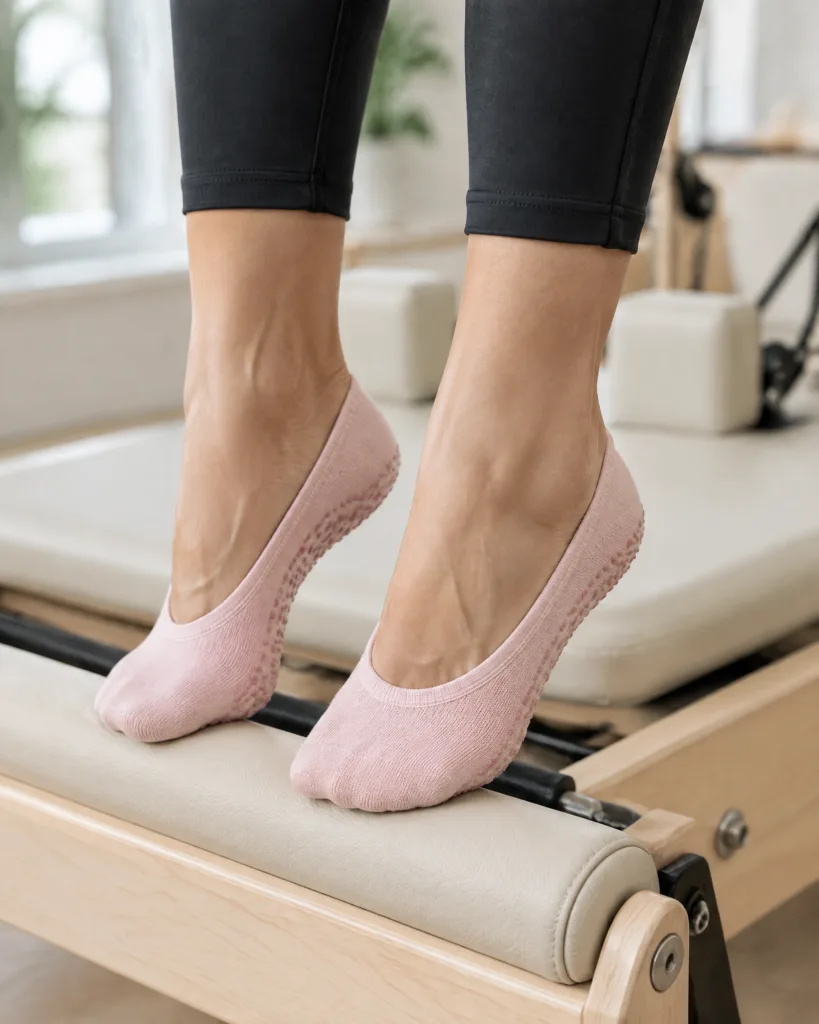
Grip sock styles include full-toe, toeless and open-top ballet styles with straps across the top of the foot. All of them work; choose the one that feels secure and comfortable. Regular cotton socks are slippery on equipment, so skip them. Wear sneakers or slides to and from the studio, then take them off at the door.
Mat vs Reformer: What Changes
Mat Pilates is done on the floor, so comfort when lying down matters most. Reformer Pilates adds a sliding carriage, springs, straps and a footbar, so anything that can snag becomes a safety concern. For reformer, choose sleeker fabric, skip zippers and buttons entirely, and always bring grip socks.
| Mat Pilates | Reformer Pilates | |
|---|---|---|
| Fit | Fitted, slightly relaxed is fine | Close-fitting, nothing loose at hems |
| Footwear | Barefoot or grip socks | Grip socks, often required |
| Hardware | Avoid back clasps and hip zippers | No zippers, buttons, rivets or toggles anywhere |
| Hair | Low ponytail or braid | Low braid or bun that fits the headrest |
| Layers | Light layer for warm-up and stretch | Remove layers before stepping on the carriage |
Hair is a small detail with a big impact. A high, thick bun or claw clip pushes your head forward when you lie on a mat or reformer headrest, so a low braid or soft low ponytail works better.
Stylist’s tip
Before your first reformer class, lie on your back at home in the outfit you plan to wear and roll your knees to your chest. Anything that pokes, shifts or gaps will be obvious within a few seconds.
Cute Pilates Outfit Ideas
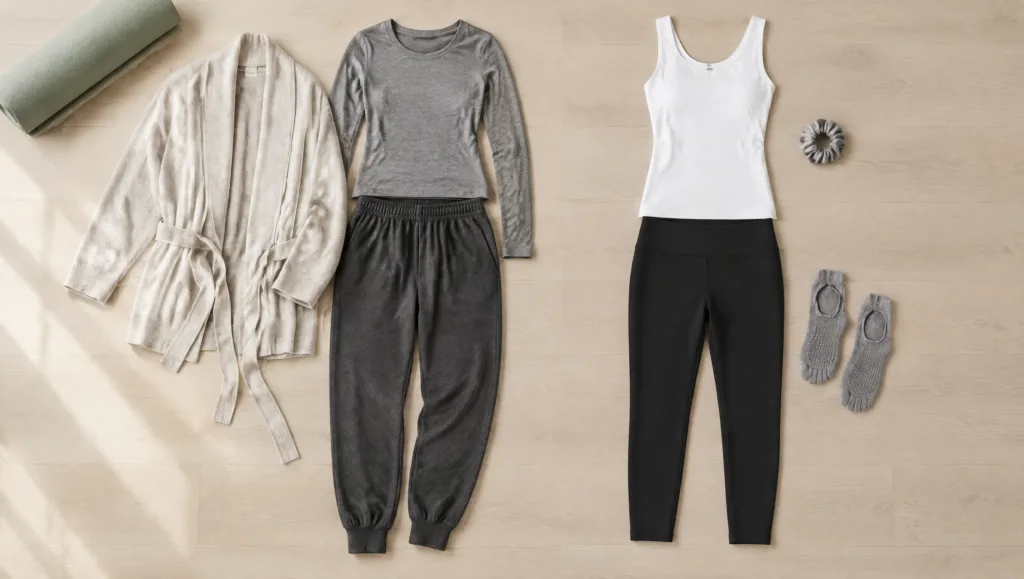
Cute Pilates outfits pair a matching or tonal leggings-and-top set with grip socks in a coordinating color, then add a cardigan, wrap or oversized sweatshirt for the walk to and from class. The formulas below keep all the function you need for the session and still look polished afterward.
Pilates-to-Brunch
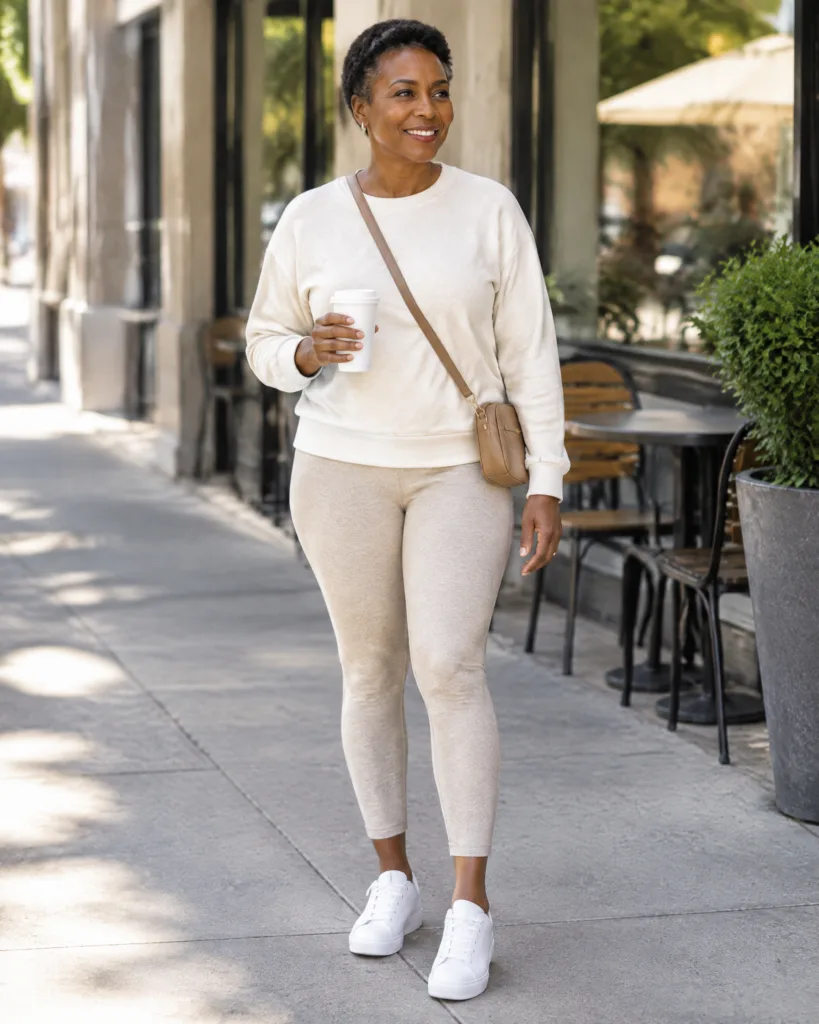
Wear oatmeal 7/8 leggings with a fitted long-line tank in the same shade, then throw on a soft cream sweatshirt, a crossbody bag and clean white sneakers after class. Tonal neutrals look intentional off the mat, and a structured tote holds your grip socks and water bottle.
Monochrome Set
A matching set in one color, such as dusty blue, chocolate brown or sage, gives an instant pulled-together look. Pair full-length leggings with a fitted long-sleeve top or tank in the same shade, and choose grip socks in white or a darker tone of the set color.
Ballet-Inspired
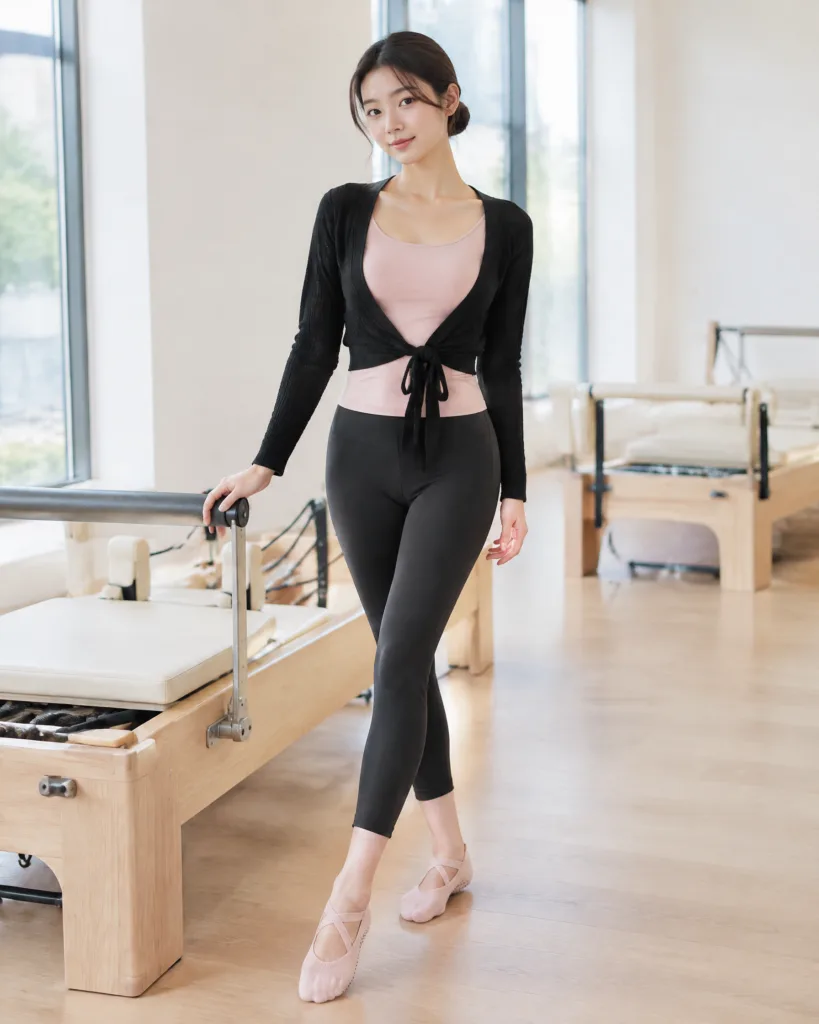
Ballet-inspired Pilates outfits borrow from dance class: a soft pink or black fitted top with a wide neckline, full-length or 7/8 leggings, a wrap cardigan tied at the waist for warm-up and open-top ballet-style grip socks. A sleek low bun completes the look.
| Outfit | Bottoms | Top | Finish |
|---|---|---|---|
| Pilates-to-brunch | Oatmeal 7/8 leggings | Matching long-line tank | Cream sweatshirt, white sneakers |
| Monochrome set | Full-length leggings in one color | Matching fitted long-sleeve | Tonal grip socks |
| Ballet-inspired | Black 7/8 leggings | Soft pink fitted top | Wrap cardigan, ballet grip socks |
| Classic reformer | Black high-waisted leggings | White fitted tee | Gray grip socks |
Plus-Size and Modest Pilates Outfits
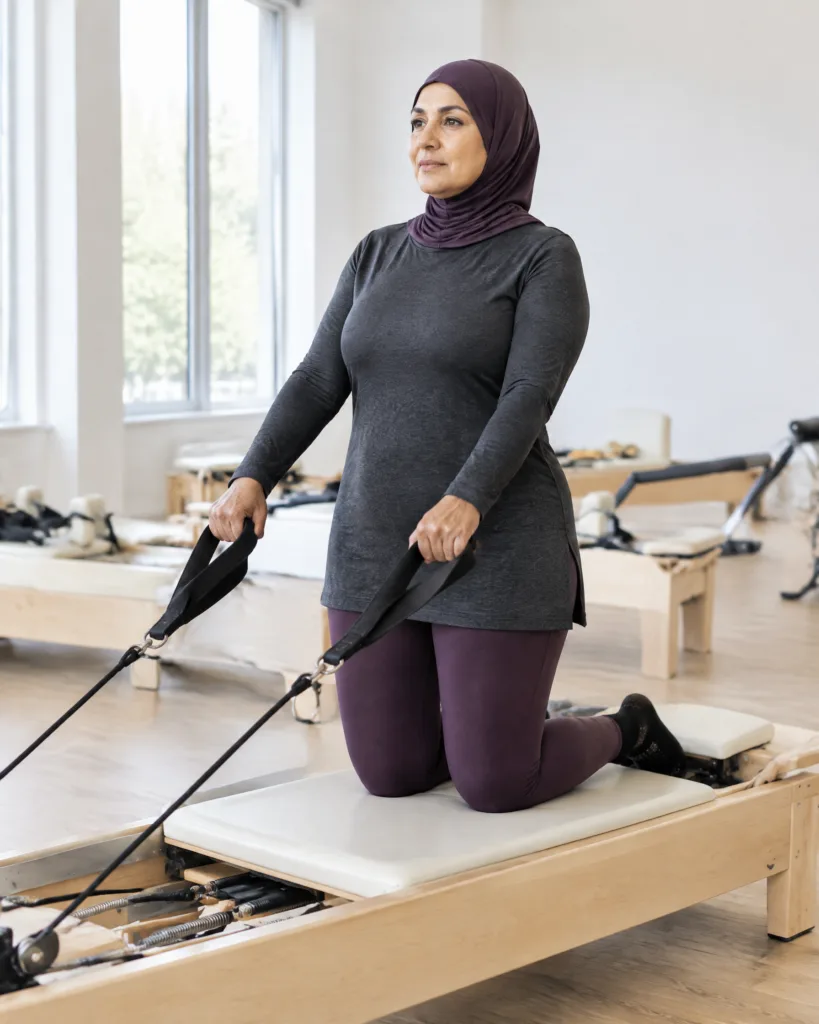
Plus-size and modest Pilates outfits follow the same rules: fitted, stretchy and snag-free, with extra attention to waistband comfort and coverage. Look for high-rise, squat-proof leggings with a wide waistband, a supportive sports bra and longer fitted tops or tunics that cover the hips without being baggy enough to catch on equipment.
- Plus-size picks: High-waisted leggings with a wide, no-roll waistband, a medium-support bra with wide straps, and a long-line fitted tank or tee.
- Modest picks: Full-length leggings, a fitted long-sleeve top that reaches below the hips, and a fitted sports hijab or headband if you wear head covering.
- Comfort tip: Bonded or flat seams prevent rubbing during repeated leg work.
Many activewear brands now offer extended sizes and longer-length tops; check each retailer’s current size range.
Hot Pilates and Heated Studios
Heated Pilates classes call for lighter, quicker-drying pieces: fitted bike shorts or 7/8 leggings in thin, moisture-wicking fabric, a breathable tank and grip socks. Skip extra layers and bring a towel. For more on dressing for heat, read our guide on what to wear to hot yoga.
What Not to Wear to Pilates
Skip baggy tees, loose shorts, zippers, buttons, belts, back ties and dangling jewelry when you go to Pilates. These items ride up, catch on reformer springs and straps, or press uncomfortably into your back. Also avoid slippery cotton socks, sheer fabric and strong perfume in small studios where people work close together.
Do
- Wear fitted leggings or bike shorts and a top that stays tucked.
- Bring grip socks, a water bottle and a small towel.
- Tie long hair in a low braid or ponytail.
Don’t
- Wear zippered jackets, button-front tops or pants with metal rivets on the reformer.
- Wear rings, bracelets or hoop earrings that can scratch upholstery or catch straps.
- Choose sheer leggings or loose, boxy tops that flip over during roll-downs.
Use this packing checklist before your first class:
| Item | Why |
|---|---|
| Grip socks | Often required; traction on equipment |
| Water bottle | Stay hydrated during class |
| Small towel | Wipe hands and face |
| Hair tie | Low braid or ponytail |
| Light layer | Warm-up and walk home |
| Slides or sneakers | Easy on and off at the door |
If you also like cardio days, our guide to what to wear running covers higher-impact support and shoes.
Frequently asked questions
What should a beginner wear to Pilates?
A beginner should wear fitted, high-waisted leggings or bike shorts, a light- or medium-support sports bra, a fitted tank or tee that reaches the waistband and a pair of grip socks. Bring a light layer for warm-up, tie long hair low, and leave jewelry and zippered pieces at home or in your bag.
Do you go barefoot to Pilates?
Many mat Pilates classes are done barefoot, but a lot of studios ask for grip socks for hygiene and traction, especially in reformer classes where your feet press on the footbar and carriage. Check your studio’s policy before you go, and bring a pair just in case, since some studios do not allow bare feet.
Do I need to wear a bra for Pilates?
A light- or medium-support sports bra is recommended for Pilates comfort, even though the exercises are low impact. It keeps you supported during planks, roll-overs and kneeling work. Choose a style without underwire or thick back hooks so nothing presses into your spine when you lie on the mat or carriage.
What should I wear to Pilates if I’m plus size?
Wear high-waisted, squat-proof leggings with a wide, no-roll waistband, a supportive sports bra with wide straps and a fitted long-line tank or tee. Flat seams reduce rubbing, and fitted tops stay clear of equipment better than loose ones. Grip socks and a light layer complete a comfortable, confident outfit.
Can I wear shorts to Pilates?
Fitted bike shorts work well for Pilates, especially in warm or heated studios. Choose a 6- to 8-inch inseam in squat-proof, moisture-wicking fabric so the shorts stay in place during leg circles and bridges. Loose running shorts tend to ride up and gap when your legs are lifted, so skip them.
What should I wear to reformer Pilates?
For reformer Pilates, wear close-fitting leggings or bike shorts and a fitted top with no zippers, buttons, rivets or back ties that could catch on springs, straps or upholstery. Add grip socks, which many reformer studios require, and tie your hair in a low braid or ponytail so it rests comfortably on the headrest.

1 comment
Comments are closed.