
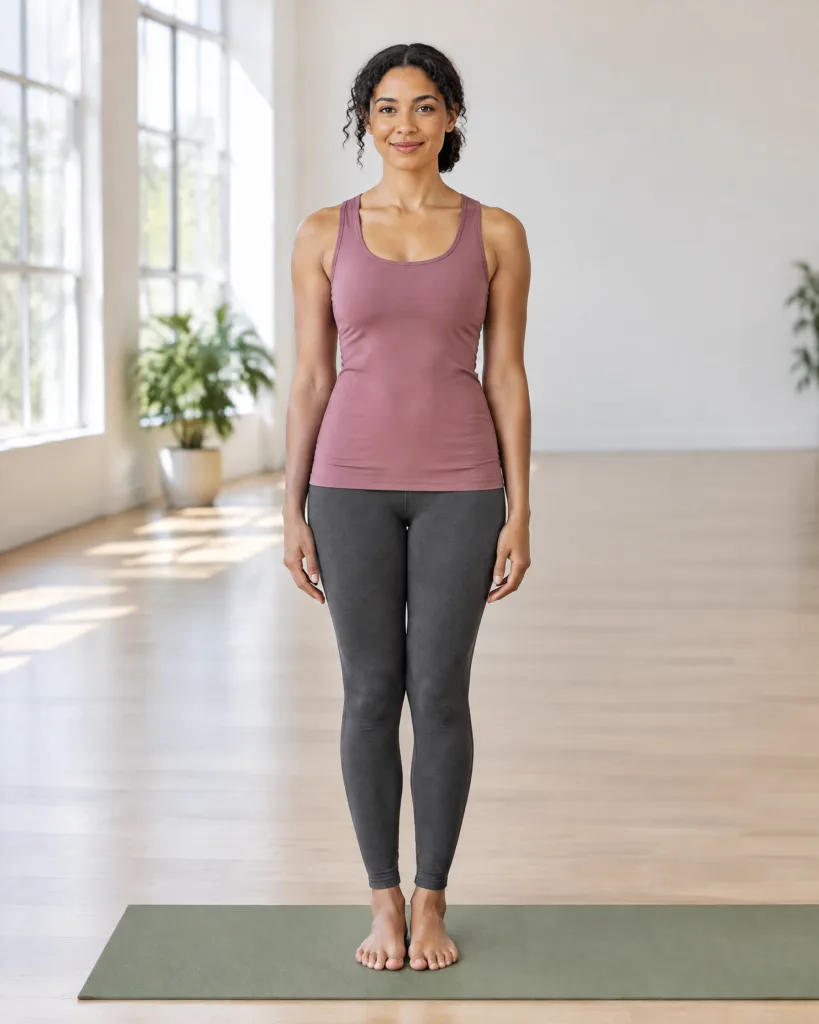
Figuring out what to wear to yoga is simpler than the activewear aisle makes it look: choose fitted, stretchy, breathable pieces that stay in place when you fold forward or lift your arms. For most classes that means high-waisted leggings, a supportive sports bra and a fitted tank or tee, with bare feet on the mat.
This guide focuses on regular, room-temperature classes such as hatha, vinyasa, yin and restorative yoga, where comfort and coverage matter more than sweat management. If your studio turns up the heat, our separate guide on what to wear to hot yoga covers that. For more activity and event dressing advice, browse our main what to wear hub. Yoga is one part of our workout outfits for women hub, which covers gym, studio and outdoor training.
Quick answer
- Fitted beats loose: leggings and a close-fitting top stay put in down dog and twists.
- Choose breathable, opaque fabrics with four-way stretch and test them in a deep squat.
- Match the outfit to the style: lighter layers for vinyasa, cozy layers for yin and restorative.
- You practice barefoot; grip socks are a good option for cold floors or extra traction.
- Skip see-through fabric, zippers, dangling jewelry and anything you will need to keep adjusting.
What to Wear to Yoga: Quick Answer
Wear fitted, stretchy clothes that let you move freely and stay in place upside down. A typical yoga outfit is high-waisted full-length or 7/8 leggings, a low- to medium-support sports bra and a fitted tank or tee that reaches your waistband. Bring a light layer for the final rest, and leave your shoes at the door.
There is no formal dress code in most studios. Teachers mainly care that you can move and that you are not distracted by your clothes. The three questions to ask of any piece are simple: Does it stretch in every direction? Does it stay where it should when I bend over? Is it opaque when stretched? If the answer is yes to all three, it will work on the mat.
What to Wear to Your First Yoga Class
For your first yoga class, wear the most comfortable fitted activewear you already own rather than buying a new set. Dark leggings, a sports bra you trust and a fitted top cover almost every beginner class. Add a light zip-up or long-sleeve layer for the start and end of class, and tie back long hair.
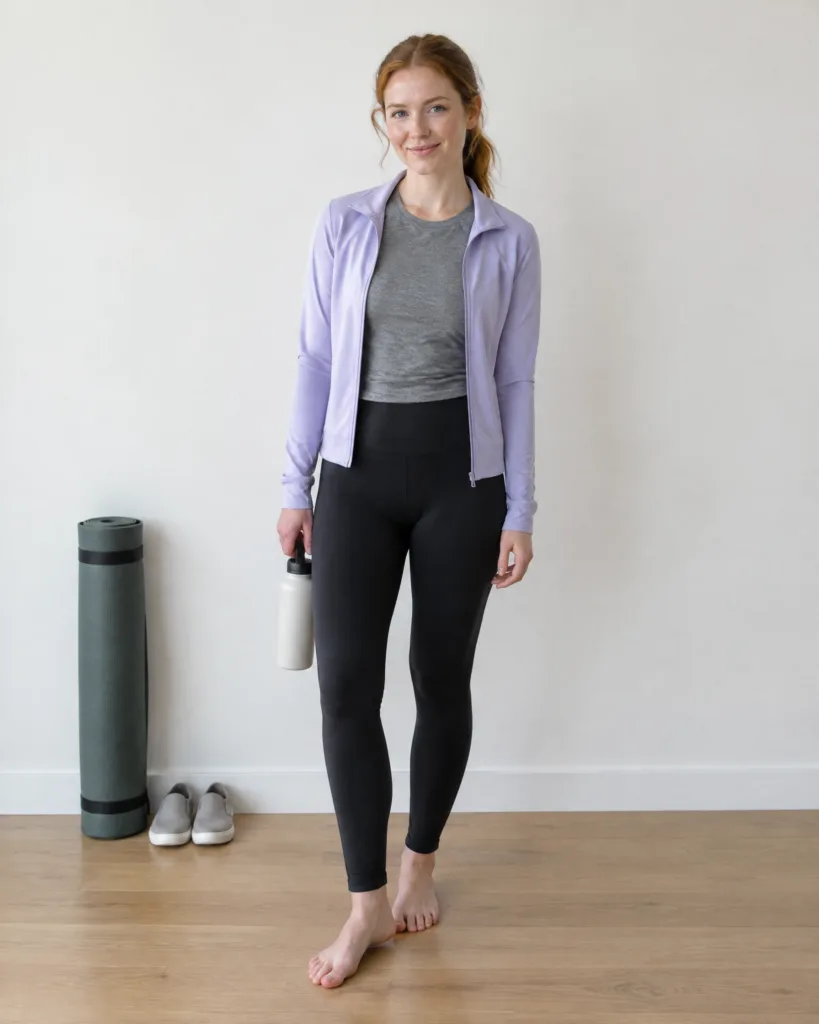
Beginner checklist:
- High-waisted leggings or fitted joggers in a dark, opaque fabric.
- A sports bra with light or medium support.
- A fitted tank or T-shirt long enough to tuck in or reach your waistband.
- A light layer, such as a thin long-sleeve top or zip jacket.
- A hair tie or soft headband.
- Slip-on shoes that are easy to take off at the door.
Most studios have mats and props you can borrow or rent, so call ahead or check the class description before you buy a mat. Arrive about 10 minutes early so you have time to settle in and tell the teacher you are new.
Yoga Clothing Essentials
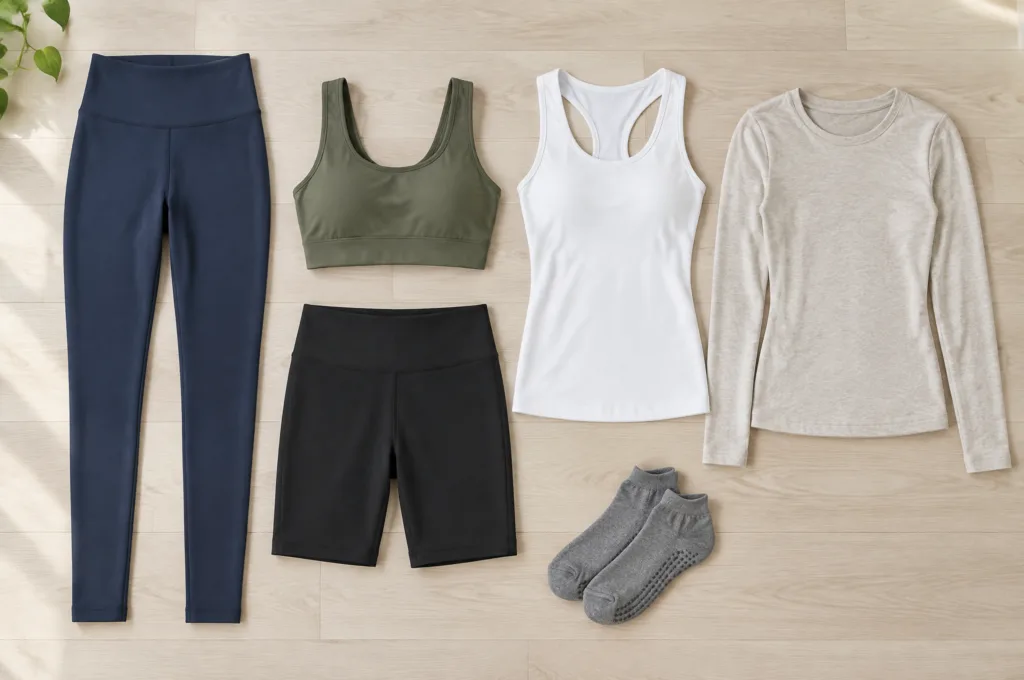
Yoga clothing essentials come down to four pieces: bottoms, a sports bra, a top and an optional layer. Each one should stretch with you, lie flat against the body and feel comfortable when you sit, lie down or twist. Fit and fabric matter more than brand, so start with basics and upgrade only what bothers you.
Leggings and Yoga Pants
Leggings are the most popular choice because they move with your legs and let the teacher see your knee and hip alignment. Look for a high-rise waistband that sits at or above the navel, a gusset (the diamond-shaped panel in the crotch) for easier movement, and flat seams that do not dig in when you sit cross-legged. Full-length and 7/8 lengths both work. Flared or straight-leg yoga pants are fine for gentle classes as long as the hem does not catch your heel. For a broader look at cuts and silhouettes, see our guide to types of pants.
Shorts
Shorts are perfectly acceptable in regular yoga, especially in warm weather. Choose fitted bike shorts or shorts with a built-in liner, because loose running shorts can ride up or gape in inversions and seated poses. A 5- to 8-inch inseam gives good coverage. If your skin slips in arm balances, leggings will give you a little more grip.
Sports Bras
A sports bra is not required, but most women find one more comfortable for forward folds and inversions. Yoga is low impact, so light or medium support is usually enough, though larger busts may prefer medium support with wider, adjustable straps. Smooth fabric and a soft band that does not roll are worth more than heavy padding.
Tops and Tanks
The best yoga top is fitted or semi-fitted and long enough to stay over your stomach in down dog. Racerback tanks free up the shoulders, while a fitted short- or long-sleeve tee gives more coverage. If you love a loose tee, tuck it into a high waistband or knot it at the hip so it does not fall over your face.
Best Fabrics for Yoga
The best fabrics for yoga are soft, breathable stretch blends that recover their shape after you bend. Nylon-spandex and polyester-spandex are the most common and wick sweat well. Cotton blends with spandex are comfortable in gentle classes but stay damp longer, so save them for yin, restorative or low-sweat sessions.
| Fabric | Feel | Sweat handling | Best for |
|---|---|---|---|
| Nylon + spandex | Smooth, soft, compressive or buttery | Wicks well, dries fast | Vinyasa, power, everyday classes |
| Polyester + spandex | Light, slightly cooler | Wicks and dries very fast, can hold odor | Faster flows, budget basics |
| Cotton + spandex | Soft, familiar, breathable | Absorbs sweat, dries slowly | Hatha, yin, restorative |
| Bamboo viscose blends | Very soft, drapey | Breathable, dries moderately | Gentle classes, lounge layers |
| Merino wool | Warm, light, odor resistant | Handles light sweat well | Winter layers, savasana tops |
Opacity is the other half of the fabric story. Thin or very stretchy leggings can turn see-through when you squat or fold forward, especially in pale colors.
Stylist’s tip
Try the squat test before class: stand with your back to a mirror in bright light, bend into a deep squat and look over your shoulder. If you can see skin or underwear through the seat, keep those leggings for walks and choose a thicker pair for the mat.
What to Wear by Yoga Style
Dress for the intensity of the class. Faster, more athletic styles such as vinyasa and power yoga call for lightweight, sweat-wicking pieces, while slow, still styles such as yin and restorative call for soft, cozy layers. Hatha sits in the middle. Heated classes need their own approach, covered in our hot yoga guide.
| Yoga style | Pace and intensity | What to wear | Extra layer? |
|---|---|---|---|
| Hatha | Slow to moderate, held poses | Leggings, fitted tee or tank, light-support bra | Light long-sleeve top |
| Vinyasa | Flowing, moderate to active | Wicking leggings, fitted tank, medium-support bra | Optional, for the end |
| Power yoga | Fast, strong, sweaty | Lightweight leggings or bike shorts, racerback tank | Not usually needed |
| Yin | Very slow, long floor holds | Soft leggings or relaxed joggers, long-sleeve top | Cozy sweater, socks |
| Restorative | Gentle, supported rest | Soft, roomy-but-not-baggy pieces | Wrap, blanket, warm socks |
| Hot yoga | Heated room, heavy sweat | Quick-dry fitted pieces only | Only for the trip home |
Hatha Yoga
Hatha classes move at a steady pace with poses held for several breaths. Almost any fitted activewear works. A fitted tee or tank with full-length or 7/8 leggings is a safe, comfortable choice, and a thin long-sleeve top is useful for breathing exercises at the start and relaxation at the end.
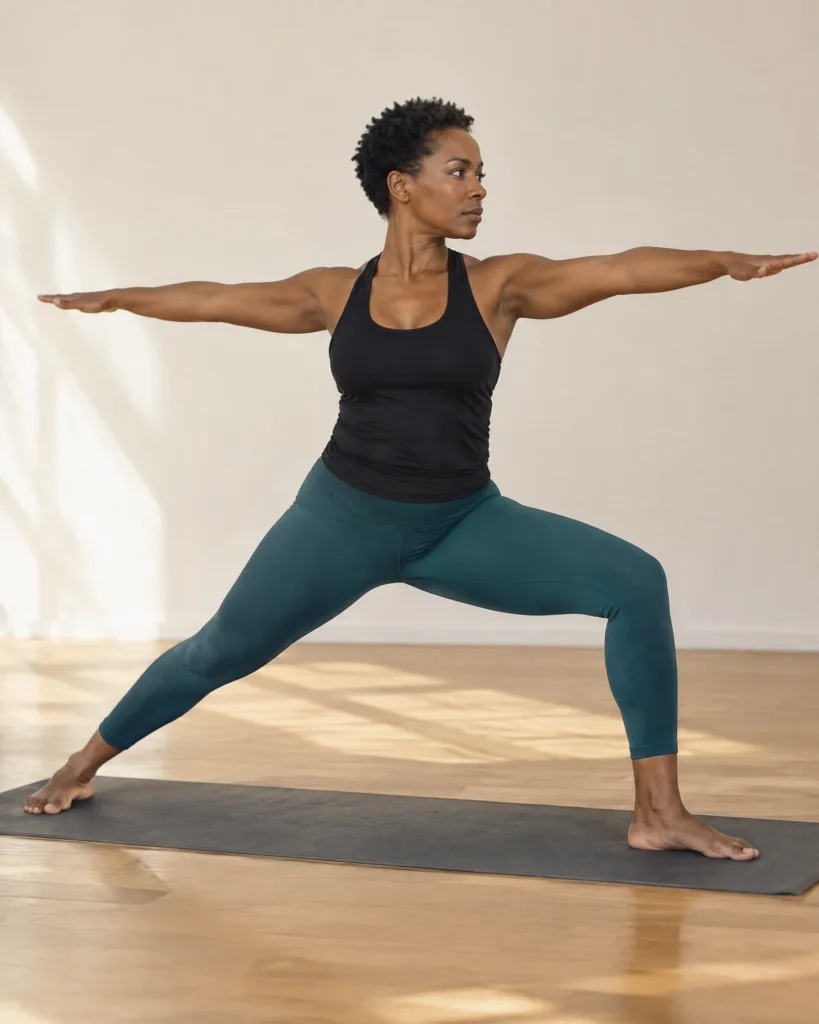
Vinyasa and Power Yoga
Vinyasa links breath and movement, and power yoga takes it further with strength work and more sweat. Choose leggings in a smooth, wicking fabric, a fitted racerback tank and a sports bra with medium support for jump-backs. Avoid loose hems or long sleeves that bunch up in chaturanga or slide over your hands.
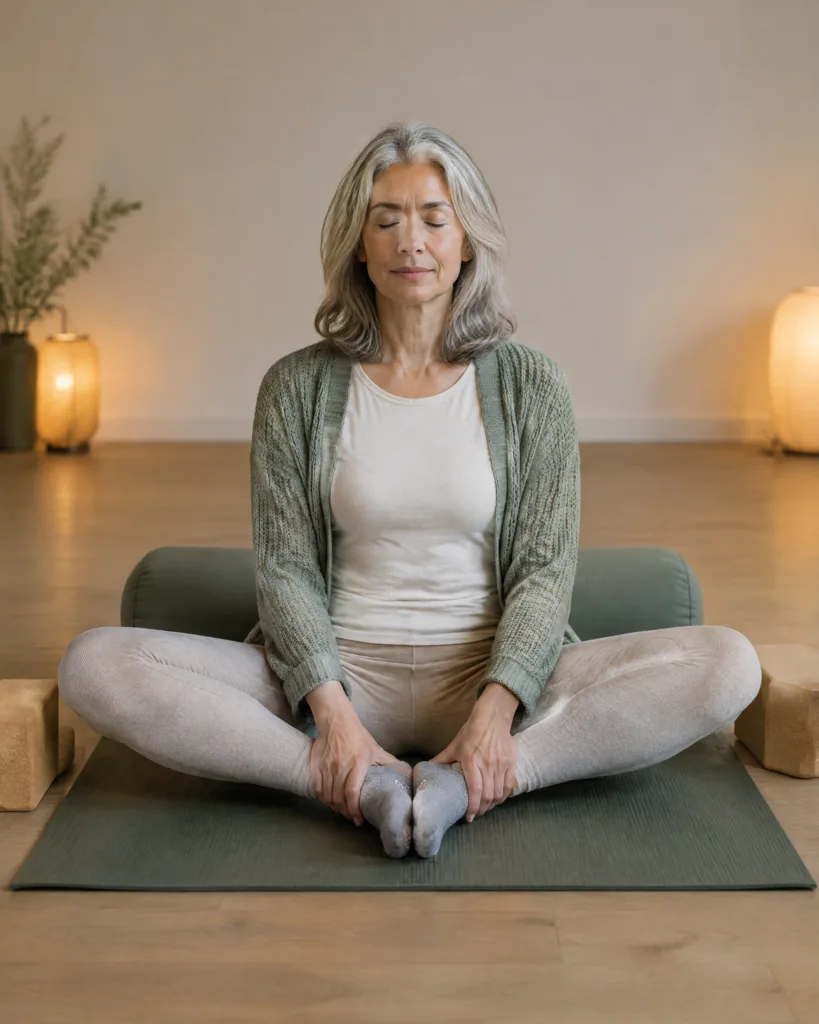
Yin and Restorative Yoga
Yin and restorative yoga are slow and still, with long holds on the floor and plenty of props. Your body cools down, so comfort and warmth come first. Soft, brushed leggings or relaxed joggers, a long-sleeve top or light sweater and warm socks for the final rest all work well here.
Hot Yoga
Heated classes change the rules: fabric must handle heavy sweat, cotton is out, and layers stay in your bag. Because the needs are so different, we cover fabrics, shorts versus leggings and what to pack in the dedicated hot yoga guide linked at the top of this article.
What to Wear to Yoga in Winter
In winter, dress in two parts: your usual fitted yoga outfit underneath and easy-off warm layers on top. A fleece or sweater, a coat and warm socks get you to the studio comfortably, then come off before class. Keep one light layer and a pair of socks beside your mat for savasana, when your body temperature drops.
Cool studios and drafty floors are common in colder months. A long-sleeve fitted top under a short-sleeve tee gives you an easy layer to peel off once you warm up. Brushed or fleece-lined leggings are cozy for gentle classes, though they may feel too warm in an active flow. If you head out to the slopes on weekends, our guide on what to wear skiing covers base layers that double as winter yoga layers.
Plus-Size and Modest Yoga Outfits
Plus-size and modest yoga outfits follow the same fit rules, with extra attention to waistband, length and coverage. A tall, wide waistband that does not roll, a longer fitted top and full-length leggings in a thicker, opaque knit make it easy to move without adjusting your clothes between poses.
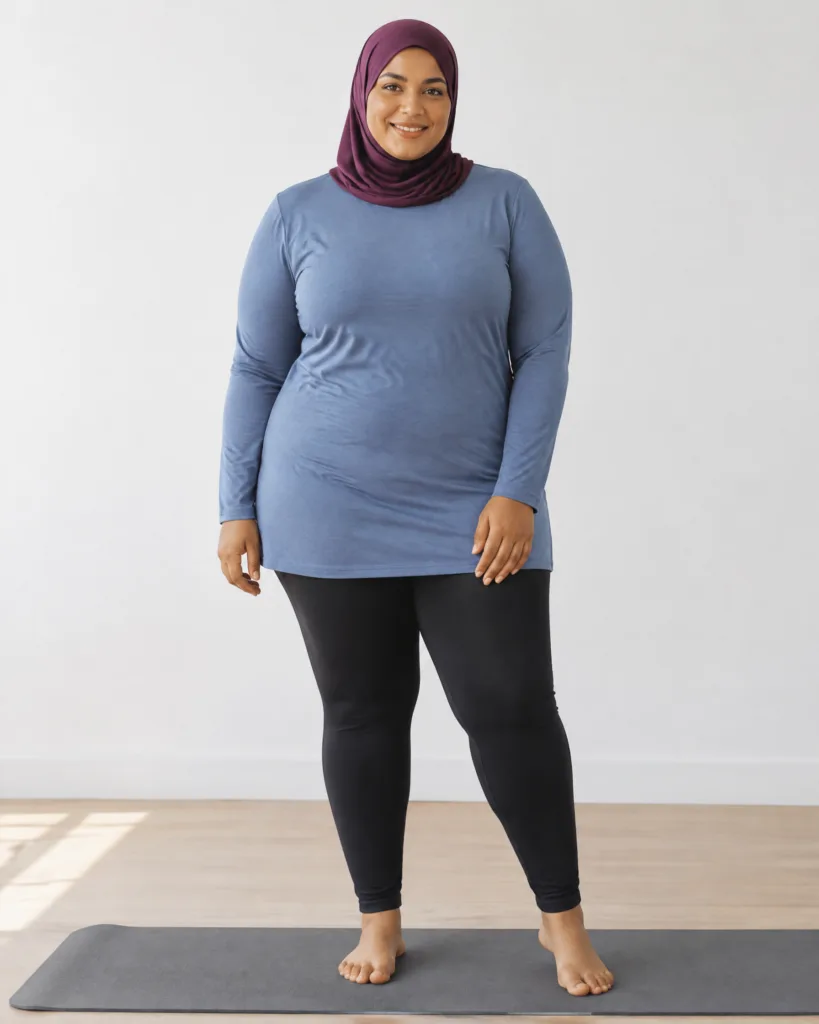
Plus-size fit notes:
- Waistband: A tall, flat waistband with no thin elastic stays put better through twists and folds.
- Length: Tunic-length tanks or tees cover the hips and stay in place in down dog.
- Chafing: Full-length leggings or long bike shorts help prevent inner-thigh rubbing.
- Bra: Medium support, adjustable straps and a band that lies flat are worth seeking out.
- Sizing: Size charts vary widely, so check each brand’s own chart.
Modest yoga options:
- Full-length leggings or wide-leg yoga pants paired with a longer, loose-but-tucked tunic.
- A long-sleeve fitted top or a thin layer over a tank.
- Sport hijabs or soft headscarves in stretchy, breathable fabric for those who cover their hair.
- A skort or knee-length fitted skirt over leggings if you prefer extra coverage.
Budget Basics vs Investment Pieces
You do not need an expensive wardrobe to start yoga. Begin with budget basics and invest only where quality makes a real difference, usually in leggings that stay opaque and a sports bra that fits well. Tops, layers and socks are easy places to save, since nearly any fitted, breathable piece works.
| Piece | Save or invest? | Why |
|---|---|---|
| Leggings | Invest in one good pair | Opacity, waistband and fabric recovery matter most |
| Sports bra | Invest if you need more support | Fit and comfort affect your whole practice |
| Tanks and tees | Save | Any fitted, breathable top works |
| Warm layer | Save | A sweater or zip you already own is fine |
| Grip socks | Save | Basic pairs work well |
| Mat | Depends | Borrow or rent first, then decide |
Prices change often, so compare current options and check each retailer’s return policy before buying.
From Yoga to Brunch: Outfits That Work After Class
An outfit that works beyond class starts with neutral, matching pieces. A coordinated leggings-and-top set in black, navy, olive or oatmeal looks pulled together on its own. Add an oversized cardigan, a denim or utility jacket, clean sneakers and a crossbody bag, and you are ready for coffee or errands.
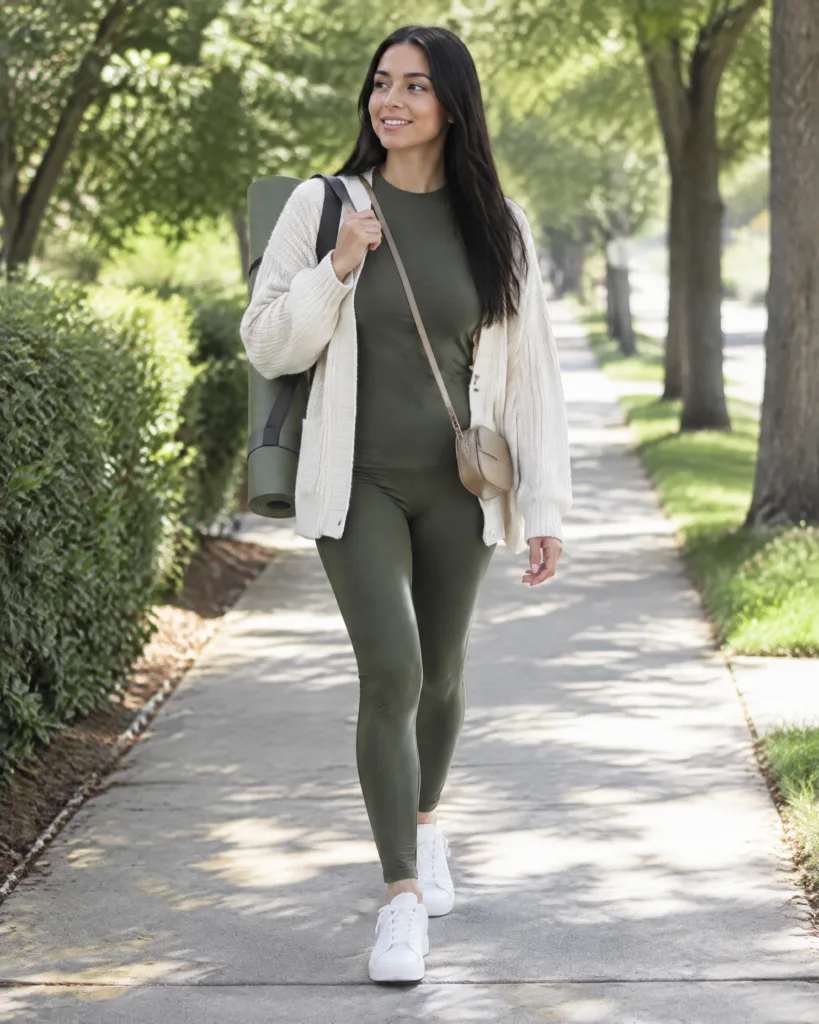
A few easy swaps help: change into a dry top if you sweated, trade your bra for a fresh one, and pack a structured layer that hides creases. Wide-leg knit pants or a knit midi skirt over leggings also make a quick, polished change.
Shoes, Socks and What to Bring
Yoga is practiced barefoot because bare feet grip the mat and help with balance. Grip socks with rubber dots are a good option if your feet get cold or slip, but regular cotton socks can be slippery and are best avoided on the mat. Wear easy slip-on shoes to class and leave them by the door. Grip socks are often required on the reformer, so if you also take Pilates, our guide on what to wear to pilates covers studio rules.
| Item | Why it helps |
|---|---|
| Yoga mat | Many studios lend or rent mats, but your own is more hygienic |
| Water bottle | For before and after class |
| Small towel | Wipes hands and face in active classes |
| Light layer | Keeps you warm in savasana |
| Grip socks | Warmth and traction on cold floors |
| Hair ties | Keep hair off your face in folds |
What Not to Wear to Yoga
Avoid anything that is see-through when stretched, too loose, scratchy or noisy. Thin pale leggings, baggy tees, zippers and buttons that press into the mat, belts and dangling jewelry are the most common mistakes. Strong perfume is worth skipping too, since classes are often quiet and close together.
Do
- Wear opaque, stretchy leggings that pass the squat test.
- Choose a top that stays over your stomach when you fold forward.
- Tie back long hair with a soft, non-slip tie.
Don’t
- Wear thin, pale leggings that turn sheer when stretched.
- Wear jeans, belts, zippers or buttons that dig in on the floor.
- Wear dangling earrings, bracelets or heavy perfume.
Caring for Yoga Clothes
To keep leggings opaque and odor-free, wash them soon after class, inside out, in cool or warm water on a gentle cycle. Skip fabric softener, which can coat fibers and trap odor, and air dry or tumble dry on low, since high heat can wear down stretch fibers and make fabric thinner over time.
Wash darker leggings with similar colors to avoid lint, and do not leave damp clothes sitting in a gym bag. Replace leggings that start to pill heavily or lose opacity in the squat test. A little care keeps a good pair performing for years.
Yoga is generally gentle, but if you are pregnant, recovering from an injury or have a health condition, check with your doctor before starting and let your teacher know so they can suggest modifications.
Planning other outings this season? Our guides on what to wear running and what to wear to a rodeo cover very different dress codes with the same comfort-first approach.
Frequently asked questions
What should I wear to yoga for the first time?
Wear fitted, stretchy clothes you already know are comfortable: dark high-waisted leggings, a light- or medium-support sports bra and a fitted tank or tee. Bring a light layer for the end of class and tie back long hair. You will practice barefoot, so slip-on shoes are handy, and most studios lend or rent mats.
What do women usually wear to yoga?
Most women wear high-waisted leggings or fitted bike shorts with a sports bra and a fitted tank or T-shirt. In cooler studios or gentle classes, many add a long-sleeve top, a light sweater or grip socks. Matching sets are popular, but any comfortable, opaque and stretchy pieces that stay in place will work just as well.
Do I have to wear a bra to yoga?
No, it is a personal choice. Many women prefer a light- or medium-support sports bra because it keeps them comfortable and covered during forward folds and inversions. Others choose a tank with a built-in shelf bra. Choose whatever lets you move freely without needing to adjust your clothes between poses.
Is there a dress code for yoga?
Most studios have no formal dress code. The general expectation is comfortable, non-revealing clothing that stays in place and lets you move freely. Some studios ask you to remove shoes before entering the practice room or to avoid strong fragrance. Check your studio’s website or ask at the front desk if you are unsure.
Can I wear shorts to yoga?
Yes. Fitted bike shorts or shorts with a built-in liner work well, especially in warm weather or active styles like vinyasa and power yoga. Avoid loose, short running shorts that can ride up in inversions or seated poses. If your legs slip in arm balances, full-length or 7/8 leggings offer more grip.
Should I wear socks to yoga?
Yoga is usually practiced barefoot for better grip and balance. If your feet get cold or you prefer extra traction, grip socks with rubber dots on the soles are a good option. Avoid regular cotton socks on the mat because they can be slippery. Warm socks are welcome during savasana in cool studios.
Can I wear joggers or sweatpants to yoga?
Yes, especially in gentle styles like hatha, yin and restorative yoga. Choose fitted joggers with cuffed ankles so fabric does not bunch or cover your feet. In faster flows, loose sweatpants can get in the way and make alignment harder to see, so leggings are usually more comfortable.