


How to wash white clothes so they stay bright comes down to six habits: sort whites by fabric, read the care label, pre-treat stains, pick the warmest water the fabric allows, use an enzyme detergent with an oxygen booster, and dry on low heat or in the sun. Done consistently, these steps prevent most yellowing and graying before it starts. Once your whites are bright again, our guide to all-white outfits for women shows how to wear them.
This guide builds on our main how to wash clothes guide and focuses on everything specific to whites: water temperature by fabric, machine and hand-wash methods, the right whiteners, soak recipes for yellowed or dingy pieces, drying, and the common mistakes that dull white laundry over time. Care depends on fiber, so check our types of fabric guide before you wash.
Quick answer
- Wash whites only with whites, and separate heavy cotton from delicates and synthetics.
- Use hot or warm water for sturdy cotton and linen, cold for delicates, silk, wool and most synthetics.
- Oxygen bleach is the safest everyday whitener; save chlorine bleach for plain white cotton only.
- Never mix bleach with vinegar, ammonia or other cleaners.
- Fix yellow or gray whites with a long oxygen-bleach soak, then a warm wash and air dry.
- Use less detergent and softener than you think; residue is a major cause of dull whites.
How to Wash White Clothes: Quick Steps
To wash white clothes, sort them away from colors, check each care label, pre-treat stains, choose the warmest water the fabric tolerates, add an enzyme detergent plus an oxygen booster, and dry on low heat or outdoors. Following these steps every time is what keeps whites bright, rather than a single rescue soak.
- Sort: keep whites separate from colors, then split heavy cottons from delicates and synthetics.
- Check the label: confirm the maximum water temperature and whether bleach is allowed.
- Pre-treat: work detergent or a stain remover into collars, cuffs, underarms and spots.
- Set the temperature: hot for sturdy cotton, warm for most whites, cold for delicates.
- Add detergent and booster: use the recommended dose of an enzyme detergent and an oxygen-based booster.
- Dry properly: air dry in sunlight or tumble on low; check stains are gone before using heat.

Hot or Cold Water for Whites?
Use hot water for sturdy white cotton such as sheets, towels and plain tees, warm water for most everyday whites, and cold water for delicates, silk, wool, spandex blends and most synthetics. Hot water lifts body oils and soil better, but it can shrink, weaken or yellow fragile fibers, so the care label always has the final say.
| Fabric | Water temperature | Bleach option | Notes |
|---|---|---|---|
| Sturdy cotton (tees, towels, sheets) | Hot or warm | Oxygen; chlorine if the label allows | Best fabric for regular whitening |
| Linen | Warm | Oxygen | Air dry to limit wrinkles and shrinkage |
| Polyester and nylon | Warm or cold | Oxygen only | Chlorine can yellow synthetics |
| Cotton-spandex blends | Cold | Oxygen only | Heat breaks down stretch fibers |
| Silk | Cold, hand wash | None | Use a pH-neutral detergent |
| Wool and cashmere | Cold, hand wash | None | Never use chlorine or enzymes on wool |
| Lace and lingerie | Cold, delicate | Oxygen, diluted | Wash in a mesh laundry bag |
How to Wash Whites in the Washing Machine
To wash whites in the washing machine, group them by fabric and soil level, pre-treat stains, add an enzyme detergent and oxygen booster, then choose a cycle that matches the sturdiest care label in the load. Leave enough room for clothes to move freely, since crowded loads rinse poorly and redeposit grime on fabric.
Sort by Fabric and Soil Level
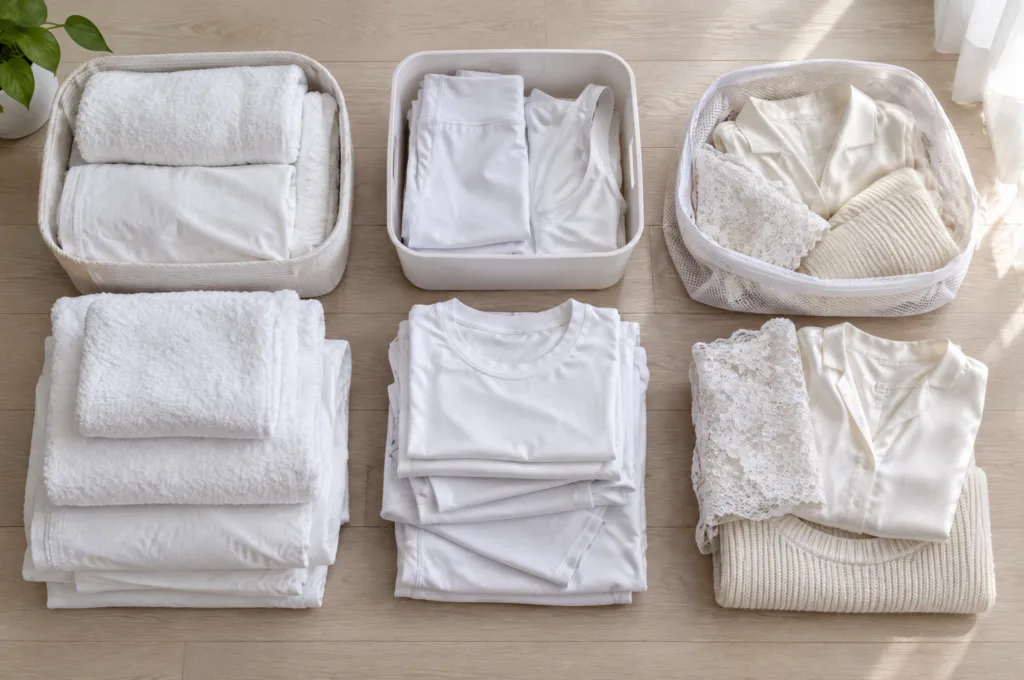
A white load still needs sorting. Heavy cotton towels can rough up thin tees and lace, and a muddy pair of white jeans can gray a load of lightly worn shirts. Make one pile for sturdy cotton and linen, one for synthetics and activewear, and one for delicates that may need a gentle cycle or hand washing.
Pre-Treat Stains
Treat stains before they reach the drum. Rub a little liquid enzyme detergent into collars, cuffs and underarms, and let it sit for 15 to 30 minutes. For food, grass or makeup, use a stain remover and gently work it in with your fingers or a soft brush. Avoid hot water on protein stains like blood or sweat until they are lifted, since heat can set them.
Stylist’s tip
Turn white tees and shirts inside out before washing. The inside of collars and underarms gets the most contact with body oils, so this gives the detergent better access where buildup starts.
Choose Detergent and Boosters
An enzyme-based detergent breaks down proteins, oils and starches, and many formulas include optical brighteners that help whites look whiter. Add an oxygen-based booster for regular maintenance. Measure carefully: too much detergent leaves a film that attracts dirt and makes whites look dull.
Pick the Right Cycle
Use a normal or heavy-duty cycle for cotton towels and sheets, permanent press for everyday shirts and blends, and delicate for lace, lingerie and lightweight knits. An extra rinse helps if you have hard water or sensitive skin. Load the drum no more than about three-quarters full.
How to Hand Wash White Clothes
Hand wash delicate whites such as silk blouses, lace, lingerie and fine knits in a clean basin of cool water with a small amount of gentle detergent. Soak for up to 30 minutes, swish gently, rinse until the water runs clear and press out water without wringing. This method protects fibers that machines and heat can stretch or yellow.
- Fill a clean sink or basin with cool water and add about a teaspoon of mild detergent.
- Submerge the garment and gently swish it for a minute or two.
- Let it soak for 15 to 30 minutes; spot-rub any marks with your fingertips.
- Drain, then rinse in fresh cool water until no suds remain.
- Roll the item in a clean towel to press out water.
- Dry flat or on a padded hanger out of direct heat.
For fiber-specific steps, see our guides on how to wash silk and how to wash a wool sweater, which cover pH-neutral detergents and flat drying in more detail.
Best Detergents and Whiteners for White Clothes
The best detergent for white clothes is an enzyme-based formula with optical brighteners, paired with an oxygen-based booster for regular whitening. Chlorine bleach is effective only on plain white cotton and linen, while baking soda, vinegar and lemon juice work best as gentle helpers rather than replacements for a good detergent.
| Whitener | Best for | Avoid on | How to use |
|---|---|---|---|
| Oxygen bleach (sodium percarbonate) | Most washable whites, including synthetics | Wool, silk, leather trim | Add to the wash or use for a long soak |
| Chlorine bleach | Plain white cotton and linen | Spandex, wool, silk, polyester, prints | Dilute per the label; never pour directly on fabric |
| Baking soda | Deodorizing and boosting detergent | Silk and wool soaks | About half a cup in the drum |
| White vinegar | Removing detergent residue | Never mix with bleach | About half a cup in the rinse cycle |
| Lemon juice and sun | Light brightening of cotton | Silk; colored trims | Soak, then dry in direct sun |
| Bluing | Counteracting yellow tones | Overuse leaves a blue tint | Very dilute in the rinse water |
Oxygen Bleach vs. Chlorine Bleach
Oxygen bleach releases oxygen in water to break up stains and is safe on most washable whites and many colors, which makes it the everyday choice. Chlorine bleach is stronger but harsh: it can weaken fibers, yellow polyester and spandex, and damage wool and silk. Use it only when the care label shows bleach is allowed, and always dilute it.
Baking Soda, Vinegar and Lemon
Baking soda softens water and deodorizes, so it helps detergent work harder. Vinegar in the rinse dissolves leftover detergent that makes whites look dingy. Lemon juice, combined with drying in the sun, gives cotton a light natural lift. Use vinegar and baking soda in separate steps, since mixed together they mostly cancel each other out.
Safety first: never mix chlorine bleach with vinegar, ammonia, lemon juice or other cleaning products. These combinations can release harmful gases. Use one product at a time, rinse well between treatments and keep the laundry area ventilated.
How to Make White Clothes White Again
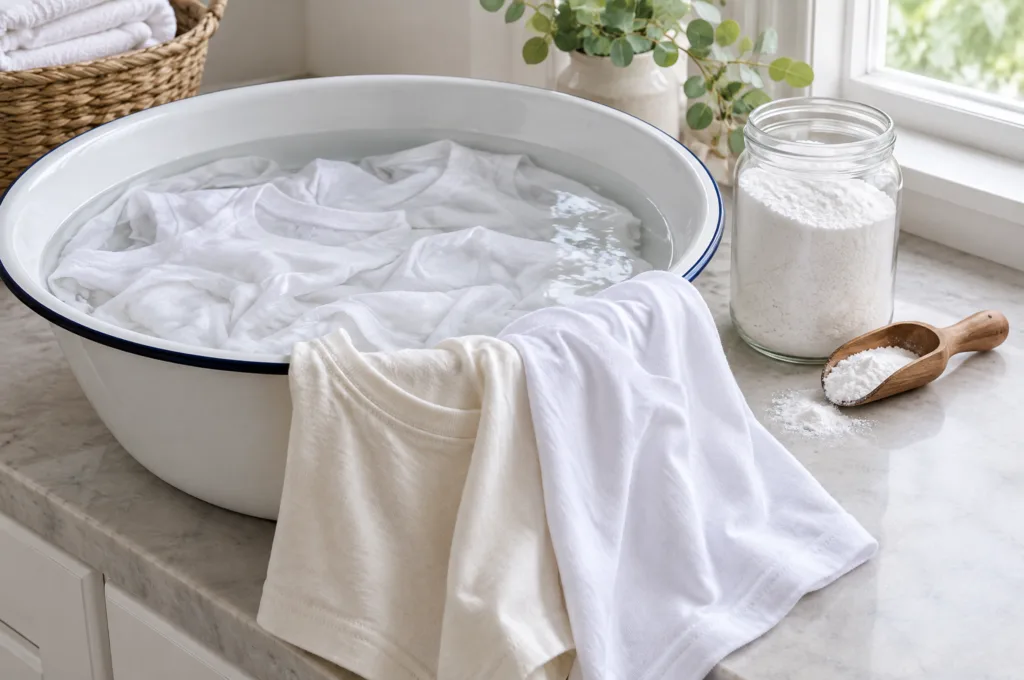
To make white clothes white again, soak them for several hours or overnight in hot water (as hot as the fabric allows) mixed with oxygen bleach, then wash warm with an enzyme detergent and air dry, ideally in sunlight. Repeat the soak for stubborn yellowing. Most dull whites are caused by built-up oils and residue rather than permanent damage.
Fixing Yellowed Whites
Yellowing usually comes from body oils, sunscreen, deodorant or storage in plastic. Dissolve oxygen bleach in a tub or bucket of hot water following the package directions, submerge the clothes fully and soak for six to eight hours or overnight. Wash as usual, then check the result before machine drying; a second soak often finishes the job.
Fixing Gray or Dingy Whites
Gray whites are usually a sign of detergent residue, hard water minerals or dye transfer from mixed loads. Run a wash with hot water (if the fabric allows) and no detergent to release residue, add half a cup of vinegar to the rinse, then wash again with a normal dose of detergent and an oxygen booster.
Removing Sweat and Underarm Stains
Sweat stains form when sweat mixes with antiperspirant ingredients. Make a paste of baking soda and a little water or a few drops of dish soap, rub it into the underarm area, and let it sit for 30 minutes to an hour. Then soak in an oxygen bleach solution and wash as usual. Skip chlorine bleach here, since it can make these stains darker.
| Problem | Likely cause | Fix |
|---|---|---|
| Yellow all over | Body oils, sunscreen, storage in plastic | Overnight oxygen-bleach soak, warm wash, sun dry |
| Yellow underarms | Sweat and antiperspirant buildup | Baking soda paste, oxygen soak, wash |
| Gray or dingy | Detergent residue, hard water, dye transfer | Hot rinse with no detergent, vinegar rinse, rewash with booster |
| Spotted or blotchy | Undissolved detergent or softener | Rewash with an extra rinse; use liquid detergent |
| Pink or blue tint | A colored item in the load | Rewash promptly with oxygen bleach; repeat if needed |
Drying White Clothes the Right Way
Dry white clothes outdoors in sunlight when you can, or tumble on low to medium heat and remove them promptly. Always check that stains are completely gone before machine drying, because high heat can set them permanently. Skip heavy fabric softener and dryer sheets, which coat fibers and gradually make whites look dull.
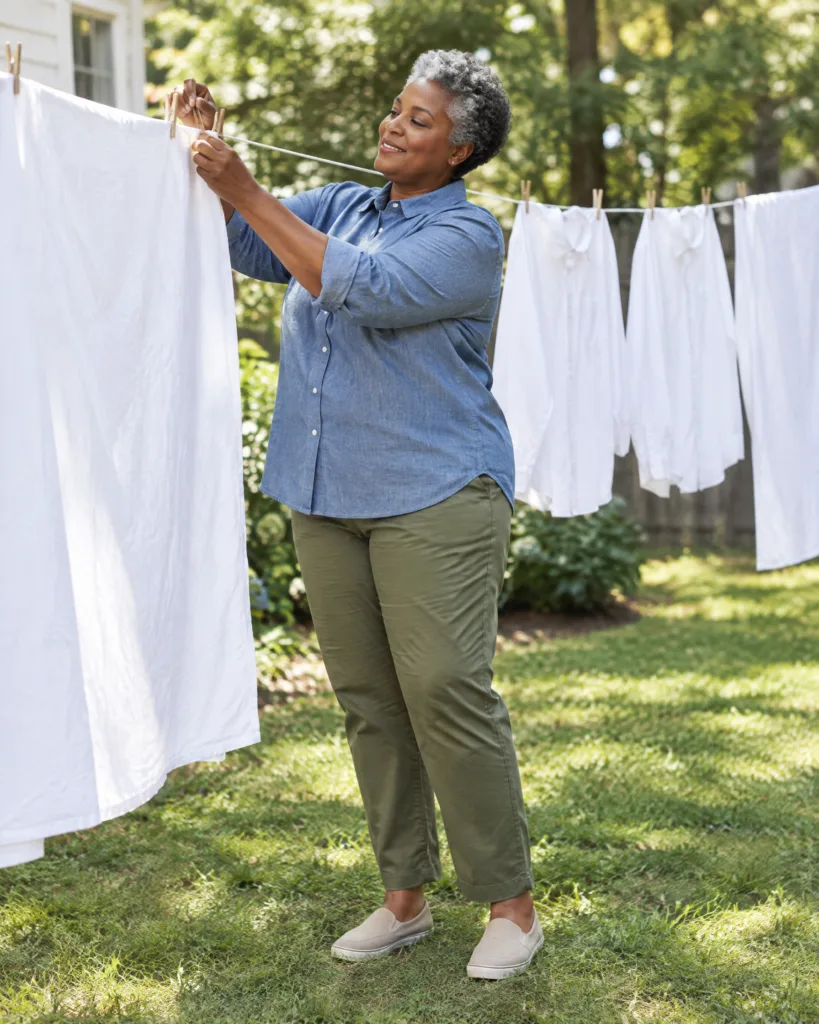
Sunlight is a gentle, natural whitener for cotton and linen, so hang shirts and sheets in direct sun. Dry silk, wool and spandex blends in the shade or indoors, since strong sun can weaken them. For tumble drying, wool dryer balls help clothes dry evenly without a softener coating.
Can You Wash Whites With Colors?
You can occasionally wash whites with colors in cold water, but it is not recommended for regular laundry. New or dark items can bleed dye and slowly turn whites gray, pink or blue. If you must combine loads, use cold water, a color-catcher sheet and only colorfast pieces that have been washed several times.
The safest exceptions are white items with colored details, such as a striped tee or a white polo shirt with a contrast collar. Wash those in cold water with an oxygen booster rather than chlorine. If you love crisp white tops, our guide on what to wear with a white polo shirt shows how to style them once they are bright again.
Fabric and Item-Specific Tips
Different white items need slightly different care. White jeans need cold washing inside out, white tees benefit from regular oxygen boosters, white dresses often need gentle cycles and lingerie needs mesh bags. Matching the method to the piece prevents shrinking, stretching and early yellowing while keeping each white item looking new longer.
- White jeans: wash inside out in cold water with similar whites, and air dry to protect stretch fibers and keep the fit.
- White tees: add an oxygen booster to every few washes and treat underarms before washing.
- White dresses: check for linings and trims; use the delicate cycle in a mesh bag or hand wash.
- White bras and lingerie: hand wash or use a mesh bag on delicate, cold; never use chlorine on elastic.
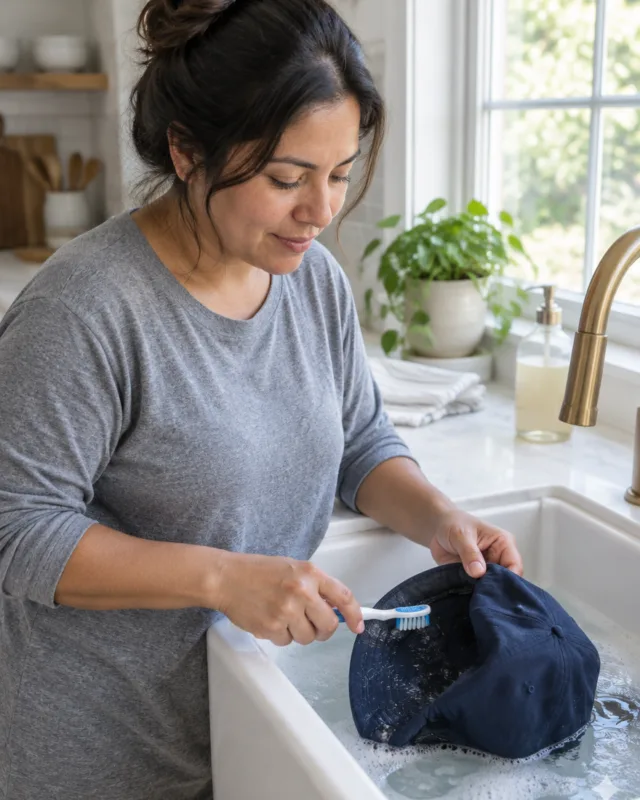
- White sneakers and hats: spot clean rather than adding them to clothes loads; see how to wash a hat for gentle methods. Canvas slip-ons need a similar approach; see how to wash Hey Dudes for the steps.

Storing Whites to Prevent Yellowing
Store whites clean, since leftover oils yellow over time. Fold them in breathable cotton bags or boxes rather than plastic, keep them away from light and humidity, and skip starch before long-term storage. Wash seasonal whites before putting them away and give them a quick rinse before wearing again.
Mistakes That Turn Whites Dull
The most common mistakes that dull whites are overloading the washer, using too much detergent or softener, mixing heavy and delicate fabrics, using chlorine bleach on synthetics and machine drying stained clothes. Fixing these habits often brightens whites more than any special product, and it protects fabric fibers too.
Do
- Wash whites only with whites and leave room in the drum.
- Measure detergent according to the load size and water hardness.
- Use oxygen bleach for routine brightening.
- Air dry in sunlight when the fabric allows.
Don’t
- Don’t use chlorine bleach on polyester, spandex, silk or wool.
- Don’t machine dry clothes until stains are fully gone.
- Don’t mix bleach with vinegar, ammonia or other cleaners.
- Don’t overuse fabric softener or dryer sheets.
Frequently asked questions
Is it better to wash whites in hot or cold water?
Hot or warm water is better for sturdy cotton and linen whites because it lifts body oils and soil. Cold water is safer for delicates, silk, wool, spandex blends and most synthetics, which can shrink or yellow in heat. Always check the care label for the maximum temperature before choosing.
How can I make my white clothes white again?
Soak them for six to eight hours or overnight in hot water with oxygen bleach, using as hot a temperature as the fabric allows. Then wash warm with an enzyme detergent and air dry, ideally in sunlight. Repeat the soak for stubborn yellowing, since several rounds may be needed.
How do you get whites white again without bleach?
Try a baking soda soak to lift odors and grime, a vinegar rinse to remove detergent residue, and lemon juice followed by drying in direct sun for cotton. A very dilute bluing agent can also counteract yellow tones. These methods are gentler but usually need repeating.
Does baking soda whiten clothes?
Baking soda boosts detergent, softens hard water and deodorizes, which helps whites look brighter. It is not a strong whitener on its own. For the best results, add about half a cup to the wash or combine it with an oxygen-bleach soak for yellowed or dingy pieces.
What is the best detergent for white clothes?
An enzyme-based detergent with optical brighteners is the best everyday choice, because enzymes break down oils and proteins while brighteners help whites look whiter. Pair it with an oxygen-based booster. Choose a pH-neutral, enzyme-free formula for silk and wool, and always follow the dosing guidance.
Can you wash white clothes with colors?
It is better not to. Dyes can bleed, especially from new or dark items, and slowly turn whites gray or tinted. If you must combine loads, wash in cold water with a color-catcher sheet and only colorfast pieces that have been laundered several times before.


1 comment
Comments are closed.