

The main types of boots for women are grouped by how high the shaft reaches: ankle boots, mid-calf boots, knee-high boots, over-the-knee boots and thigh-high boots, plus function boots built for rain, snow and trails. Within each height you will find named styles such as Chelsea, combat, riding and western boots, each with its own defining details and best outfits.
This glossary sits within our wider guide to types of fashion styles, and it focuses only on women’s boots. Below you will find a quick list, the anatomy terms shoe sites use, a comparison table, fit advice for wide calves and petite frames, and simple care basics.
Quick answer
- Boot names usually describe shaft height (ankle, mid-calf, knee-high, over-the-knee) or origin (Chelsea, riding, combat, western).
- Booties sit at or just below the ankle bone; ankle boots usually rise slightly above it.
- A black leather ankle boot and a brown knee-high riding boot go with almost everything in a US wardrobe.
- Match hem length to shaft height: cropped or straight pants with ankle boots, skirts and slim jeans with tall boots.
- Measure your calf at its widest point before buying tall boots; wide-calf shafts typically start around 15 to 16 inches.
The Main Types of Boots for Women (Quick List)
Women’s boots fall into five height groups and one function group. Ankle styles end near the ankle bone, mid-calf styles end halfway up the lower leg, knee-high styles stop just below the knee, over-the-knee and thigh-high styles cover the knee, and weather boots prioritize waterproofing, warmth or traction over looks. Our fall outfits for women hub pairs each boot style with seasonal layers.
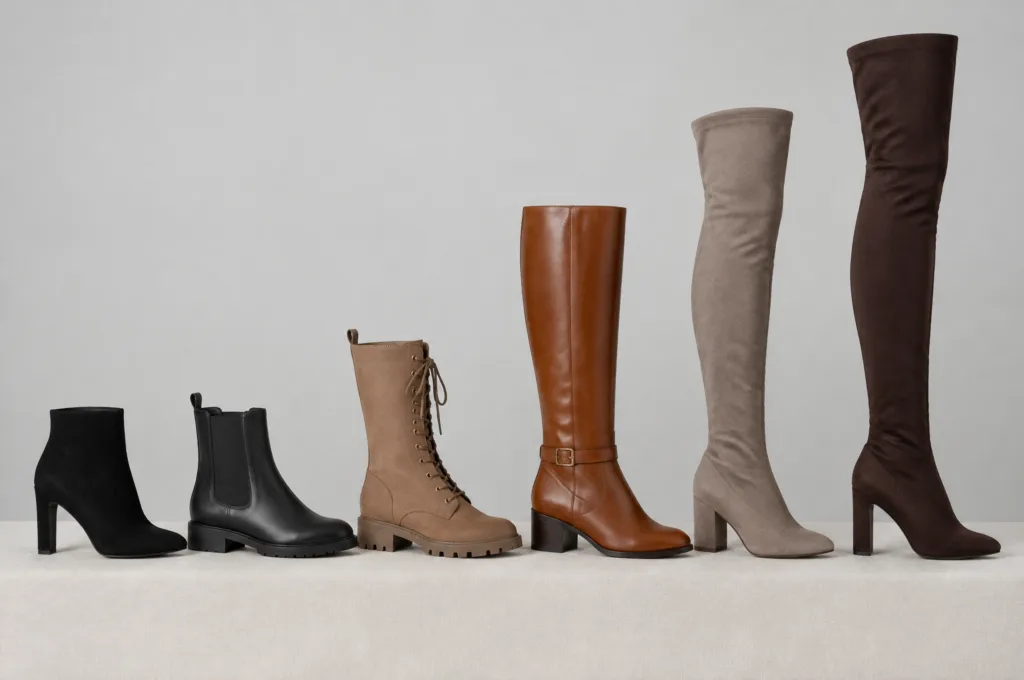
Here is the full list this guide covers, grouped by height:
- Ankle height: Chelsea boots, booties, sock boots, chukka boots, desert boots and western ankle boots.
- Mid-calf height: combat boots, moto boots and lace-up boots.
- Knee height: knee-high boots and riding boots.
- Above the knee: over-the-knee (OTK) boots and thigh-high boots.
- Western: classic cowboy boots, roper boots and western booties.
- Weather and outdoor: rain boots, snow boots and hiking boots.
Boots are one branch of a much larger footwear family. If you are building vocabulary for sneakers, flats and sandals too, see our guide to different types of shoes.
Women’s boot comparison table
| Boot style | Shaft height | Best season | Best outfit pairing |
|---|---|---|---|
| Chelsea boot | Ankle | Fall, spring | Straight or cropped jeans, trench coat |
| Bootie | At or below ankle | Fall, spring | Midi skirts, ankle pants, slip dresses |
| Chukka / desert boot | Ankle | Fall, spring | Chinos, relaxed denim, knit sweaters |
| Combat boot | Mid-calf | Fall, winter | Floaty dresses, cargo pants, leggings |
| Moto boot | Mid-calf | Fall | Skinny jeans, leather or denim jackets |
| Knee-high boot | Knee | Fall, winter | Sweater dresses, A-line skirts |
| Riding boot | Knee | Fall, winter | Skinny jeans, leggings, blazers |
| Over-the-knee boot | Above knee | Winter | Mini or knee-length dresses, slim jeans |
| Cowboy boot | Mid-calf | Year-round | Bootcut jeans, prairie dresses |
| Rain boot | Mid-calf to knee | Spring, fall | Leggings, tucked slim jeans, rain jacket |
| Snow boot | Ankle to mid-calf | Winter | Thermal leggings, puffer coat |
Boot Anatomy: Shaft, Heel, Toe and Sole Terms
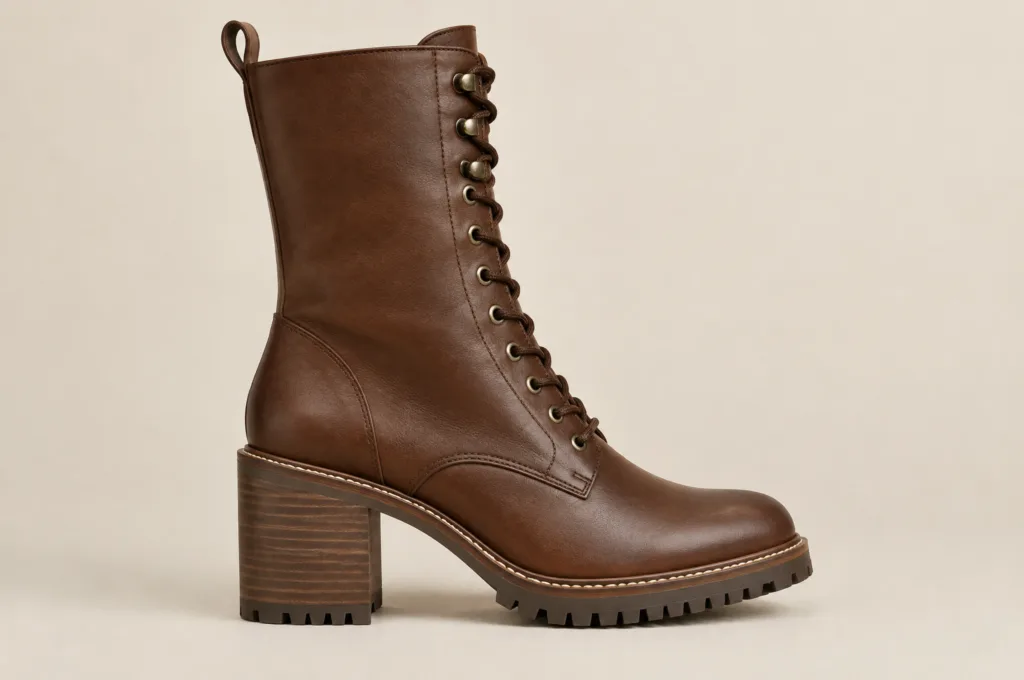
Boot anatomy terms help you read product descriptions and compare fit. The shaft is the part that covers your leg, the vamp covers the top of your foot, the heel sits under your heel, and the outsole touches the ground. Shaft height and circumference matter most for fit, while sole type decides traction and comfort.
| Term | What it means | Why it matters |
|---|---|---|
| Shaft | The upright tube that wraps the ankle and leg | Height decides the boot category; circumference decides calf fit |
| Shaft height | Measured from the arch to the top of the shaft | Helps you compare boots across brands |
| Vamp | Upper section over the toes and top of the foot | A higher vamp feels more secure |
| Toe box | Front shape: round, almond, square or pointed | Changes how long and sleek the foot looks |
| Heel | Raised block under the heel | Height and width affect comfort and balance |
| Pull tab | Loop at the back or sides of the shaft | Makes pulling on slip-on styles easier |
| Gusset | Elastic or flexible panel | Gives Chelsea and stretch boots their easy fit |
| Lug sole | Thick rubber sole with deep grooves | Adds grip on wet or uneven ground |
| Welt | Strip joining the upper to the sole | A stitched welt can often be resoled |
Ankle Boot Styles
Ankle boots are the most versatile type of women’s boot because they work with jeans, pants, skirts and dresses in three seasons. Their shaft ends near the ankle bone, so they leave the leg visible and pair easily with cropped hems. The four classic ankle styles are Chelsea, booties, chukkas and western ankle boots.

Chelsea boots
A Chelsea boot has elastic side panels and usually a pull tab at the back, so you slide it on without laces or zippers. It has a rounded toe, a low heel and a clean silhouette. Wear it with straight-leg or cropped jeans, a sweater and a trench coat. Lug-sole versions add grip and a more modern edge.
Booties and sock boots
Booties sit at or just below the ankle bone and often have a heel, which makes them a dressier choice. Sock boots are a variation with a stretchy, close-fitting shaft that hugs the ankle like a sock. Both look polished with midi skirts, slip dresses and ankle-length trousers, because the low shaft keeps the line of the leg visible.
Chukka and desert boots
Chukka boots are ankle-high lace-ups with two or three eyelets and a simple, rounded shape. Desert boots are a type of chukka, traditionally made of suede with a crepe rubber sole. Both lean casual. Pair them with relaxed jeans, chinos or corduroy pants and a chunky knit for an easy weekend look.
Western ankle boots
Western ankle boots borrow cowboy details, such as a slanted heel, decorative stitching and a pointed or snip toe, but in a shorter shaft. They are easier to wear daily than full cowboy boots. Style them with flared jeans, a denim midi skirt or a floral dress and a light jacket.
Stylist’s tip
If your pants pool on top of ankle boots, try a cropped or slightly flared hem that ends just above or skims the top of the shaft. That small gap or overlap keeps the outfit looking intentional.
Mid-Calf Boot Styles
Mid-calf boots rise roughly halfway up the lower leg, usually 8 to 12 inches from the arch. They feel sturdier and edgier than ankle boots and add warmth without the commitment of a tall shaft. The three main mid-calf types for women are combat boots, moto boots and lace-up boots.

Combat boots
Combat boots are lace-up boots with a lug sole and a rounded toe, inspired by military footwear. They offer traction and a rugged edge. A popular way to wear them is with a contrast piece: a flowing midi dress, a pleated skirt with tights, or cargo pants and an oversized sweater for a relaxed casual look.
Moto boots
Moto, or biker, boots usually have a slightly chunky heel, buckles, straps or zipper hardware, and a thick sole. They suit skinny jeans tucked in, a leather or denim jacket, and a plain tee. Choose a simpler moto boot with minimal hardware if you want a version that also works with a knit dress.
Lace-up boots
Lace-up mid-calf boots run from feminine heeled versions to outdoor-inspired flat ones. The laces let you adjust the shaft around your calf, which makes them a helpful option for wide or narrow calves. Wear them with leggings and a long cardigan, or with a knee-length skirt and opaque tights.
Tall Boot Styles
Tall boots cover most or all of the lower leg and look best with skirts, dresses and slim pants that tuck in smoothly. Knee-high and riding boots stop just under the knee, while over-the-knee and thigh-high boots extend above it. Tall boots add warmth and create a long, continuous line from hem to toe.

Knee-high boots
Knee-high boots end one to two inches below the kneecap. They come flat, block-heeled or stiletto-heeled, and in leather, suede or stretch fabric. They are a natural match for sweater dresses, A-line midi skirts and slim jeans. Fall and winter are their peak seasons in most of the US.
Riding boots
Riding boots are a knee-high style inspired by equestrian footwear: a flat or very low heel, a round toe and a straight, structured shaft, often with a back zipper. They are a reliable everyday tall boot. Wear them with skinny jeans or leggings, a fitted sweater and a blazer or quilted jacket.
Over-the-knee boots
Over-the-knee boots, often shortened to OTK, extend a few inches past the kneecap. Stretch suede or stretch leather helps them stay up. Pair them with a knee-length sweater dress or a longer coat so that the hem meets or overlaps the top of the boot, creating a clean line.
Thigh-high boots
Thigh-high boots reach mid-thigh and make a strong statement. They are usually made of stretch materials and often have a heel. For a balanced, modest look, wear them with a long oversized sweater dress or a longline coat that covers the top of the shaft, plus opaque tights.
Cowboy and Western Boots
Cowboy boots are western boots with a tall shaft, a slanted riding heel, a pointed or squared toe and decorative stitching on the shaft. Shorter ropers and western booties share the same details. They work year-round with jeans, denim skirts and flowy dresses, and they suit both country and city wardrobes.

The main western variations women see in stores are:
- Classic cowboy boot: a 12- to 13-inch shaft, a riding heel of about 1.5 inches and a pointed or snip toe.
- Roper boot: a shorter shaft, a lower heel and a rounded toe, made for comfort and walking.
- Western bootie: an ankle-height boot with western stitching and toe shape.
- Square-toe western boot: a wider, roomier toe box that many people find comfortable for long days.
For outfit formulas built around these boots, browse our western outfits for women, from bootcut jeans and denim shirts to prairie-inspired dresses.
Boots by Heel Type
Heel type changes how dressy and comfortable a boot feels. Flat and lug-sole boots are best for walking and casual wear, block heels balance height with stability, and stilettos read dressiest but take the most practice. Platform soles add height while keeping the foot at a gentler angle than a high, thin heel.
| Heel type | Typical height | Comfort | Dressiness | Best for |
|---|---|---|---|---|
| Flat | Under 1 inch | High | Casual | Errands, travel, school runs |
| Block heel | 1.5 to 3 inches | Medium to high | Smart casual | Office, dinner, all-day wear |
| Stiletto | 3 inches or more | Lower | Dressy | Evenings, events |
| Platform / lug sole | Varies | Medium | Casual to trendy | Fall weather, street style |
Flat
Flat boots include riding boots, Chelsea boots and most combat boots. They are the easiest to wear all day and suit both jeans and dresses.
Block heel
A block heel has a wide, squared base that spreads your weight over a larger area. It is the most popular choice for women who want a little lift and steady footing at work or on city sidewalks.
Stiletto
A stiletto heel is thin and tall. Stiletto booties and knee-highs look sharp with tailored trousers and dresses. For a deeper look at heel shapes, from kitten to cone, read our guide to types of heels.
Platform and lug sole
Platforms raise the whole sole, while lug soles add thick grooves for grip. Both feel substantial and add height without a steep angle.
Weather and Outdoor Boots
Weather and outdoor boots are built for function first. Rain boots are made of waterproof rubber, snow boots add insulation and grippy outsoles for cold, icy ground, and hiking boots provide ankle support and traction on trails. When choosing one, check the waterproof rating, the temperature rating and the tread depth.

Rain boots
Rain boots are pull-on rubber boots in ankle, mid-calf or knee heights. Look for a seamless rubber shaft and a textured sole. Pair them with leggings or slim jeans tucked in, a rain jacket and a crossbody bag.
Snow boots
Snow boots combine a waterproof lower, an insulated lining and a deep lug sole. Many list a temperature rating in °F; choose one that matches the coldest days where you live, and check the brand’s current specs before buying. For full cold-weather outfit ideas, see our winter outfits for women.
Hiking boots
Hiking boots are lace-up boots with a stiff sole, ankle support and aggressive tread. Mid-cut versions protect the ankle on rocky trails, while low-cut hikers feel lighter. Break them in on short walks before a long hike.
How to Choose the Right Boots
The right boots depend on your leg proportions, calf circumference, the climate where you live and how you plan to wear them. Start by measuring your calf, then choose a shaft height that matches your usual hemlines, and finish by picking a material you can realistically maintain through rain, salt and daily wear.
By height and leg shape
Shaft height and toe shape both change the visual line of the leg. Boots in a similar color to your pants or tights create a long, continuous line. Almond and pointed toes extend the look of the foot, while round toes feel more casual. Petite women often find that ankle boots with a slight V or a low-cut front, or knee-high boots that end just under the knee, keep proportions balanced. Taller women can wear any height, including OTK styles, with ease.
Use this pairing guide to match boots to hem lengths:
| Boot height | Pants pairing | Skirt or dress pairing |
|---|---|---|
| Ankle / bootie | Cropped, straight or flared jeans that end at or just above the boot | Midi skirts, maxi dresses, slip dresses |
| Mid-calf | Tucked-in skinny jeans, leggings, cargo pants | Midi and maxi dresses that meet or overlap the shaft |
| Knee-high | Skinny jeans or leggings tucked in | Knee-length or A-line skirts, sweater dresses |
| Over-the-knee | Slim jeans or leggings | Knee-length sweater dresses, longline coats |
Wide-calf fit tips
Measure around the widest part of your calf while seated with your foot flat. Compare that number to the boot’s listed shaft circumference, leaving about half an inch to an inch of room if you plan to wear jeans inside. Many brands label wide-calf shafts starting around 15 to 16 inches and extra-wide styles above that, but sizing varies, so check each product’s measurements. Stretch panels, lace-ups and adjustable buckles also add flexibility.
Leather vs suede care
Smooth leather is easy to wipe clean and handles light rain. Condition it every few months to keep it supple. Suede has a soft, napped surface that marks easily, so treat it with a protector spray before the first wear and brush it gently with a suede brush. Store tall boots with boot shapers so the shafts stay upright.
Do
- Measure your calf before ordering tall boots online.
- Waterproof suede boots before the first wear.
- Choose a block heel or lug sole for long days on your feet.
Don’t
- Tuck wide-leg pants into tall boots; the fabric bunches.
- Wear salt-stained boots without wiping them down.
- Store tall boots folded over, which can crease the shaft.
The 3 or 4 boots to own first
If you are building a capsule wardrobe, start with a black leather ankle boot or Chelsea boot, a brown knee-high riding boot, one weather boot suited to your climate (rain or snow), and, if you like it, a western or combat boot for personality. Those four cover workdays, weekends, dresses and jeans. When you shop for jeans to match, our guide to types of jeans explains which cuts tuck into boots and which sit over them.
Frequently asked questions
What are the different styles of women’s boots?
Women’s boot styles are grouped by height: ankle boots and booties, mid-calf boots, knee-high boots, over-the-knee boots and thigh-high boots. Function boots such as rain, snow and hiking boots form a separate group. Within those groups are named styles like Chelsea, combat, moto, riding and cowboy boots.
What are common names for women’s boots?
Common names include Chelsea boots (elastic sides), combat boots (lace-up with a lug sole), riding boots (flat knee-high), cowboy boots (slanted heel and stitched shaft), moto boots (buckles and hardware), booties (short, often heeled) and OTK, short for over-the-knee boots that extend above the kneecap.
What is the difference between booties and ankle boots?
Booties usually sit at or just below the ankle bone and often have a heel, which makes them feel dressier. Ankle boots typically rise slightly above the ankle bone and come in flat and heeled versions. Many stores use the two names loosely, so check the listed shaft height when you shop.
Which boots are in style in 2026?
Classic styles stay current year after year: sleek Chelsea boots, knee-high boots in leather or suede, riding boots and western boots. Lug soles and square or almond toes remain popular choices. Rather than chasing trends, choose a style that matches your daily outfits and climate so you will wear it often.
What boots go with everything?
Black leather ankle boots and brown knee-high riding boots go with most wardrobes. The ankle boot works with jeans, trousers and dresses, while the riding boot pairs with leggings, skinny jeans and skirts. Choose a low or block heel and a simple design so they move easily from weekday to weekend.
How do you wear boots with jeans?
Tuck skinny or slim jeans into tall boots so the denim lies flat inside the shaft. With ankle boots, wear straight, cropped or slightly flared jeans that end at or just above the top of the boot. Wide-leg and bootcut jeans look best worn over the boot rather than tucked in.