
The main types of sleeves fall into two groups: constructions, which describe how a sleeve is sewn to the bodice, and styles, which describe its length and shape. Knowing both helps you read product descriptions, shop online with confidence and choose tops and dresses that feel right on your arms. Sleeves are one of the quiet details that shape the overall look, much like the silhouettes in our guide to types of fashion styles.
The short answer: there are three basic sleeve constructions (set-in, raglan and kimono, with drop-shoulder as a common fourth), five standard lengths (cap, short, elbow, three-quarter and full), and dozens of named styles such as puff, bishop, bell, flutter and dolman. Most sleeves you see in stores combine one construction, one length and one shape.
Quick answer
- Set-in, raglan and kimono are the three basic sleeve constructions; drop-shoulder is a relaxed variation of set-in.
- Sleeve length runs from cap (covers the shoulder top) to full length (reaches the wrist bone).
- Volume sleeves such as puff, balloon and bishop add shape; flared sleeves such as bell and flutter add movement.
- Flutter, elbow, three-quarter and bell sleeves give soft upper-arm coverage without bulk.
- Raglan, dolman and flutter sleeves soften a strong shoulder line; puff and cap sleeves add width at the shoulder.
Types of Sleeves at a Glance
Sleeve types are named for how they attach, how long they are and what shape they take. Construction is the foundation (set-in, raglan, kimono, drop-shoulder), length sets where the hem lands on the arm, and style describes volume or flare. Use the chart below as a quick reference for every sleeve name in this guide.
| Sleeve | Group | What it looks like | Common on |
|---|---|---|---|
| Set-in | Construction | Seam circles the armhole at the shoulder point | Blouses, blazers, shirt dresses |
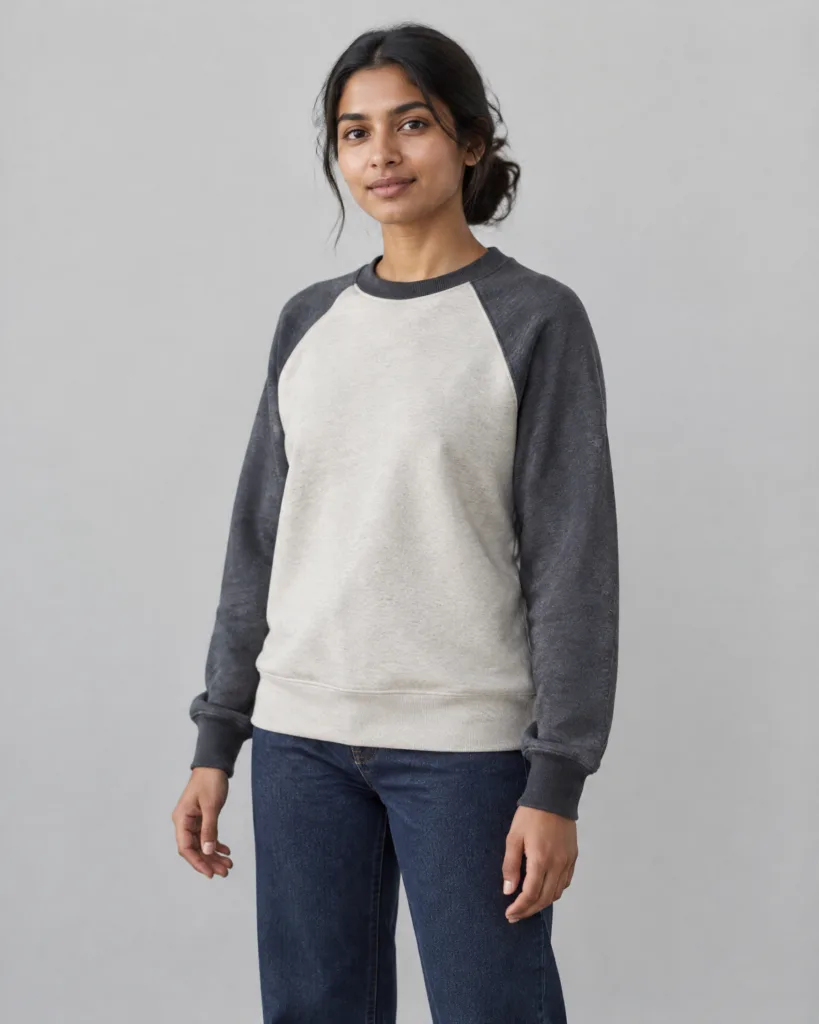
| Raglan | Construction | Diagonal seam from underarm to neckline | Sweatshirts, baseball tees, knits |
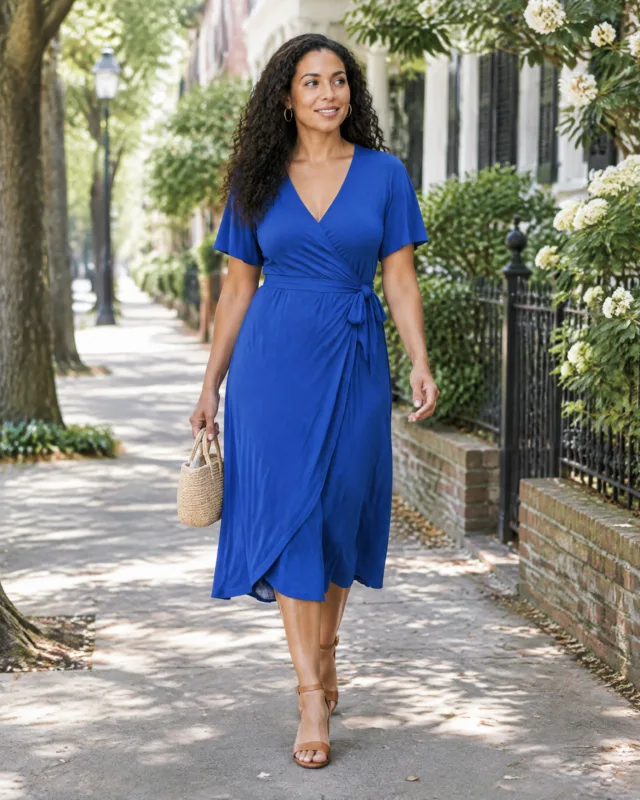
| Kimono | Construction | Cut in one piece with the bodice, no armhole seam | Wrap tops, robes, loose blouses |
| Dolman / batwing | Construction | Very deep armhole tapering to a fitted wrist | Sweaters, jersey tops |
| Drop-shoulder | Construction | Seam sits below the natural shoulder | Oversized sweaters, tees |
| Cap | Length | Covers the top of the shoulder only | Sheath dresses, summer tops |
| Short | Length | Ends mid upper arm | Tees, shirts, day dresses |
| Elbow | Length | Ends at the elbow | Blouses, knit dresses |
| Three-quarter | Length | Ends between elbow and wrist | Tops, jackets, dresses |
| Full | Length | Reaches the wrist bone | Shirts, coats, sweaters |
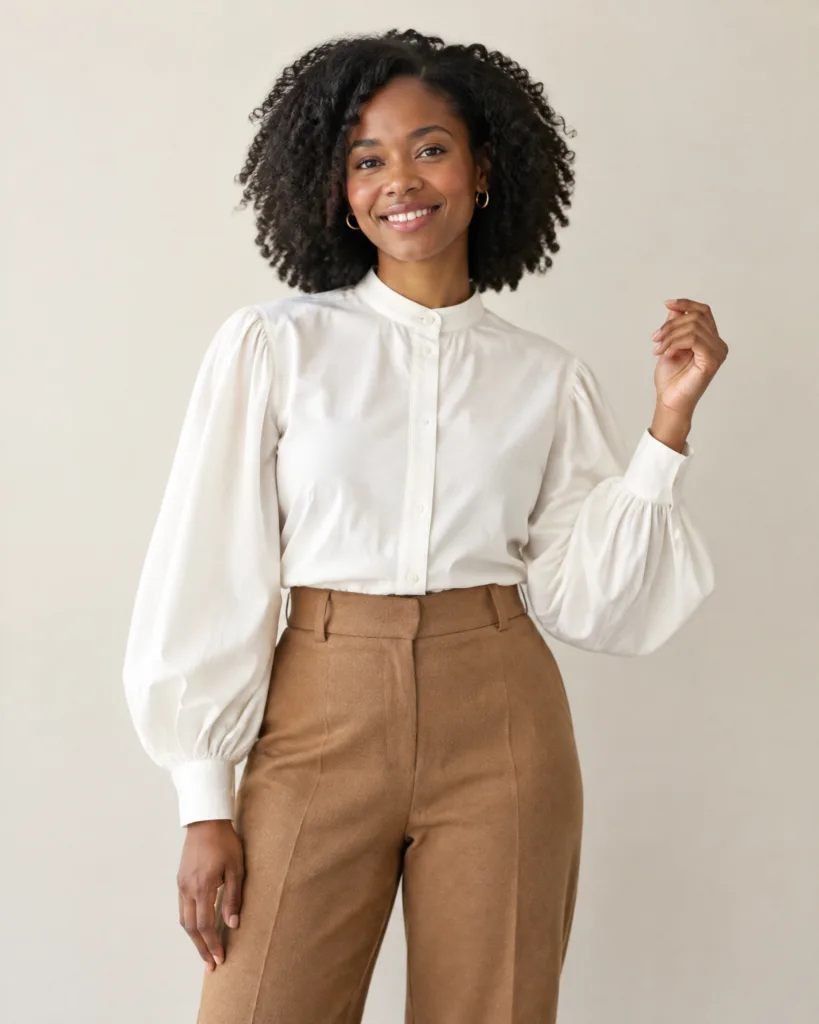
| Puff | Volume | Gathered at the shoulder or cuff | Blouses, party dresses |
| Balloon | Volume | Full along the arm, gathered into a cuff | Statement blouses, knits |
| Bishop | Volume | Full at the lower arm, gathered into a cuff | Peasant blouses, maxi dresses |
| Lantern | Volume | Rounded volume pinched at the middle | Evening tops |
| Leg-of-mutton | Volume | Full at the upper arm, fitted from elbow down | Vintage-inspired blouses |
| Juliet | Volume | Short puff at the top over a long fitted sleeve | Romantic and bridal dresses |
| Bell | Flared | Fitted at the top, flares toward the wrist | Boho tops, midi dresses |
| Trumpet | Flared | Fitted to the elbow, then flares | Dressy blouses |
| Flutter | Flared | Short, loose, lightweight ruffle | Summer dresses, tops |
| Angel / cape | Flared | Long open panel that drapes from the shoulder | Evening and occasion wear |
| Cold-shoulder | Shoulder-baring | Sleeve with a cutout at the shoulder | Casual and resort tops |
| Off-the-shoulder | Shoulder-baring | Sleeve sits below the shoulder line | Summer tops, party dresses |
| Split / slit | Shoulder-baring | Sleeve open along its length | Occasion wear |

The Basic Sleeve Constructions
The three basic sleeve constructions are set-in, raglan and kimono, and they differ in where the seam joins the bodice. Set-in sleeves meet the body at the shoulder point, raglan sleeves run diagonally to the collar, and kimono sleeves are cut in one piece with the bodice. Drop-shoulder and dolman sleeves are variations on these.
Set-In Sleeves
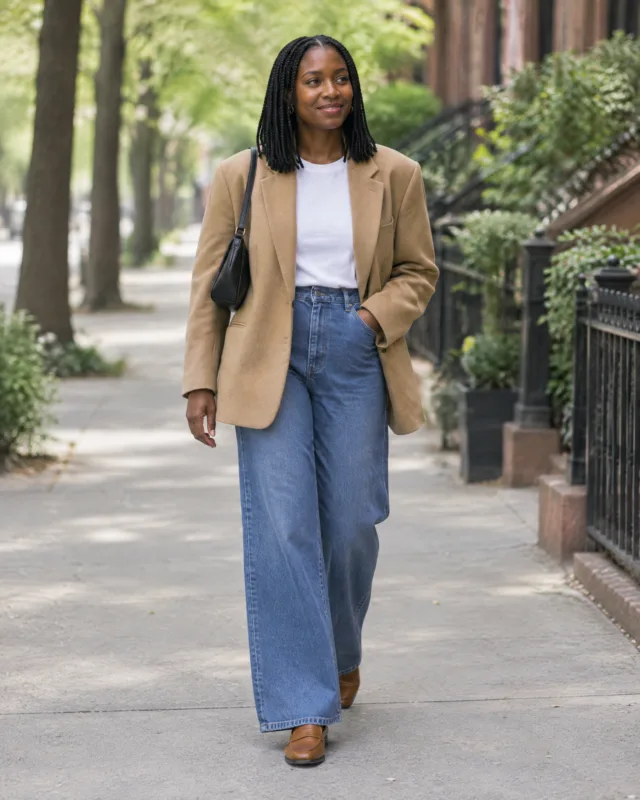
A set-in sleeve is sewn into a round armhole, with the seam sitting on the natural shoulder point. It is the most structured construction and the one you see on blazers, button-down shirts, sheath dresses and most tailored clothing. A well-fitted set-in sleeve hangs straight from the shoulder without pulling across the upper arm or wrinkling at the cap.
A taller sleeve cap looks crisp but limits arm lifting; a lower cap moves more easily, which is why casual shirts feel easier than tailored jackets.
Raglan Sleeves
A raglan sleeve has a diagonal seam that runs from the underarm up to the neckline, so the sleeve forms part of the shoulder. Sweatshirts, baseball tees and many knit sweaters use this construction. Because there is no seam on the shoulder point, raglan sleeves look relaxed, allow easy movement and visually soften a broad or angular shoulder.
Kimono and Dolman Sleeves
A kimono sleeve is cut in one piece with the front and back of the garment, with no separate armhole seam. It creates a soft, continuous line from neck to wrist, common on wrap tops and loose blouses. A dolman, also called a batwing, has an extra-deep armhole that may reach the waist, then tapers to a fitted wrist.
Drop-Shoulder Sleeves
A drop-shoulder sleeve is a set-in sleeve whose seam sits below the natural shoulder, partway down the upper arm. It gives the relaxed, slouchy look of oversized sweaters, boyfriend shirts and roomy tees. Because the seam is lowered on purpose, sizing down rarely fixes the look; choose your usual size and let the shoulder fall naturally.
Sleeve Types by Length
Sleeve length is measured by where the hem lands on the arm: cap sleeves cover only the shoulder top, short sleeves end mid upper arm, elbow sleeves end at the elbow, three-quarter sleeves stop between elbow and wrist, and full-length sleeves reach the wrist bone. Each length changes the balance of an outfit and how warm it feels.
Cap and Short Sleeves
A cap sleeve is a small, shaped piece that covers the top of the shoulder and stops before the underarm. It reads polished on sheath dresses and fitted tops. A short sleeve ends around the middle of the upper arm and is the standard on tees and camp shirts. Both work for warm weather and layer neatly under cardigans.
Elbow and 3/4 Sleeves
An elbow-length sleeve ends right at the elbow, while a three-quarter (3/4) sleeve stops a few inches lower, around mid-forearm. Both offer arm coverage without feeling hot and show off a bracelet or watch. Three-quarter sleeves are popular on blouses, ponte dresses and cropped jackets, and they are practical when you cook, write or work at a desk.
Full-Length Sleeves
A full-length or long sleeve should reach the wrist bone when your arm hangs at your side, and stay close to it when you bend your elbow. Shirts, sweaters and coats use this length. If long sleeves always look short on you, look for tall sizing or styles with a cuff you can unbutton.
| Length | Where it ends | Best seasons |
|---|---|---|
| Cap | Top of the shoulder | Late spring to early fall |
| Short | Mid upper arm | Spring and summer |
| Elbow | At the elbow | Spring and fall |
| Three-quarter | Mid-forearm | Year-round |
| Full | Wrist bone | Fall and winter |

Volume and Statement Sleeves
Volume sleeves add fullness somewhere along the arm, usually through gathers, pleats or extra fabric. Puff and balloon sleeves are rounded, bishop and lantern sleeves gather volume toward the lower arm, and leg-of-mutton and Juliet sleeves add historic, romantic shape at the upper arm. They make a simple top feel like the focal point of an outfit.
Puff and Balloon
A puff sleeve is gathered at the shoulder seam, the cuff or both, creating a rounded shape that is usually short. A balloon sleeve carries the volume through the entire sleeve and is gathered into a cuff at the wrist or elbow, so it looks fuller and longer. Both pair best with simple bottoms such as straight jeans or a slim skirt.
Bishop and Lantern
A bishop sleeve is narrow at the shoulder and grows fuller toward the wrist, where it gathers into a cuff, creating a soft pouf at the forearm. It is a signature of peasant blouses. A lantern sleeve has two sections that meet in the middle of the arm, so the volume swells around a seam, like a paper lantern.
Leg-of-Mutton and Juliet
A leg-of-mutton, or gigot, sleeve is very full at the upper arm and fitted from the elbow to the wrist, a shape borrowed from 19th-century dress. A Juliet sleeve combines a short puff at the top with a long, close-fitting lower sleeve. Both bring a vintage or romantic note to blouses and occasion dresses.

Stylist’s tip
Keep the rest of the outfit quiet when you wear a statement sleeve. A sleek bottom, minimal jewelry at the wrist and a simple neckline let the sleeve do the work.
Flared and Flowy Sleeves
Flared sleeves widen as they move away from the body, so they swing and drape when you move. Bell and trumpet sleeves flare from a fitted top, flutter and butterfly sleeves are short and airy, and angel and cape sleeves hang as long open panels. They suit lightweight fabrics such as chiffon, crepe, rayon and jersey.
Bell and Trumpet
A bell sleeve is fitted at the shoulder and upper arm, then flares gradually toward the wrist in a bell shape. A trumpet sleeve stays fitted to around the elbow before flaring sharply, so the flare looks more dramatic. Both look elegant on midi dresses and blouses.
Flutter and Butterfly
A flutter sleeve is a short, loose layer of fabric that ripples over the shoulder and upper arm without gathering. A butterfly sleeve is similar but often cut wider or in two overlapping tiers. Both are a top choice for summer dresses because they feel cool and give soft coverage at the upper arm.
Angel and Cape
An angel sleeve is a long, wide panel that falls loosely from the shoulder, sometimes split down the middle. A cape sleeve is attached across the shoulder and drapes over the arm like a small cape, often with the arm free underneath. Both create movement and drama, so they appear most often in evening wear and occasion dresses.
Shoulder-Baring and Cutout Sleeves
Shoulder-baring sleeves open up the shoulder or arm while keeping some sleeve coverage. Cold-shoulder sleeves have a cutout at the top of the shoulder, off-the-shoulder sleeves sit below the shoulder line, and split sleeves open along the length of the arm. Sleeveless styles skip the sleeve entirely and finish the armhole with a facing or binding.
These styles are most common on summer tops, resort wear and party dresses. A cold-shoulder top keeps the strap or upper sleeve in place, so it is easier to wear with a regular bra than an off-the-shoulder style. For more coverage, layer a cardigan over a sleeveless dress for cooler rooms.
Best Sleeve Types for Your Arms and Body Shape
The best sleeve for you depends on where you want balance and how much coverage you like. Flutter, elbow, three-quarter and bell sleeves give soft upper-arm coverage; raglan, dolman and flutter sleeves soften a strong shoulder; and puff, cap and structured set-in sleeves add width to narrow shoulders. Comfort and personal preference always come first.
| Goal | Sleeves that help | Why they work |
|---|---|---|
| Soft upper-arm coverage | Flutter, elbow, 3/4, bell | Cover the upper arm without clinging |
| Soften broad shoulders | Raglan, dolman, kimono, flutter | No seam on the shoulder point; diagonal or flowing line |
| Add shoulder definition | Puff, cap, structured set-in | Add width or crisp shape at the shoulder |
| Balance fuller hips | Puff, Juliet, leg-of-mutton | Bring visual volume up to the shoulder line |
| Petite frames | Cap, short, 3/4, small puff | Keep proportions light; avoid sleeves that swallow the arm |
| Long arms | Bishop, balloon, cuffed full sleeves | Volume and cuffs fill the length nicely |
If you have broad shoulders compared with your hips, the inverted triangle body shape guide explains why raglan and dolman sleeves feel so easy to wear. If you carry more fullness at the midsection, our apple body shape guide pairs well with three-quarter and flutter sleeves on tops that skim the waist.

Fit checks matter as much as style. A set-in seam should sit at the outer edge of your shoulder bone, the sleeve should let you reach forward without pulling across the back, and the cuff should rest at the wrist bone with your arm relaxed. Over-50 and petite shoppers often find that a slightly shorter full sleeve, or a 3/4 sleeve, looks most balanced.
Sleeves Used in Dresses, Tops and Jackets
Each garment favors certain sleeves. Dresses use cap, flutter, puff, bishop and bell sleeves most often; blouses and tops lean on set-in, kimono, puff and bell; knits favor raglan, dolman and drop-shoulder; and jackets and coats rely on structured set-in sleeves, sometimes with two pieces to follow the bend of the elbow.
| Garment | Most common sleeves | Notes |
|---|---|---|
| Day dresses | Flutter, cap, short puff, 3/4 | Easy coverage for warm weather |
| Maxi and boho dresses | Bishop, bell, kimono | Flowing lines match long skirts |
| Occasion dresses | Cap, cape, Juliet, off-the-shoulder | Shape and drama for photos |
| Blouses | Set-in, puff, balloon, bishop | Cuffs and gathers add polish |
| Tees and sweatshirts | Set-in short, raglan, drop-shoulder | Comfort and range of motion |
| Sweaters | Raglan, dolman, drop-shoulder | Relaxed knits layer easily |
| Blazers and coats | Two-piece set-in | Shaped to follow the elbow |
When you shop by garment, our guide to types of dresses names the silhouettes these sleeves usually appear on, and the guide to types of jeans helps you pick a leg shape that balances a full sleeve. A structured sleeve also pairs neatly with a sleek shoulder bag or clutch; see our types of bags glossary for shapes that sit well against volume.

Do
- Check that a set-in seam sits at the edge of your shoulder bone.
- Pair a statement sleeve with a simple bottom and neckline.
- Choose flutter or 3/4 sleeves for soft, breathable coverage.
- Steam volume sleeves from the inside to keep their shape.
Don’t
- Wear wide bell sleeves to a messy dinner or while cooking.
- Size down in a drop-shoulder style to make the seam sit higher.
- Stack bulky bracelets over a cuffed balloon sleeve.

Frequently asked questions
What are the different types of sleeves?
Sleeves are grouped by construction and by style. The constructions are set-in, raglan, kimono and drop-shoulder. Styles are described by length, from cap to full, and by shape, such as puff, balloon, bishop, bell, flutter, dolman, Juliet and cold-shoulder. Most garments combine one construction, one length and one shape.
What are the three basic types of sleeves?
The three basic types of sleeves are set-in, raglan and kimono. A set-in sleeve is sewn into a round armhole at the shoulder point, a raglan sleeve has a diagonal seam from underarm to neckline, and a kimono sleeve is cut in one piece with the bodice, so it has no separate armhole seam.
What are the seven main types of sleeves?
Seven common sleeve types are cap, puff, bishop, bell, raglan, kimono and set-in. Together they cover the basic constructions and the most popular shapes you will see on blouses and dresses. Other frequent names include flutter, dolman, balloon and three-quarter, which describe variations on length or volume.
Which sleeve type gives the most upper-arm coverage?
Flutter, elbow-length, three-quarter and bell sleeves give soft upper-arm coverage without clinging. Flutter sleeves stay airy for summer, while three-quarter and elbow sleeves work year-round. Choose lightweight, opaque fabrics such as crepe, jersey or cotton, and make sure the sleeve opening is roomy enough to move freely.
What is the difference between a puff and a balloon sleeve?
A puff sleeve is gathered at the shoulder seam, the cuff or both, and is usually short with a rounded shape. A balloon sleeve carries volume through the whole length of the sleeve and gathers into a cuff at the elbow or wrist, so it looks fuller and more dramatic.
What sleeves are best for broad shoulders?
Raglan, dolman, kimono and flutter sleeves suit broad shoulders because they remove or soften the seam at the shoulder point and create a diagonal or flowing line. V-necks and fuller skirts or wide-leg pants add balance. Big puff sleeves and strong shoulder pads add width, so wear them only if you like that look.