

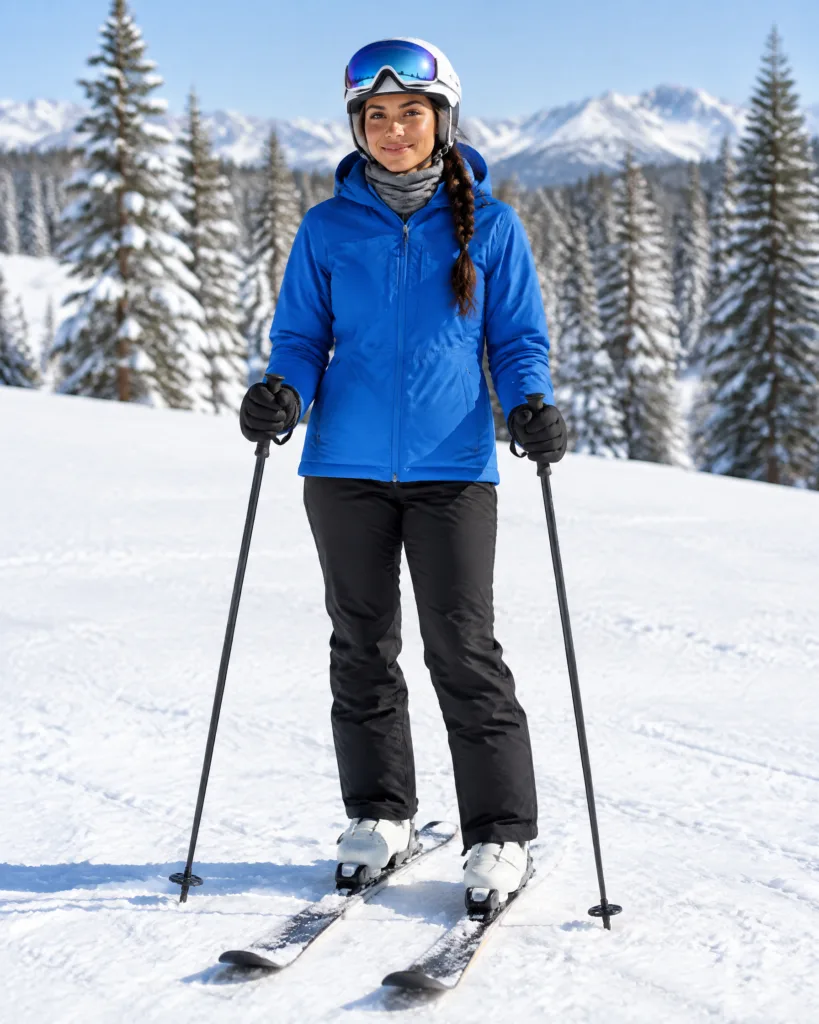
What to wear skiing comes down to three layers and a few key accessories: a moisture-wicking base layer, an insulating mid layer and a waterproof jacket and pants, plus ski socks, gloves or mittens, goggles and a helmet. Skip cotton and denim entirely, because they hold moisture and leave you cold and damp on the mountain.
This guide is part of our what to wear series on dressing for real-life occasions. Below you will find how to layer, ski pants vs bibs, a head-to-toe accessory list, outfits by temperature in Fahrenheit, a first-timer plan, what works if you have no ski clothes, snowboarding differences and cute après-ski looks.
Quick answer
- Dress in three layers: a wicking base, a warm mid layer and a waterproof, windproof shell on top and bottom.
- Choose merino wool or synthetic fabrics; avoid cotton, jeans and sweatshirts anywhere on your body.
- Wear one pair of thin ski socks, not two thick pairs, and keep your base layer out of your boots.
- A helmet, goggles, waterproof gloves or mittens and a neck gaiter matter as much as the jacket.
- Adjust your mid layer to the forecast: lighter in spring, heavier and doubled below 20°F.
- First-timers can rent helmets and skis and borrow shells; invest first in base layers, socks and gloves.
What to Wear Skiing: The Quick Answer
For a day of skiing, wear a thermal base layer top and leggings, a fleece or light puffy mid layer, a waterproof ski jacket and ski pants or bibs, one pair of ski socks, waterproof gloves or mittens, goggles, a helmet and a neck gaiter. Everything should be wool or synthetic, never cotton. Skiing is the cold-weather end of our sports and activity outfits hub.
| Body zone | What to wear | Skip |
|---|---|---|
| Head | Helmet (or warm beanie if not wearing one), thin balaclava | Cotton hat |
| Eyes | Ski goggles; sunglasses on sunny spring days | Fashion sunglasses in snow |
| Neck and face | Fleece or merino neck gaiter | Long loose scarf |
| Upper body | Base layer top, fleece or puffy, waterproof shell | Cotton tee, hoodie |
| Hands | Waterproof gloves or mittens, optional liners | Knit gloves |
| Legs | Thermal leggings, waterproof ski pants or bibs | Jeans, sweatpants, cotton leggings |
| Feet | One pair of thin to midweight ski socks | Cotton socks, two pairs layered |
How to Layer for Skiing
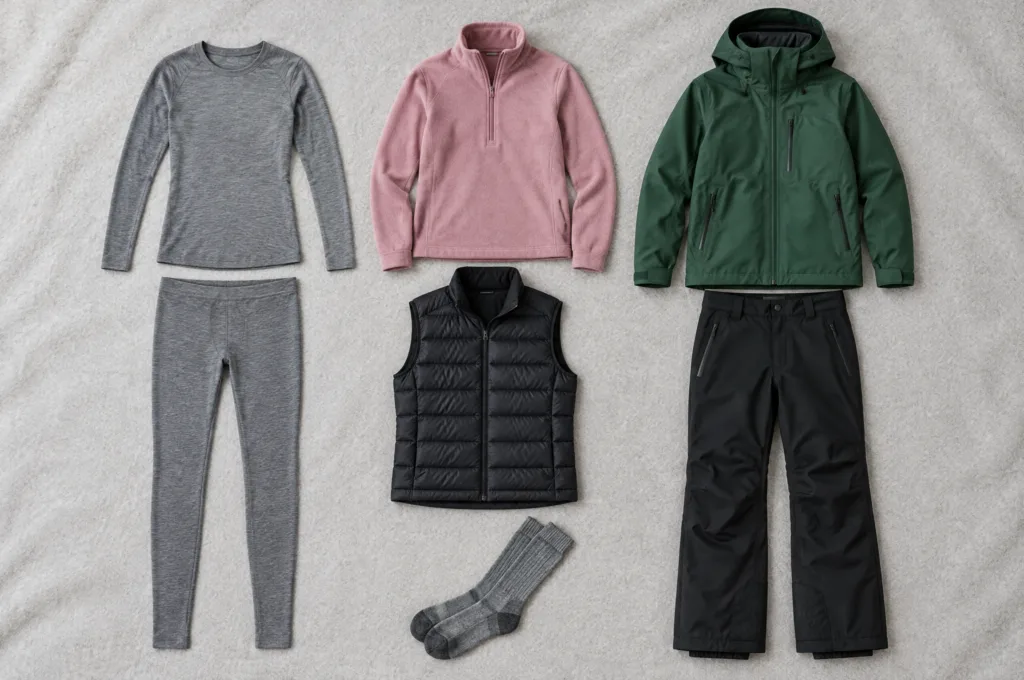
The three-layer rule for skiing means a base layer to move sweat off your skin, a mid layer to trap warmth and an outer layer to block wind, snow and moisture. Each layer has one job, and you can add or remove the middle one as the weather and your effort level change through the day.
Base layer
Your base layer sits next to your skin and keeps you dry, which is what keeps you warm. Choose a fitted long-sleeve top and full-length leggings in merino wool or a synthetic like polyester. Merino resists odor and stays warm when damp; synthetics dry faster and are often less expensive.
Pick a lightweight base for spring or for women who run warm, and a midweight base for most winter days. Women’s base layers usually come in fitted, longer-torso cuts so the top stays tucked when you bend. Wear a supportive, moisture-wicking sports bra and synthetic or merino underwear, not cotton.
Mid layer
The mid layer is your insulation and the piece you adjust most. A zip-neck fleece, a merino sweater or a thin down or synthetic puffy jacket all work. Look for a full or half zip so you can vent on the chairlift or during a lesson without taking anything off.
If you tend to run cold, try a light fleece plus a thin vest, or a fleece with a packable puffy over it on the coldest days. A synthetic puffy keeps insulating when damp, while down is lighter and warmer for its weight but should stay under a waterproof shell.
Outer layer
The outer layer, or shell, protects you from wind, snow and wet chairlift seats. A ski jacket and ski pants should be waterproof and breathable, with taped seams, pit zips for venting, a helmet-compatible hood and a powder skirt that snaps around your waist to keep snow out.
Jackets come as uninsulated shells, which rely on your mid layer for warmth, or insulated jackets with built-in fill. An insulated jacket is simpler for beginners and cold resorts; a shell is more versatile across seasons. For fit, choose a jacket that covers your hips when you raise your arms, with enough room to move over your mid layer.
Stylist’s tip
Do the chairlift test when trying on a ski jacket. Sit down, reach forward as if holding poles, and raise both arms; the hem should still cover your lower back and the sleeves should still reach your wrists.
Ski Pants vs Bibs
Ski pants and bibs both keep your legs dry, but bibs add a high front and back panel with shoulder straps that block snow from going down your waistband and stay put when you fall. Ski pants are simpler for bathroom breaks and easier to take on and off, while bibs add warmth to your core.
| Ski pants | Bibs | |
|---|---|---|
| Warmth | Good | Warmer around the torso |
| Snow protection | Relies on jacket powder skirt | Excellent, especially in deep snow |
| Bathroom breaks | Easiest | Look for drop-seat or side-zip designs |
| Fit | Waist-based, adjustable tabs | Strap-adjusted, flexible for longer torsos |
| Best for | Resort days, spring skiing | Beginners who fall often, cold or powder days |
Many women’s bibs now include a drop seat or a long side zipper, so you can use the restroom without taking off your jacket. Check this feature in person before you buy. For fit, try pants on with your ski boots or with thick socks; the hem should cover the top of the boot and sit just above the floor, and articulated knees make bending easier. Petite and tall lengths are common in women’s ski pants, so check the inseam rather than settling for rolled cuffs.

Ski Accessories You Need
Ski accessories protect the parts of your body that get cold first: your head, eyes, hands, neck and feet. The essentials are a helmet, goggles, waterproof gloves or mittens, ski socks and a neck gaiter or balaclava. Sunscreen and lip balm with SPF round out the list, since sun at altitude is strong even when it feels cold.
Helmet and goggles
A ski helmet is standard on the slopes and widely available to rent. It should sit level, snug and comfortable, about an inch above your eyebrows, with no gap between the helmet and the top of your goggles. Try your goggles with your helmet so the frames meet cleanly.
Choose goggle lenses for the light: darker lenses for bright sunny days and lighter lenses for flat light, clouds and snow. Many goggles come with interchangeable lenses. If you wear glasses, look for over-the-glasses goggles designed to fit over your frames.
Gloves vs mittens
Mittens are warmer because your fingers share warmth in one compartment, which makes them a smart pick for women with cold hands. Gloves offer more dexterity for buckles, zippers and phones. Whichever you choose, make sure they are waterproof, with a long cuff that goes over or under your jacket sleeve.
Thin liner gloves add warmth inside either style and let you use your hands briefly without exposing bare skin. Disposable hand warmers in your pockets or mittens are a simple fix for anyone who runs cold.
Ski socks
Wear one pair of thin to midweight ski socks in merino or synthetic that reach above your boot cuff. Thick socks or two layered pairs can bunch up, cut off circulation and actually make your feet colder. Tuck nothing into your boots except your socks; your base layer leggings should stop above the boot.
Neck gaiter or balaclava
A neck gaiter in fleece or merino covers your neck and pulls up over your nose and chin on windy lifts. A thin balaclava fits under a helmet and covers your head, ears and face on very cold days. Both are safer than a long scarf, which can catch on chairlifts.

What to Wear Skiing by Temperature
The right ski outfit changes with the temperature: in spring conditions above 40°F, drop to a light base and a shell; between 20°F and 40°F, wear a midweight base, fleece and insulated jacket; and below 20°F, add a puffy mid layer, a balaclava and mittens. Wind chill on lifts makes it feel colder than the forecast.
| Temperature | Base layer | Mid layer | Outer layer | Extras |
|---|---|---|---|---|
| Above 40°F | Lightweight top and leggings | Thin fleece or none | Shell with vents open | Sunglasses or light goggle lens, sunscreen |
| 30–40°F | Lightweight to midweight | Fleece | Shell or lightly insulated jacket | Neck gaiter, gloves |
| 20–30°F | Midweight | Fleece or light puffy | Insulated jacket | Gaiter, gloves or mittens |
| 0–20°F | Midweight or heavyweight | Fleece plus puffy vest or jacket | Insulated jacket and pants or bibs | Balaclava, mittens, hand warmers |
| Below 0°F | Heavyweight | Warm puffy | Insulated jacket and bibs | Balaclava, mittens with liners, face fully covered |
Spring skiing above 40 degrees
Spring days can swing from icy mornings to soft afternoon snow. Wear a lightweight base, skip or thin your mid layer and choose a shell with pit zips. Waterproof outerwear matters even more in spring because slushy snow soaks through quickly. Bring a lighter goggle lens and sunscreen for bright, reflective snow.
20 to 40 degrees
This is the most common range at many US resorts. A midweight base, a zip fleece and an insulated jacket or shell with a puffy usually feel right. Keep a neck gaiter handy for lifts, and open your vents after a long run.
Below 20 degrees
Below 20°F, protect every inch of skin. Layer a fleece and a puffy under your jacket, wear bibs for core warmth, swap gloves for mittens with liners and add a balaclava under your helmet. Take warm-up breaks indoors, and watch for numb or pale patches on your face or fingers.
What to Wear Skiing for the First Time
For your first time skiing, you need warm, waterproof layers, but not a full set of new gear. Rent skis, boots, poles and a helmet, borrow a ski jacket and pants from a friend if you can, and spend your budget on the pieces that touch your skin: base layers, ski socks and good gloves or mittens.
| Item | Rent | Borrow | Buy |
|---|---|---|---|
| Skis, boots, poles | Best option | Rarely fits well | Wait until you ski often |
| Helmet | Commonly offered | Only if it fits snugly | Good once you ski regularly |
| Jacket and ski pants | Some resorts and shops offer | Great option | Buy when you know your style |
| Goggles | Sometimes | Good option | Affordable first purchase |
| Base layers and ski socks | Not offered | Not recommended | Buy first |
| Gloves or mittens | Not offered | Possible | Buy first |
Look at what you already own: running or gym leggings in synthetic fabric, a fleece, a zip-up base layer from hiking or winter workouts, and your regular winter coat as a backup if it is waterproof. Rental and lesson offerings vary by resort, so check current options and prices before your trip.
Beginners spend more time sitting in the snow, so waterproof pants or bibs matter even more on day one than a fancy jacket does.
No Ski Clothes? What Works and What to Avoid
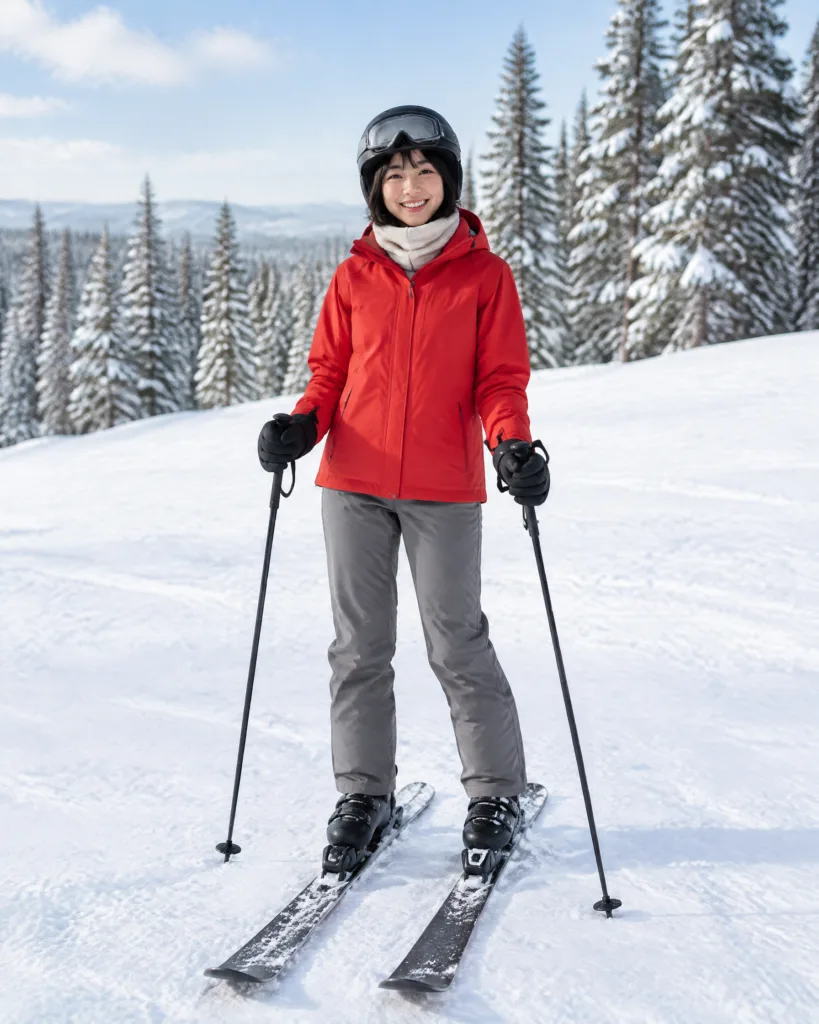
If you do not have ski clothes, you can still put together a safe outfit. Wear synthetic or wool leggings under waterproof rain pants, a fleece over a synthetic base top and a waterproof rain jacket or winter coat on top. Avoid jeans, cotton, sweatpants and loose scarves, which get wet, heavy and cold.
Do
- Wear thermal or synthetic leggings under waterproof rain pants.
- Layer a fleece under a waterproof rain shell or winter coat.
- Use waterproof winter gloves and a fleece or wool beanie under a rental helmet.
- Bring a spare pair of gloves and socks in a locker.
Don’t
- Ski in jeans; denim soaks up water and freezes.
- Wear cotton tees, hoodies or sweatpants as layers.
- Double up on thick socks inside ski boots.
- Wear a long loose scarf that can catch on lifts.
Running or workout leggings make a good base layer if they are synthetic. Our guides to what to wear running and what to wear to yoga explain which activewear fabrics wick sweat, and many of those pieces work under ski clothes.
Snowboarding vs Skiing Clothing Differences
Snowboarders wear the same three-layer system as skiers, but most choose a looser, longer jacket and roomier pants for freedom of movement, since they sit and kneel in the snow more often. Many also add padded shorts, knee pads or wrist guards, which are especially useful for beginners who fall often.
- Fit: Snowboard jackets and pants tend to be looser and longer; ski clothes are often slimmer with articulated knees.
- Waterproofing: Snowboarders spend more time sitting in the snow, so waterproof seats and knees matter.
- Protection: Wrist guards and padded shorts help new riders; skiers rarely need them.
- Gloves: Snowboarders often prefer mittens with long gauntlet cuffs, since they push off the snow with their hands.
Cute Ski Outfits and Après-Ski Looks
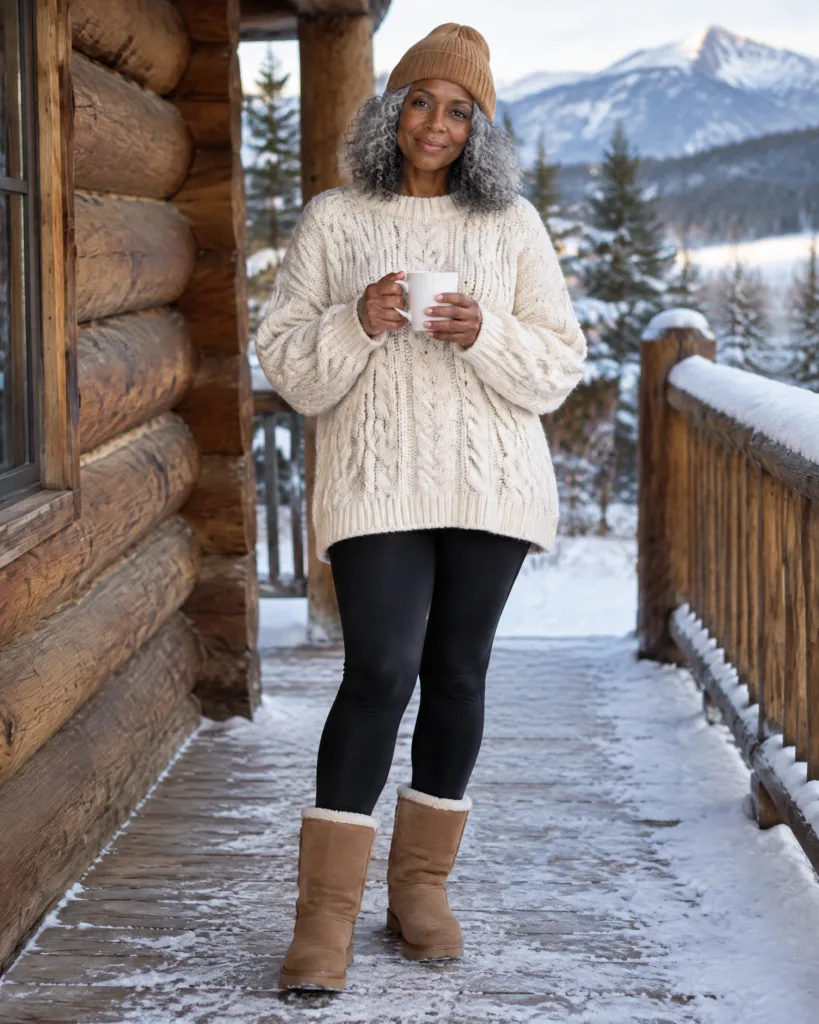
Stylish ski outfits start with color and fit: a bright jacket with neutral pants, a tonal outfit in one shade or a one-piece ski suit with a belted waist. For après-ski, change into a chunky sweater, warm leggings or straight jeans and insulated waterproof boots so you stay cozy walking around the village and lodge.
On the slopes:
- Color blocking: a cherry red or cobalt jacket with black pants is easy to spot on the mountain.
- Tonal neutrals: cream jacket with cream or camel bibs and a matching beanie.
- One-piece ski suit: a belted suit defines the waist and keeps snow out completely.
- Retro accents: a printed fleece mid layer that shows when you unzip your jacket.
Après-ski and lodge:
- Chunky cable-knit sweater + fleece-lined leggings + shearling-lined waterproof boots.
- Turtleneck + straight dark jeans + puffer vest + insulated lace-up winter boots.
- Fair Isle sweater + corduroy pants + knit beanie + snow boots.
You can stretch these cozy layers far beyond the mountain; browse our winter outfits for women for more ideas, and our guide to how to wash a wool sweater for keeping merino and knits soft after a trip.
Ski Trip Packing Checklist
A ski trip packing list covers your on-mountain layers, accessories and après-ski clothes. Plan two base layer sets so one can dry, one fleece, one jacket and one pair of ski pants or bibs, two or three pairs of ski socks, and insulated waterproof boots for walking around the resort.
- 2 base layer tops and 2 pairs of thermal leggings
- 1 fleece and 1 packable puffy jacket or vest
- 1 waterproof ski jacket and 1 pair of ski pants or bibs
- 3 pairs of ski socks
- Waterproof gloves or mittens, plus liners
- Goggles, helmet (or rental plan), neck gaiter, beanie
- Sunscreen, SPF lip balm, hand warmers
- 2 sweaters, 1 pair of jeans or warm pants, 1 pair of fleece-lined leggings
- Insulated waterproof winter boots and cozy indoor socks
- Swimsuit with a cover-up if your lodging has a hot tub
Many of the same warm layers work for other cold-weather outings, too; our guide on what to wear to a hockey game shows how to style them in a chilly arena.

Frequently asked questions
What do I wear skiing for the first time?
Wear a thermal base layer top and leggings, a fleece mid layer, a waterproof jacket and ski pants or bibs, one pair of ski socks, waterproof gloves or mittens and goggles. Rent a helmet, skis and boots. Avoid cotton and jeans, and focus your budget on base layers, socks and gloves.
What is the 3-layer rule for skiing?
The 3-layer rule means wearing a base layer that wicks sweat away from your skin, a mid layer that traps warmth and an outer shell that blocks wind, snow and moisture. You can adjust the mid layer to the temperature, keeping the base and waterproof shell the same all day.
What can I wear skiing if I don’t have snow pants?
Waterproof rain pants over synthetic or merino thermal leggings are the best substitute for snow pants. Make sure the rain pants are roomy enough to fit over your leggings and long enough to cover your boot tops. Avoid jeans, sweatpants and cotton leggings, which absorb water and get cold quickly.
Can you ski in jeans?
Skiing in jeans is not recommended. Denim absorbs snow and water, gets heavy, takes a long time to dry and can freeze stiff on cold days, leaving your legs cold and uncomfortable. Wear waterproof ski pants or rain pants over thermal leggings instead, and save jeans for après-ski.
What should I wear under ski pants?
Wear thin, fitted thermal leggings in merino wool or a synthetic fabric under ski pants. They wick sweat and add warmth without bulk. Skip cotton leggings, pajama pants and sweatpants, which hold moisture. Stop the leggings above your boot cuff so only your ski socks go inside the boots.
Are mittens or gloves warmer for skiing?
Mittens are warmer than gloves because your fingers share warmth in one compartment. Gloves offer better dexterity for zippers, buckles and phones. If your hands run cold, choose waterproof mittens with thin liner gloves inside, and keep hand warmers in your pocket for the coldest lift rides.
What shoes should I wear to the ski resort?
Wear insulated, waterproof winter boots with good traction for walking around the resort, parking lots and village. Ski boots are rented or fitted separately and are only for skiing. Bring warm socks to change into after skiing, and pack your ski socks to put on before boot fitting.


1 comment
Comments are closed.