


The main types of heels are grouped three ways: by height (kitten, mid, high and platform), by shape (stiletto, block, wedge, cone, spool, flare, sculptural and Cuban) and by shoe style (pumps, slingbacks, d’Orsays, mules, Mary Janes, ankle straps, peep toes and heeled boots). Once you know those three layers, you can name almost any pair you see and pick the right one for your feet and your plans. Think of this as the footwear chapter of our guide to types of fashion styles.
Quick answer
Quick answer: Every heel has a height, a heel shape and a shoe style. A “black block-heel slingback pump,” for example, describes all three.
- By height: kitten (1–2 in), mid (2–3 in), high (3–4 in), very high or platform (4 in and up).
- By shape: stilettos are thinnest and dressiest; block and wedge heels are the most stable.
- By style: pumps, slingbacks, mules and Mary Janes describe the upper, not the heel.
- Most comfortable: low block heels, wedges and kitten heels spread your weight best.
- Beginners: start at 2–3 inches with a wide base and a strap that holds your foot.
Types of Heels at a Glance
The quickest way to compare types of heels is by height, comfort and best use. Stable shapes like block and wedge heels rank highest for all-day wear, while stilettos and very high platforms are best saved for shorter events. Use the chart below as your cheat sheet before you shop or get dressed.
| Heel type | Typical height | Comfort (1–5) | Best for |
|---|---|---|---|
| Kitten heel | 1–2 in | 5 | Office, travel days, long events |
| Block heel | 1.5–4 in | 5 | Work, weddings, outdoor events |
| Wedge heel | 2–4 in | 4 | Summer parties, garden weddings, vacation |
| Cuban heel | 1–2 in | 4 | Boots, casual outfits, concerts |
| Cone / spool heel | 2–3.5 in | 3 | Office, dinners, retro looks |
| Flare / sculptural heel | 2.5–4 in | 3 | Statement outfits, cocktail parties |
| Platform heel | 4–6 in (with 1–2 in platform) | 3 | Nights out, photos, height without steep pitch |
| Stiletto | 3–5 in | 2 | Formal events, date night, evening wear |
Heel Types by Height
Heel height is measured in inches at the back of the shoe, from the floor to where the heel meets the sole. Low heels sit under 2 inches, mid heels fall between 2 and 3 inches, and high heels start around 3 inches. Platforms raise the front of the foot so a tall heel feels lower.
Low and Kitten Heels
Kitten heels are short, slim heels, usually 1 to 2 inches, often with a slight curve set in from the back of the shoe. They add polish with little pressure on the ball of the foot, so they suit offices, travel and long events.
Mid Heels
Mid heels, roughly 2 to 3 inches, are the everyday sweet spot. They add visible height and lengthen the leg line while staying walkable for most women.
High Heels
High heels start around 3 inches and climb to 4 inches or more. The steeper the angle (called the pitch), the more weight shifts onto the ball of your foot. Classic high heels include the stiletto pump and the strappy evening sandal. Plan for shorter wear time or bring a backup pair.
Platform Heels
Platform heels have a thick sole under the toes, usually 0.5 to 2 inches, plus a tall heel. Because the front is raised, a 5-inch platform can feel like a 3.5-inch heel.

Heel Types by Shape
Heel shape describes the column under your heel, and it decides both the look and the stability of a shoe. Thin shapes like stilettos read formal and dramatic, while wide shapes like blocks and wedges feel sturdier and more casual. Learning these eight shapes lets you name nearly any heel instantly.
Stiletto
A stiletto is a tall, very thin heel, typically 3 to 5 inches, that tapers to a tiny tip. It creates the longest leg line and the most formal look. The trade-off is balance: the small contact point sinks into grass and catches in grates, so save stilettos for indoor events.
Block
A block heel is a thick, square or rectangular heel that keeps the same width from top to bottom, or nearly so. It ranges from a low 1.5 inches to a chunky 4 inches. Block heels are the go-to for outdoor weddings, workdays and anyone building confidence in heels. Our wedding guest outfits hub pairs heel heights with venues, from lawns to ballrooms.
Wedge
A wedge heel runs under the entire foot as one solid piece, from heel to toe. With no gap under the arch, your weight spreads across the whole sole, which is why wedges feel steady. Cork and espadrille wedges are summer staples.
Cone and Spool
A cone heel is wide where it meets the shoe and narrows toward the floor, like an ice cream cone turned upside down. A spool heel is wide at the top and bottom with a pinched middle, similar to a thread spool. Both feel more stable than a stiletto and carry a slightly retro mood.
Flare and Sculptural
A flare heel starts narrow under the shoe and widens toward the ground, giving a modern, slightly 1970s shape. Sculptural heels go further, using curves, cutouts, geometric blocks or unexpected materials to turn the heel into a design feature. They are best worn with simple outfits so the shoe stands out.
Cuban
A Cuban heel is short and thick, usually 1 to 2 inches, with a straight front and a slightly tapered back. You will see it most often on ankle boots, western boots and Chelsea boots. It adds a bit of height and swagger while staying easy to walk in all day.
Heeled Shoe Styles
Heeled shoe styles describe the upper, meaning how the shoe covers and holds your foot. A pump, slingback or Mary Jane can sit on almost any heel shape, so the same style comes in stiletto, block or kitten versions. Choosing the right upper matters as much as choosing the right heel. For flats, sneakers and boots as well, see our full guide to types of shoes.
Pumps
Pumps are closed, slip-on shoes with a low-cut front that shows the top of the foot and no straps or laces. They are the classic workwear and formal shoe. A pointed-toe pump elongates the leg; an almond toe gives more room.
Slingbacks
Slingbacks have a closed or partly closed front and a thin strap that wraps behind the heel instead of a full back. They feel lighter than pumps and suit spring and summer dressing.
D’Orsay
A d’Orsay shoe has a cut-out on one or both sides, so the arch is exposed while the toe and heel stay covered. It shows more of the foot for an elegant, airy look. Because there is less to hold the foot, d’Orsays work best with a lower heel or an ankle strap.
Mules
Mules are backless heels that you slip into, with the upper covering only the front of the foot. They range from kitten-heel office mules to tall block-heel evening styles. They are easy to put on but can slip off at the heel, so choose a snug fit and a lower height for long walks.
Mary Janes
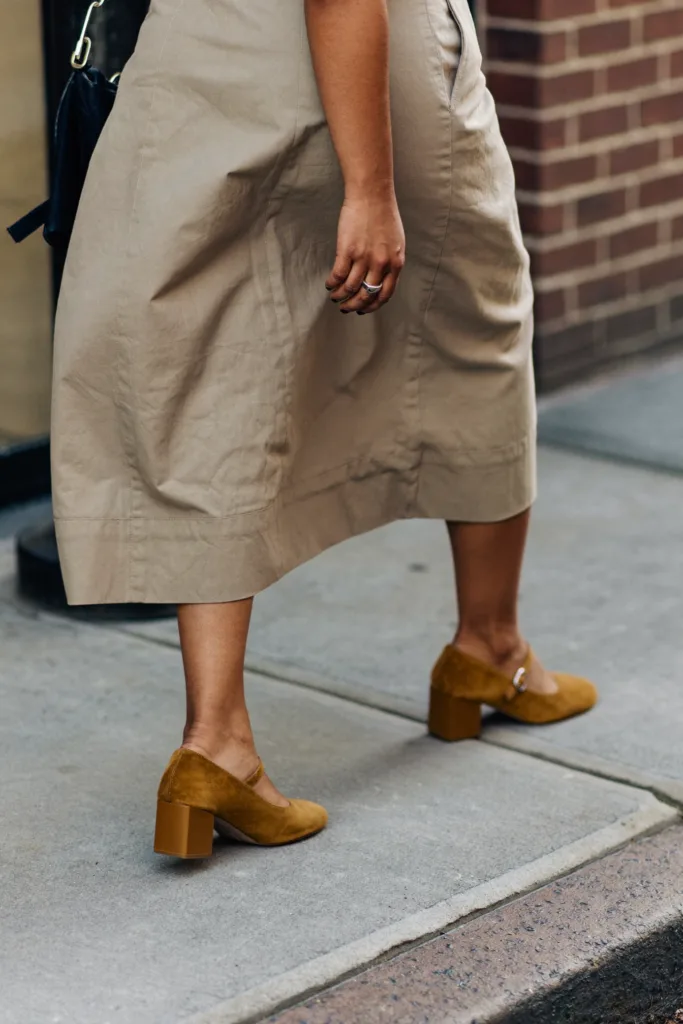
Mary Jane heels have a rounded or almond toe and a strap across the instep, usually closed with a buckle or button. The strap keeps the shoe locked on, which makes them comfortable and secure.
Ankle Strap and Peep Toe
Ankle strap heels add a band around the ankle for support, which helps a lot with stilettos and sandals. Peep toe heels have a small opening that shows one or two toes, a softer alternative to a full sandal. Heeled sandals combine open uppers with straps for warm-weather events.
Heeled Boots
Heeled boots include ankle boots, knee-high boots and over-the-knee styles on block, stiletto, Cuban or platform heels. The fully enclosed foot gives extra stability, so many women walk farther in a heeled boot than in a pump of the same height. They are fall and winter workhorses.

Most Comfortable Types of Heels
The most comfortable types of heels are low block heels, wedges and kitten heels, because they keep your foot flatter and spread weight over a wider surface. Comfort also depends on fit details: a roomy toe box, a cushioned insole, real arch support and a strap that stops your foot from sliding forward.
Here is a simple comfort ranking, from easiest to most demanding:
- Low block heel (under 2.5 in) with an ankle or Mary Jane strap.
- Wedge heel under 3 inches with a cushioned footbed.
- Kitten heel pump or slingback.
- Cuban-heel ankle boot or block-heel boot.
- Mid-height cone or spool heel.
- Platform heel with a 1-inch or taller platform.
- Flare or sculptural heel, depending on the base size.
- High stiletto over 3.5 inches.
Also check heel placement: the heel should sit directly under your heel bone, not behind it.
Stylist’s tip
Shop for heels in the late afternoon, when feet are slightly swollen, and walk on a hard floor in the store, not only on carpet. If your toes press the front or your heel lifts out after ten steps, the pair will not improve with time.
Which Heels to Wear for Each Occasion
Match the heel to how long you will stand, the ground you will walk on and the formality of the event. Offices favor pumps and block heels, weddings call for dressier sandals or stable blocks on grass, date nights suit stilettos or mules, and casual days lean toward wedges and booties.
| Occasion | Best heel types | Avoid |
|---|---|---|
| Work | Block-heel or kitten pumps, loafer heels, slingbacks | Very high stilettos, clear platforms |
| Weddings | Block-heel sandals, embellished pumps, d’Orsays; wedges outdoors | Thin stilettos on grass or sand |
| Date night | Stilettos, strappy sandals, heeled mules | Heavy hiking-style boots |
| Casual | Wedges, Cuban-heel boots, low block mules | Formal satin pumps |
Work
For most offices, a 2- to 3-inch pump, slingback or Mary Jane in black, navy, nude or tan is the safest choice. If you are dressing for a big day, our guide to interview outfits for women shows how polished heels finish a professional look.
Weddings
Check the invitation first, since different dress code types call for different shoes. Black tie leans toward satin pumps or elegant sandals. For barn, garden or beach weddings, block heels and wedges keep you from sinking into the ground.
Date Night
This is where stilettos, strappy heeled sandals and sculptural heels shine, since you are often sitting more than standing. If dinner leads to a walk, a heeled mule or a mid-height block sandal gives you the same polish with less strain. To finish the look, pick a clutch or shoulder bag from our guide to types of bags.
Casual
For weekends and day events, reach for wedge sandals, block-heel mules or Cuban-heel ankle boots. Heading to a show? Our guide on what to wear to a concert covers boots and platforms that survive hours of standing.
How to Choose Heels for Your Feet and Body
Choose heels by matching the shoe’s structure to your foot width, arch and comfort level, then fine-tune the look with toe shape and strap placement. Wide feet need roomy toe boxes, petite women benefit from minimal straps and pointed toes, and beginners should start low with a wide base.
- Wide feet: Look for brands that offer wide sizing, almond or square toes and soft leather or knit uppers. Mary Janes and adjustable sandals let you fine-tune the fit.
- Narrow feet: Ankle straps and slingbacks with elastic stop your foot from slipping out of pumps.
- High arches: A built-in arch support or a cushioned insert prevents the ball of the foot from taking all the pressure.
- Flat feet: Wedges and heels with a contoured footbed feel most supportive.
- Petite frames: Low-vamp pumps, nude-to-you shades and pointed toes extend the leg line. Thick ankle straps can visually cut the leg, so choose thin ones.
- Beginners: Start at 2 to 3 inches with a block or wedge shape and a strap, then move higher once that feels natural.
If you are still figuring out proportions, knowing what is my body shape can help you decide which heel heights and toe shapes balance your silhouette best. Hem length matters too, and our guide to types of pants shows which cuts pair best with heels.
Tips for Walking Comfortably in Heels
Walking comfortably in heels comes down to fit, support and practice. Buy the right size and width, add gel or cushioned inserts where you feel pressure, break new pairs in at home, and walk heel-to-toe with short steps. Care for the pair too, since worn heel tips make any shoe wobbly.
Follow these steps with every new pair:
- Check the fit. You should be able to slide a fingertip behind your heel, and your toes should not touch the front.
- Add inserts. Ball-of-foot pads, heel grips and arch inserts fix most small fit issues.
- Break them in. Wear the shoes around the house for 20 to 30 minutes at a time for a week, with socks if the leather is stiff.
- Scuff the soles. Lightly roughen slick new soles with sandpaper, or have a cobbler add rubber grip pads.
- Walk heel-to-toe. Land on the heel first, roll forward and keep your strides shorter than in flats.
- Engage your core. Stand tall with shoulders back so your hips, not your knees, carry the movement.
Heel care and resoling: Replace the small plastic heel tips (called top lifts) as soon as you see wear, since walking on the bare post damages the heel. A cobbler can resole leather soles, re-cover scuffed heels and stretch tight toe boxes. Store heels upright with shoe trees or tissue to keep the shape.
Do
- Do start with a 2–3 inch block or wedge heel if you are new to heels.
- Do match the heel shape to the ground: blocks and wedges for grass, cobblestones and sand.
- Do replace worn heel tips early to protect the heel and keep you steady.
Don’t
- Don’t buy heels that pinch in the store and hope they will stretch a full size.
- Don’t wear brand-new stilettos for the first time to an all-day event.
- Don’t ignore heel placement; a heel set too far back throws off your balance.
Stylist’s tip
If you want one versatile pair, choose a 2.5-inch block or almond-toe pump in a shade close to your skin tone. It stretches across workwear, weddings and dinners, and it makes your legs look longer with dresses, skirts and cropped pants.
Frequently asked questions
How many types of heels are there?
There are dozens of types of heels, but they fit into three groups: height (kitten, mid, high, platform), heel shape (stiletto, block, wedge, cone, spool, flare, sculptural, Cuban) and shoe style (pumps, slingbacks, mules, Mary Janes and more). Combining the three names describes almost any heeled shoe accurately.
What are the different types of high heels?
The main types of high heels are stilettos, platform heels, high block heels, cone heels and tall sculptural heels, usually 3 inches or higher. They appear on pumps, strappy sandals, slingbacks and boots. Stilettos are the dressiest, while platforms and high blocks feel steadier because they reduce the angle of the foot.
What is the most comfortable type of heel?
Low block heels, wedges and kitten heels are the most comfortable types of heels for most women. Their wider base and lower pitch spread body weight more evenly across the foot. Adding an ankle or Mary Jane strap, a roomy toe box and a cushioned insole makes them even easier to wear all day.
What is the difference between a pump and a stiletto?
A pump is a shoe style: a closed, slip-on shoe with a low-cut front and no straps. A stiletto is a heel shape: tall, thin and tapered to a tiny tip. They overlap often, since a stiletto pump is a pump built on a stiletto heel, but pumps can also have block or kitten heels.
Why are fewer young women wearing heels?
Many younger women now favor comfort-first fashion, so sneakers, loafers and flat boots have become everyday choices. Remote and hybrid work also reduced the need for formal office shoes. Heels have not disappeared, though; they are now chosen for weddings, nights out and special events, often in lower, chunkier or platform styles.
What heel height is best for beginners?
A heel between 2 and 3 inches is best for beginners, ideally on a block or wedge shape with a strap across the ankle or instep. That height adds polish without forcing much weight onto the ball of the foot. Practice at home first, then move up half an inch at a time if you want to.


3 comments
Comments are closed.